
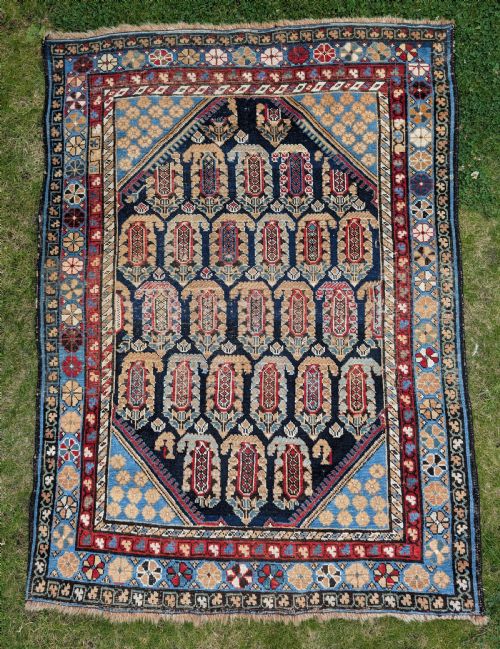


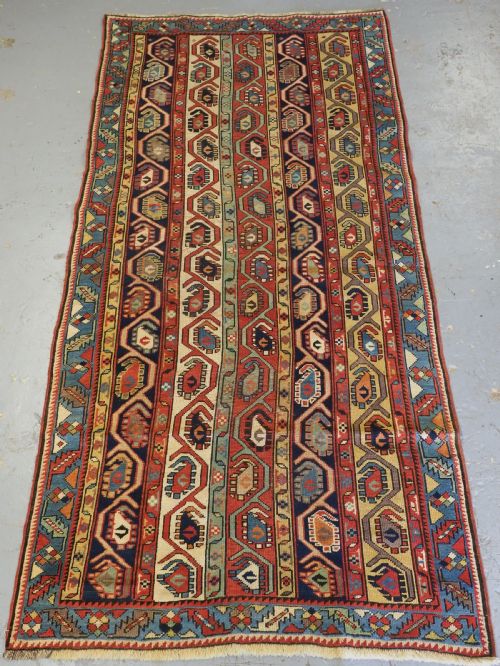


Caucasian Boteh Rug
A caucasian boteh rug brings the unmistakable geometric energy of the Caucasus into a room through repeated paisley motifs.
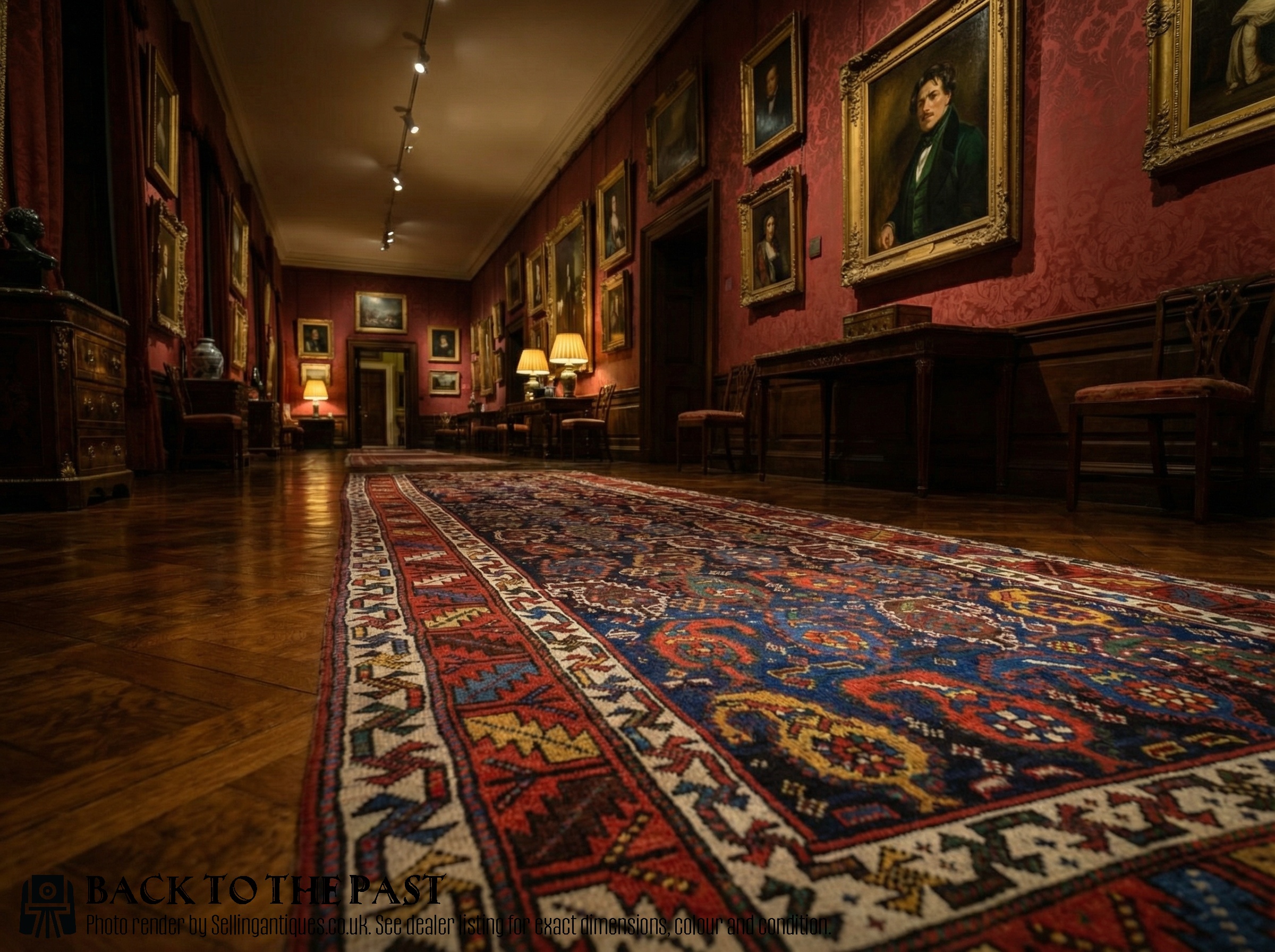
Caucasian Boteh Rug
When you search for a caucasian boteh rug, you are looking at woven floor coverings that originate from the Caucasus region and feature the iconic seed or almond-shaped boteh motif. These pieces range from compact scatter rugs to elongated runners, often associated with specific weaving centres such as Gendje, Karabagh, Shirvan, and Dagestan. The designs deployed across these textiles balance strict geometric borders with rows of upright, diagonal, or flaming boteh symbols.
On this page, you are most likely to encounter examples originating from the latter half of the nineteenth century up to around nineteen hundred. They frequently appear as runner rugs or long rugs showcasing either polychrome displays or distinctive yellow grounds. The weaving traditions of this mountainous territory yield dense, durable structures built for functional daily use rather than purely decorative display.
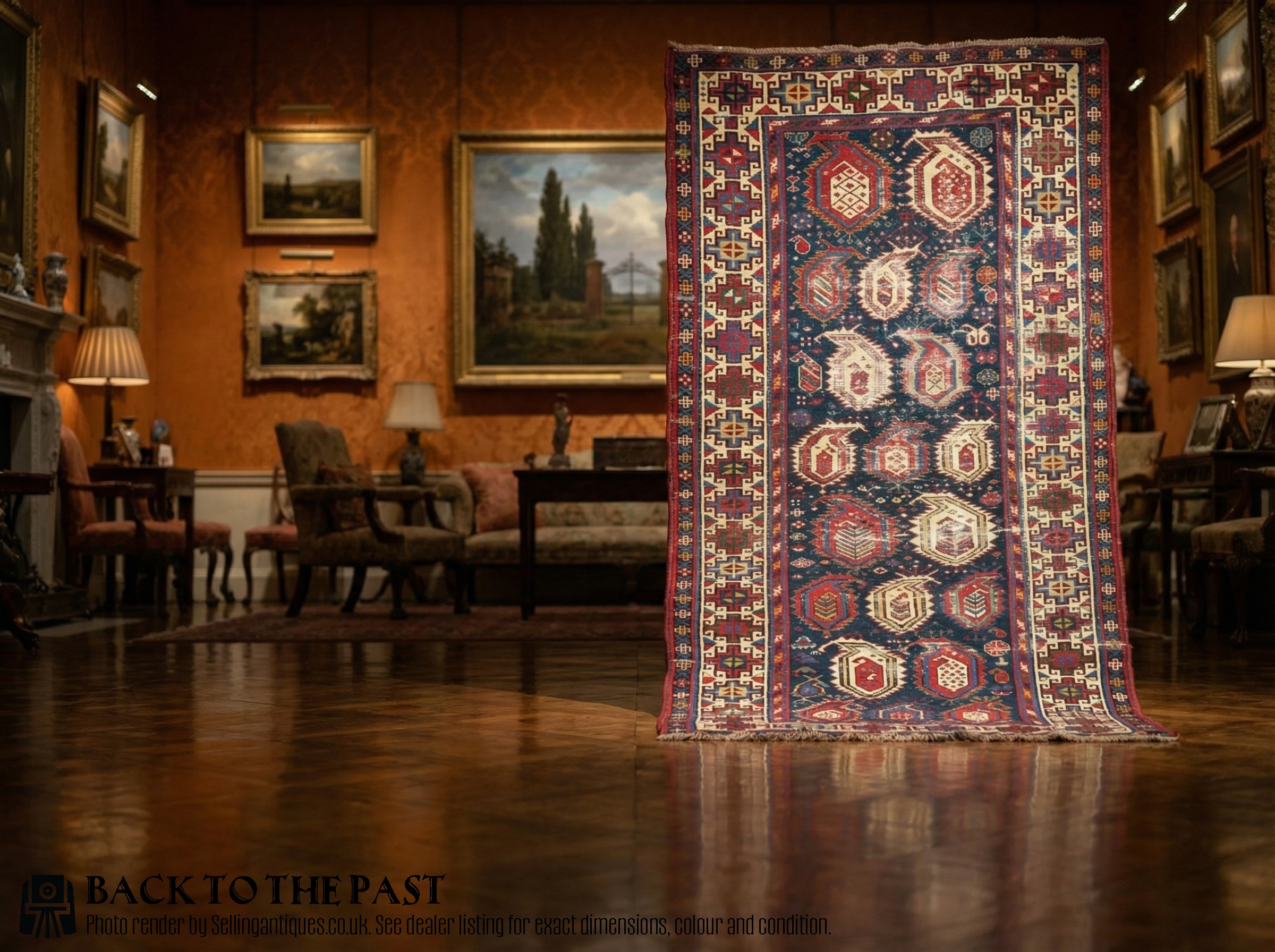
What varies in quality
The standard of a Caucasian weaving depends significantly on the clarity of the drawing and the depth of the palette. Sharply rendered boteh motifs with high contrast against the field command greater visual interest than muddy or crowded compositions. Furthermore, the handling of natural dyes creates subtle abrash, where colour shifts organically across the field, distinguishing a dynamic piece from a flat or uniform surface.
Certain nineteenth-century weavers arranged their boteh motifs to appear as though they were flickering flames dancing up the rug.
The Caucasian Boteh Rug Glossary
- Boteh
- A stylised motif resembling a seed, almond, or twisted pear, symbolising life and eternity. It forms the primary decorative element across these regional carpets.
- Abrash
- A natural variation in colour within the same field of wool caused by differences in dye batches or hand-spun yarn. This tonal shift is a hallmark of traditional vegetable dyeing.
- Runner
- An elongated format of rug designed specifically for corridors, hallways, or narrow spaces. They preserve repeating geometric patterns along an extended axis.
- Prayer rug
- A small format textile featuring a distinct mihrab or arch design at one end, traditionally orientated towards Mecca during daily devotions.
Caucasian Boteh Rug: Frequently Asked Questions
Where were caucasian boteh rugs made?
These textiles were produced across the Caucasus region, encompassing weaving areas such as Karabagh, Gendje, Shirvan, and Dagestan.
Each district imparted distinct design preferences regarding colour saturation, border arrangements, and the scale of the boteh motifs.
How do I date a caucasian boteh rug?
Dating relies on examining structural materials, knot density, and the specific chemical composition of the dyes used.
Nineteenth-century examples commonly display hand-spun wool and early natural dye palettes before synthetic colours became widespread.
Are these rugs suitable for high-traffic areas?
The dense wool construction and tight knotting of nineteenth-century Caucasian weaving provide considerable durability for everyday flooring.
Placing an appropriate underlay beneath the rug prevents slipping and reduces fibre wear in busy hallways.
How should I clean my rug?
Gentle surface vacuuming without a rotating brush roll removes trapped dust without damaging the antique wool foundation.
Professional specialist cleaning is required for deeper maintenance to protect the fugitive natural dyes from running.