
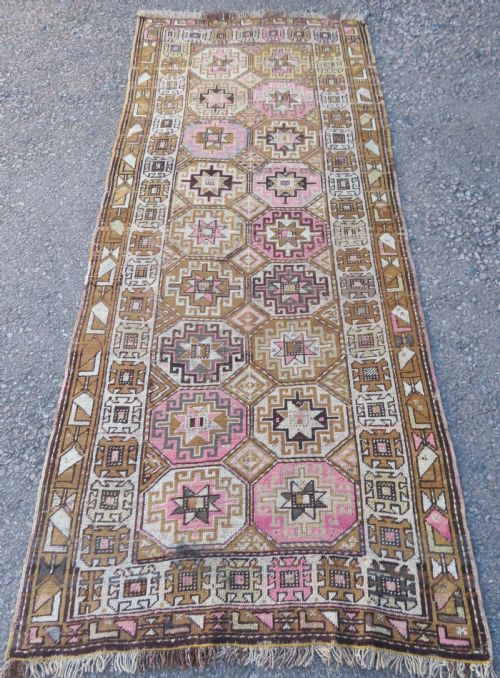

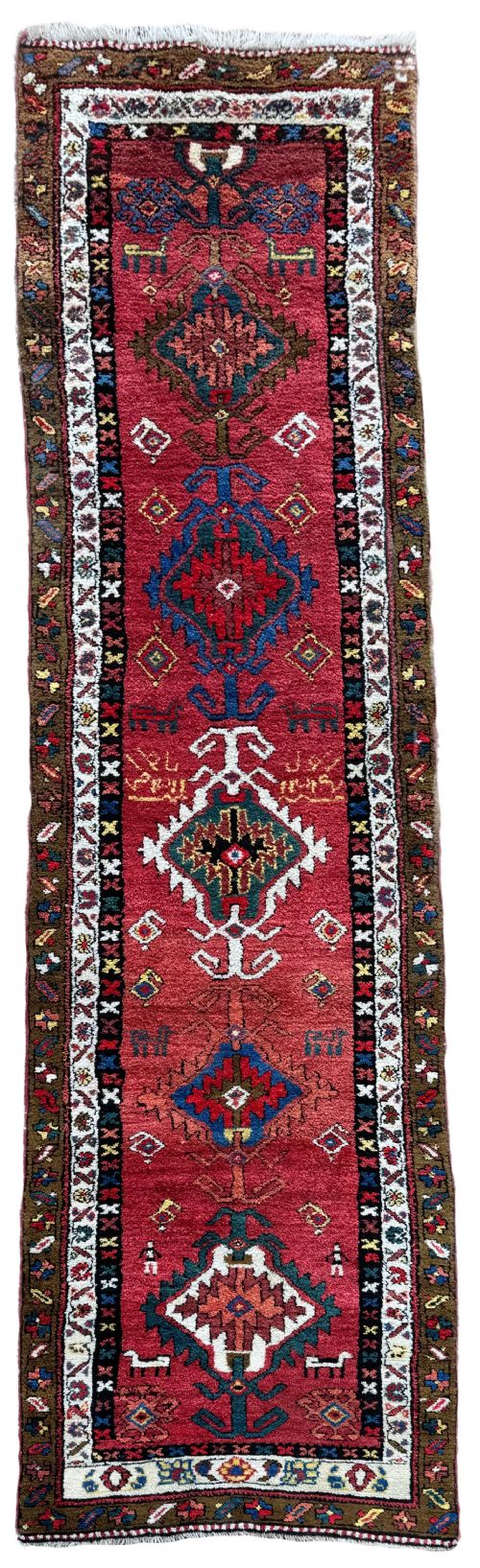
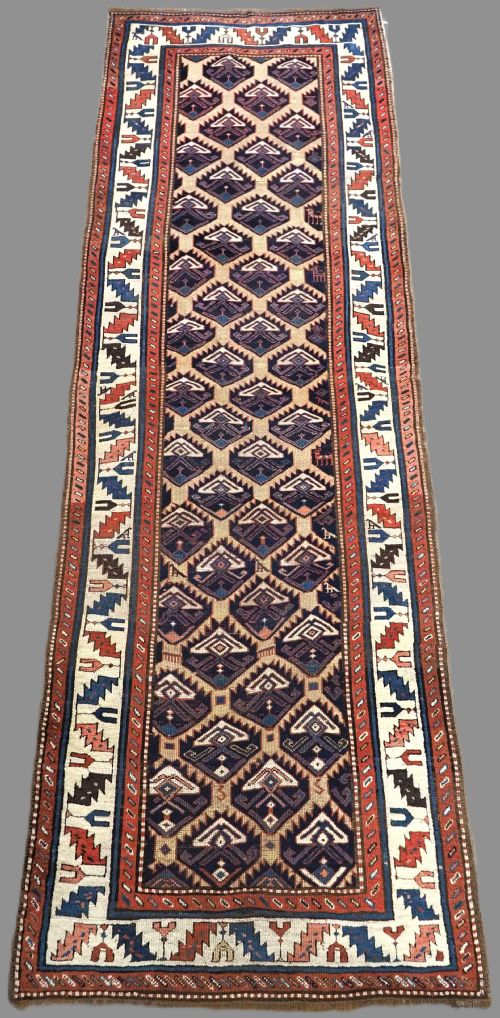
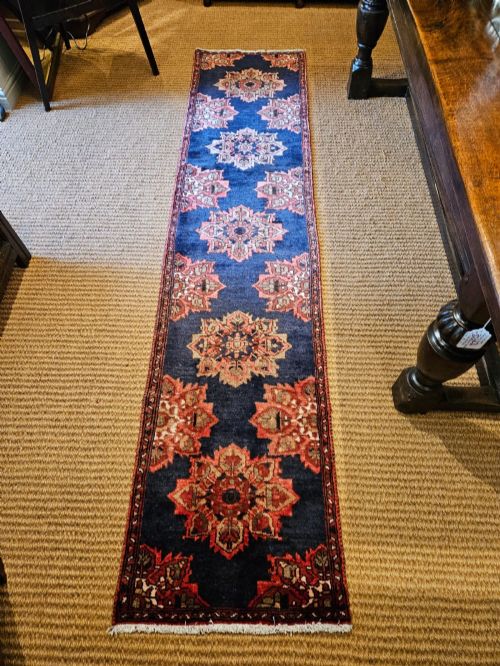
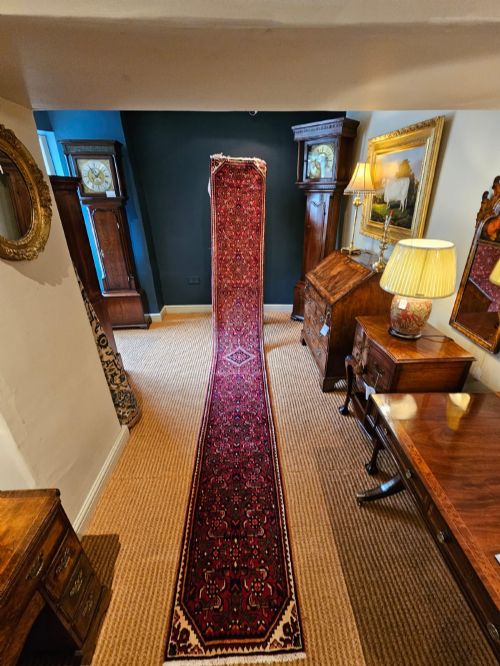
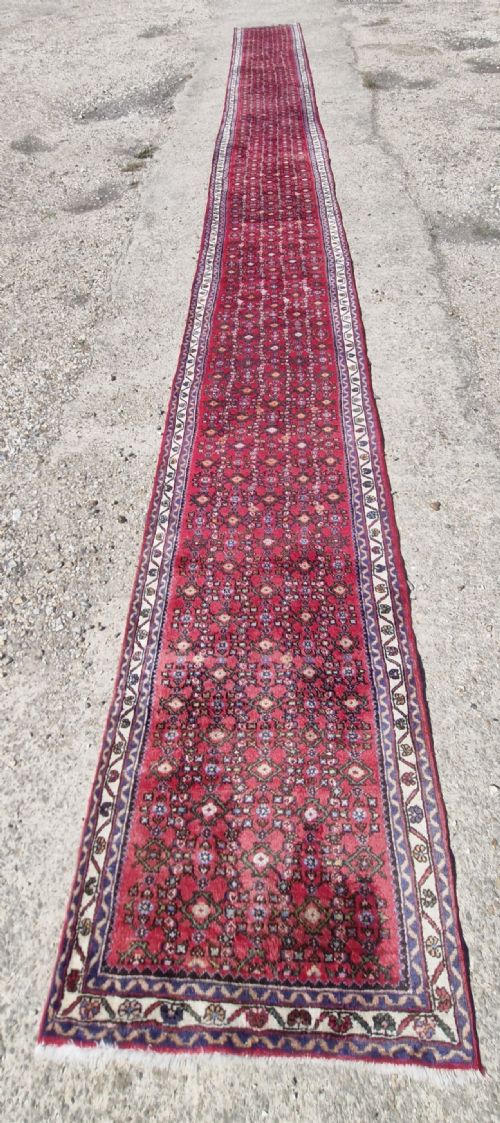
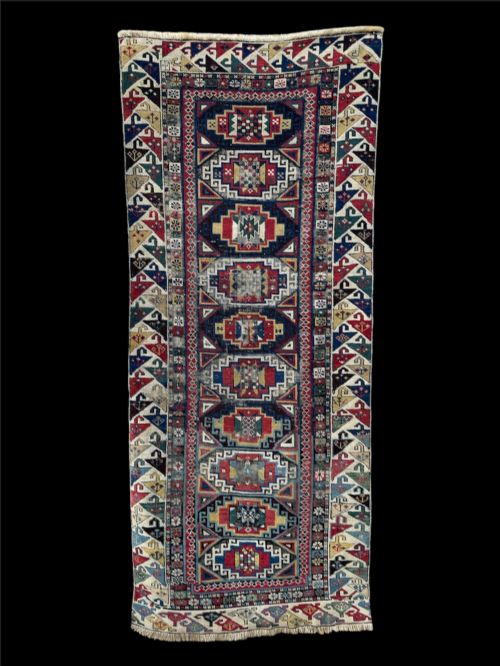
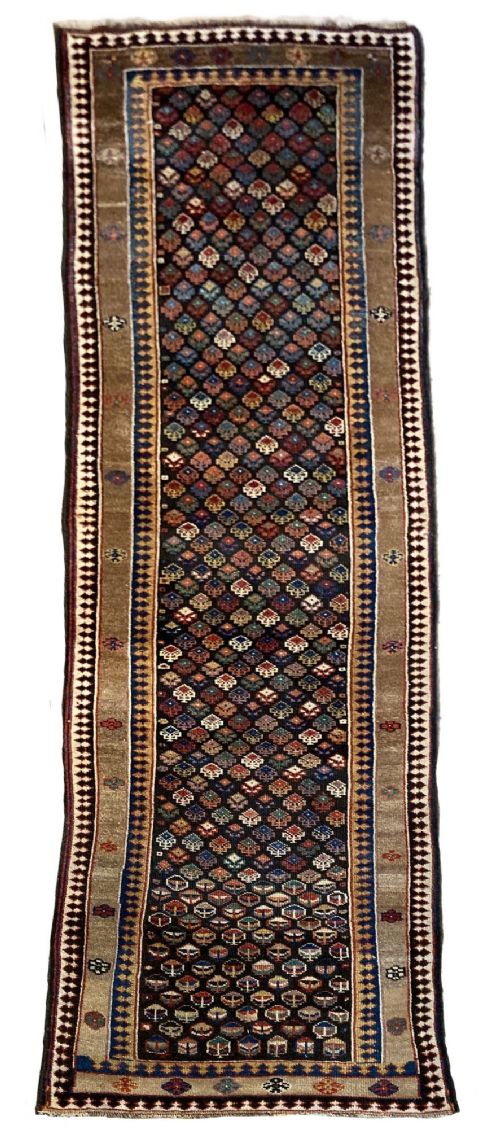
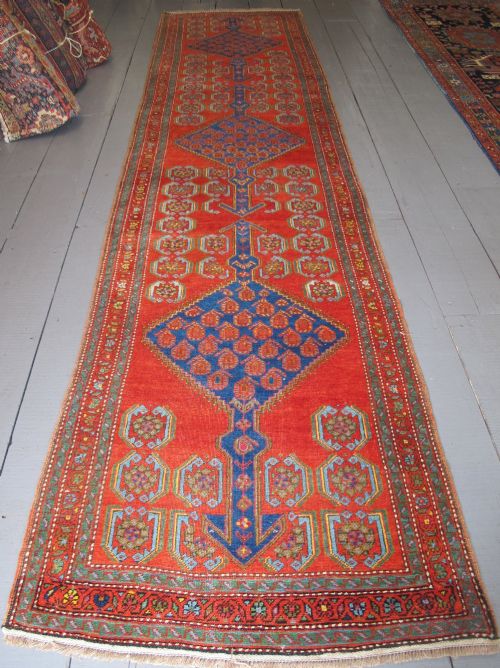


Antique Hall Carpet
An antique hall carpet brings enduring character to narrow passageways through time-tested weaving traditions from Persia and the Caucasus.
Antique Hall Carpet
When you search for an antique hall carpet, you encounter long, narrow formats specifically proportioned for corridors, landings, and hallways. The pieces represented here span from the mid-nineteenth century through the early twentieth century, originating primarily from Persian and Caucasian weaving regions.
You will frequently meet runners bearing regional tribal designations such as Kurdish, Heriz, Kazak, Shirvan, and Bakshaish. These formats served practical domestic purposes in connecting rooms while providing durable floor coverings for high-traffic thoroughfares.
How they were made
Weavers constructed these carpets using hand-spun wool and cotton foundations, often incorporating natural dyes that yield rich, stable tones over decades of use. Certain examples integrate camel hair into the pile or borders, adding distinct texture and natural colour variation.
The construction relies on traditional knotting techniques executed on vertical looms, producing dense piles designed to withstand heavy foot traffic. Regional workshops and nomadic groups utilised local materials exclusively, ensuring each piece reflects the specific resources of its origin.
Listings feature pieces utilising natural dyes, hand-spun wool, and camel hair across multiple nineteenth and twentieth century periods.
What varies in quality
The distinction between ordinary and exceptional examples rests upon knot density, precision of the geometric or floral layout, and the vitality of the natural dyes. Finer pieces demonstrate careful control over the loom, resulting in straight edges and crisp medallion or lattice motifs.
Dye saturation and the preservation of the original pile depth heavily influence the standing of an individual runner. Uniform wear across the wool surface indicates balanced usage, while harmonious colour fading enhances the visual depth of the design.
The Antique Hall Carpet Glossary
- Runner
- A long, narrow carpet format designed specifically for hallways, corridors, and stairs. These pieces measure significantly longer than they are wide to fit restricted floor spaces.
- Pile
- The upright or looped yarn that forms the usable surface of the carpet. This dense layer of wool protects the underlying foundation threads from direct wear.
- Natural Dyes
- Colourants derived from plants, insects, and minerals rather than synthetic compounds. These traditional agents produce complex, subtle shades that mellow gracefully over time.
- Boteh
- A traditional teardrop or almond-shaped motif with a curved upper end, frequently seen in Persian and Caucasian weaving. This ancient symbol represents a floral spray or cypress tree.
- Foundation
- The underlying grid of warp and weft threads that supports the knotted pile of the carpet. Cotton and wool serve as the primary structural materials for this framework.
Antique Hall Carpet: Frequently Asked Questions
How do I clean an antique hall carpet?
Gentle surface brushing and regular light vacuuming without a beater bar remove embedded grit from the wool pile safely.
Professional specialist washing remains necessary for deep cleaning to protect the natural dyes and fragile cotton foundations from moisture damage.
Are these carpets suitable for heavy foot traffic?
Traditional construction methods and dense hand-spun wool make these runners exceptionally durable for everyday domestic use in busy corridors.
Utilising a quality underlay prevents slipping while absorbing impact, which significantly extends the working life of the vintage textile.
How do I identify a Caucasian runner?
Caucasian pieces typically feature bold geometric medallions, stark primary colours, and angular lattice patterns woven with distinct structural rigidity.
These designs contrast with the more curvilinear floral compositions commonly found in traditional Persian workshop carpets from the same eras.
What is a tribal runner?
Tribal runners originate from nomadic or village weavers working independently rather than in large urban workshop settings.
Their designs rely on memory, local folklore, and traditional family motifs, resulting in charming irregularities and spontaneous colour shifts across the field.