




Brown Caucasian Runner
These brown caucasian runner pieces are hand-knotted tribal floor coverings from the Caucasus and north-west Persia that bring rich earth tones and geometry to narrow spaces.
Brown Caucasian Runner
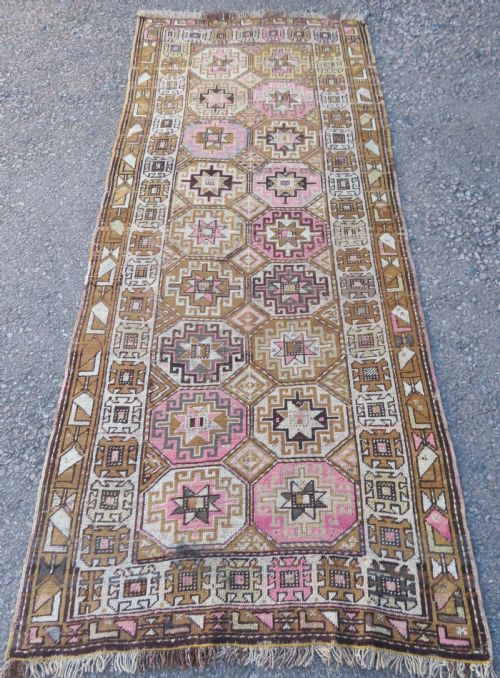
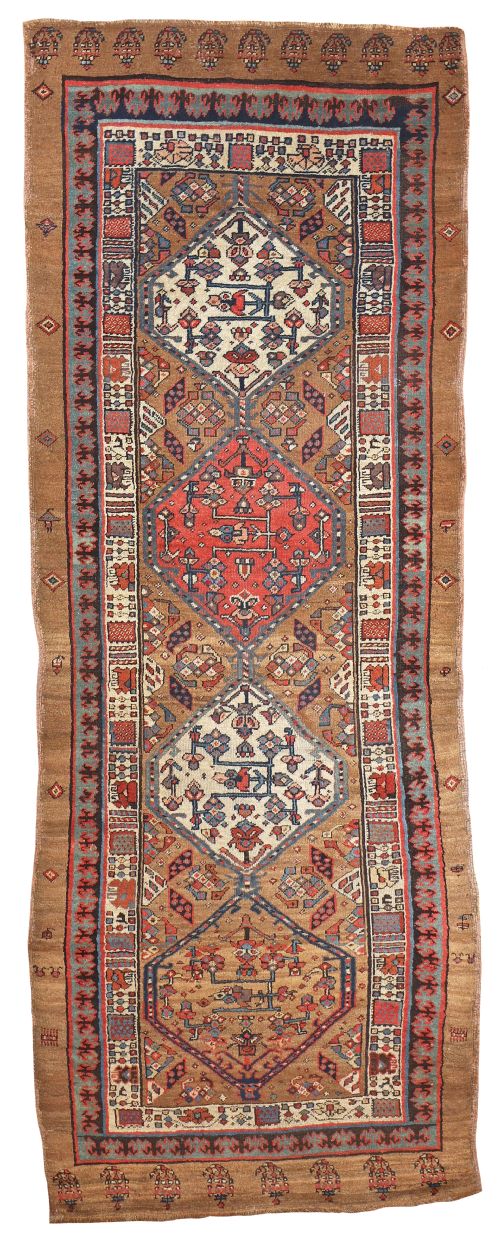
When you search for a brown caucasian runner, you are looking at narrow, elongated tribal floor coverings woven by nomadic and village weavers. These textiles typically feature disciplined geometric motifs, latch-hook medallions, or diagonal boteh patterns arranged along a linear format.
The pieces available on this page originate predominantly from the nineteenth and early twentieth centuries, spanning the 1870s to the 1920s. They encompass designated runner rugs, long rugs, and repurposed tribal fragments such as mafrash panels.
Geographically, the weaving traditions stretch across the Caucasus and north-west Persia, taking in specific regional styles like Karabagh, Sarab, and Kurdish tribal work. Buyers will find that these longer formats were originally produced for village homes and hallways where hard-wearing practicality met traditional local symbolism.
How they were made
The structure of a brown caucasian runner relies on hand-spun wool for the pile, complemented by cotton or wool foundations depending on the specific tribal origin. Certain examples incorporate camel hair into the mix, utilising the natural undyed fibre to create durable, resilient fields of brown.
Weavers knotted these pieces by hand on vertical looms, employing traditional wool and occasionally cotton yarns dyed with natural materials available in the region. The resulting textile is dense and robust, built to withstand heavy foot traffic in domestic corridors.
Some runners started life as storage bags before finding a second career on the floor.
What varies in quality
The distinction between standard examples and finer pieces lies in the precision of the knotting and the complexity of the design layout. Finer runners exhibit tighter pile density and sharper definition in geometric motifs like latch hooks or diagonal boteh.
Material selection also dictates overall grade, particularly the quality of the wool and the depth achieved in natural brown shades. Pieces showing careful symmetry in tribal patterns and intact original borders generally represent the higher tier of the range.
The Brown Caucasian Runner Glossary
- Boteh
- A stylised almond or pear-shaped motif representing a floral spray or cypress tree. It appears frequently in diagonal rows on Caucasian and Persian tribal runners.
- Latch hook
- A small, stepped triangular projection attached to larger medallions or borders. This geometric device is a hallmark of tribal and nomadic weaving traditions.
- Mafrash
- A large woven storage bag panel used by nomadic tribes. These heavy panels are occasionally repurposed into smaller flatweave mats or kilims.
- Runner
- A long, narrow carpet format designed for hallways, staircases, or gallery spaces. Their dimensions prioritise linear movement over broad floor coverage.
Brown Caucasian Runner: Frequently Asked Questions
Where were these runners made?
These pieces originate from the Caucasus region and north-west Persia, produced by various tribal groups including Kurdish, Shahsavan, and Karabagh weavers.
Production typically took place in village settings or nomadic camps during the late nineteenth and early twentieth centuries.
What materials are used?
The pile is predominantly hand-spun wool, sometimes utilising natural camel hair for undyed brown tones. Foundations generally consist of wool or cotton.
Natural dyes provide the underlying palette, which focuses heavily on earthy browns, reds, and blues.
How do I care for a runner?
Protect the textile by placing a quality underlay beneath it to prevent slipping and reduce friction against hard floors. Vacuum gently using suction only, avoiding the rotating brush bars on modern vacuum cleaners.
Professional cleaning tailored for antique rugs should be employed when deep maintenance is required.
Are these pieces suitable for hallways?
These narrow formats were originally constructed for domestic corridors, making them well-suited for modern hallway placements. Their dense wool construction provides natural durability for areas of high foot traffic.
Use a secure rug pad underneath to keep the runner flat and stable in busy thoroughfares.