
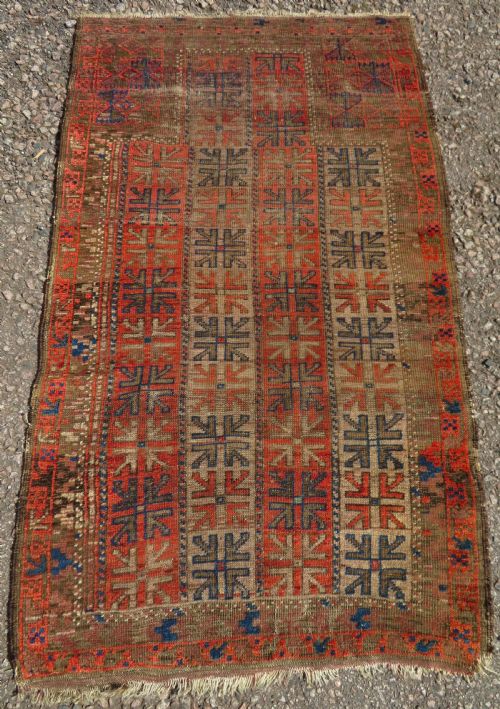
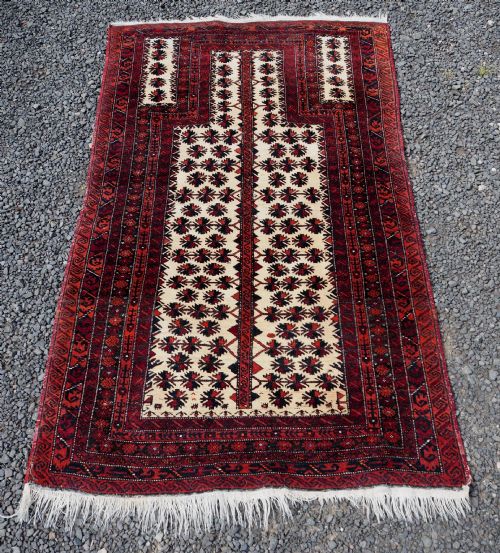
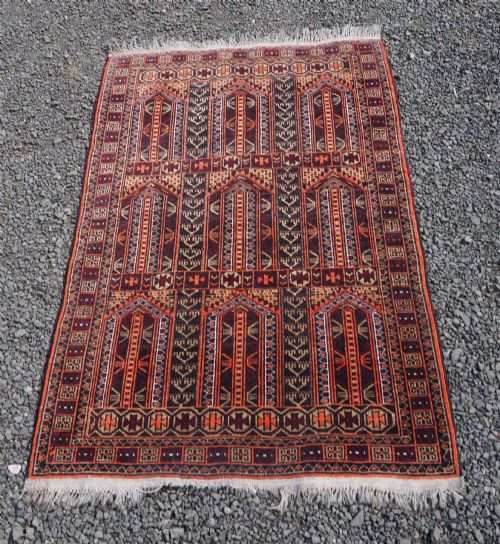
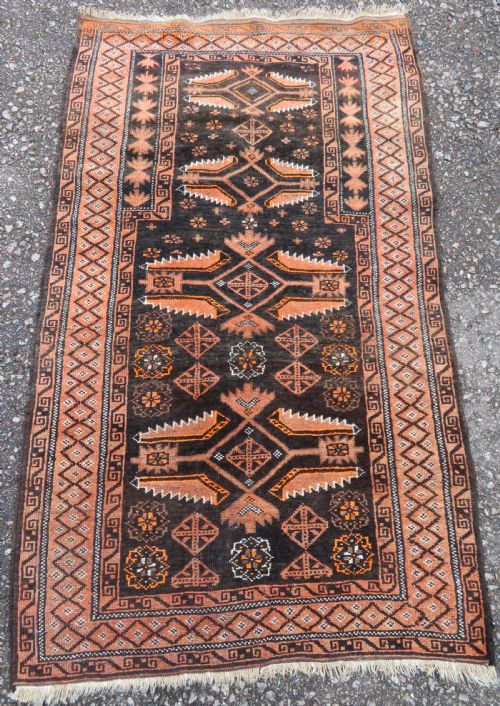
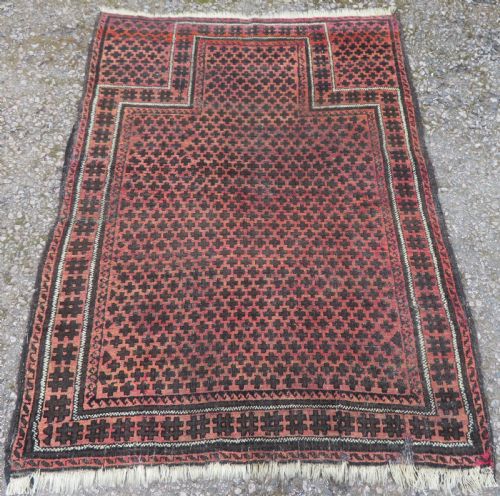

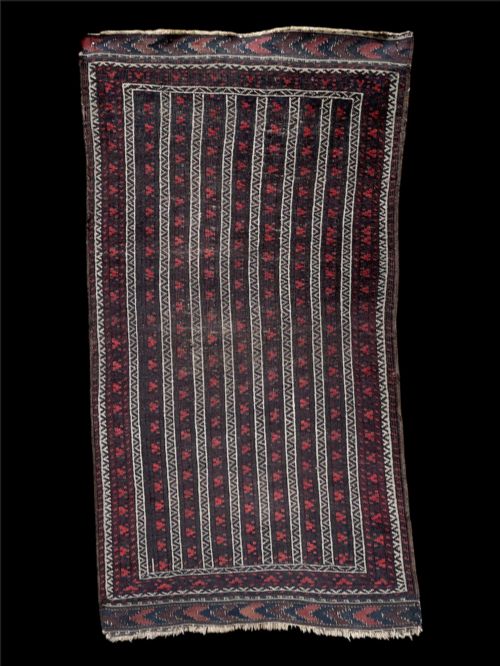


Vintage Baluch Prayer Rug
These vintage baluch prayer rug examples are tribal weavings crafted by nomadic peoples, prized for their rich earthy palettes and symbolic prayer arch designs.
Vintage Baluch Prayer Rug
A vintage baluch prayer rug is a handwoven textile originating from the tribal and nomadic groups inhabiting regions across Afghanistan, Persia, and Khorasan. When searching this phrase, buyers encounter traditional formats defined by mihrab arches, tree of life motifs, and repeat leaf patterns.
The pieces available span from the late nineteenth century through the early decades of the twentieth century. Common stylistic variants include the seh mihrab format, lotus leaf repeats, and camel ground compositions created by regional weavers.
These floor coverings reflect the distinct cultural heritage of Baluch, Taimani, and Timuri tribes. Each piece serves as a functional item designed for prayer and domestic use within nomadic tents and village homes.
How They Were Made
Weavers constructed these textiles using hand-spun wool, cotton foundations, and occasionally camel hair or goat hair for added durability. Natural dyes provided the deep rich colours seen across the wool piles.
Nomadic artisans utilised traditional upright looms set up in camps and villages. Mixed techniques and handweaving methods ensured each rug possessed individual structural characteristics.
Vintage Baluch Prayer Rug Retail Price Guide 2026
Typical asking prices for vintage baluch prayer rug among the pieces listed under this phrase on Sellingantiques today, from the lower quarter to the upper quarter. They describe what is for sale here now, not the wider market.
Some weavers incorporated stray goat hairs into the pile, leaving a tactile reminder of the livestock wandering the nomadic camp.
What Varies in Quality
Quality rests in the fineness of the knotting and the handling of the wool. Superior examples display tightly packed foundations and well-preserved natural dye palettes that retain their depth.
The clarity and execution of specific tribal motifs, such as the seh mihrab or central tree of life, distinguish finer workshop or village output. Wear patterns and historical distress also influence the character of each surviving textile.
The Vintage Baluch Prayer Rug Glossary
- Mihrab
- The niche or arch design on a prayer rug that points toward Mecca during daily worship. It often appears in single or triple configurations on tribal formats.
- Seh Mihrab
- A triple arch design layout frequently seen on traditional prayer rugs. This motif organises the upper field into three distinct prayer niches.
- Tree of Life
- A symbolic design motif depicting branches and foliage representing eternal life and creation. It forms the central axis in many nomadic weavings.
- Camel Hair
- A natural fibre utilised in tribal rugs for its characteristic warm tone and durability. Weavers employed it for un-dyed background fields or specific structural details.
- Natural Dyes
- Organic colouring agents derived from plants, roots, and minerals used before synthetic alternatives became widespread. They yield subtle variations and rich patinas over time.
Vintage Baluch Prayer Rug: Frequently Asked Questions
How do I identify a baluch prayer rug?
Look for distinctive prayer arch motifs, such as the seh mihrab, combined with tribal geometric patterns and earthy colour palettes. These elements point directly to the nomadic weavers of the region.
Materials also offer clues, as genuine examples typically utilise hand-spun wool and occasionally camel hair on a flexible foundation.
Where were these rugs made?
They were produced by nomadic and village tribes across Afghanistan, East Persia, and the Khorasan region. Different groups, including the Taimani and Timuri, contributed distinct regional variations.
Production took place in tribal camps and rural settlements using traditional handweaving methods passed down through generations.
How should I care for a vintage rug?
Gentle vacuuming without a rotating brush helps remove dust while protecting the wool pile and delicate foundation threads. Professional cleaning suited for antique textiles preserves the natural dyes.
Keep the textile away from direct sunlight to prevent fading and use a quality underlay to reduce friction against the floor.
What do the different symbols mean?
Motifs such as the tree of life and lotus leaf patterns carry deep cultural and spiritual significance for the nomadic weavers. The prayer arch directs the user during daily devotions.
Geometric fillers and star elements often represent protection, tribal identity, and aspects of the surrounding natural environment.