



Karabagh Rug Runner
A karabagh rug runner brings the rich, patterned weaving of the Caucasus directly into long hallways and narrow rooms.
Karabagh Rug Runner
A karabagh rug runner is a woven floor covering originating from the Caucasus region, specifically shaped in a long, narrow format suitable for hallways and corridors. When buyers search for a karabagh rug runner, they encounter pieces that blend traditional Caucasian patterns with distinct regional variations spanning the late nineteenth and early twentieth centuries.
The evidence shows these textiles categorized under styles such as Caucasian, Caucasian Tribal, and Caucasian Traditional. Alongside designated runners, listings include long rugs, carpets, and village rugs sharing the same elongated proportions.
Dating across the listings ranges from the mid-nineteenth century through the nineteen-thirties. The most frequent examples belong to the eras around eighteen-eighty to nineteen-hundred, displaying traditional village weaving methods.
What varies in quality
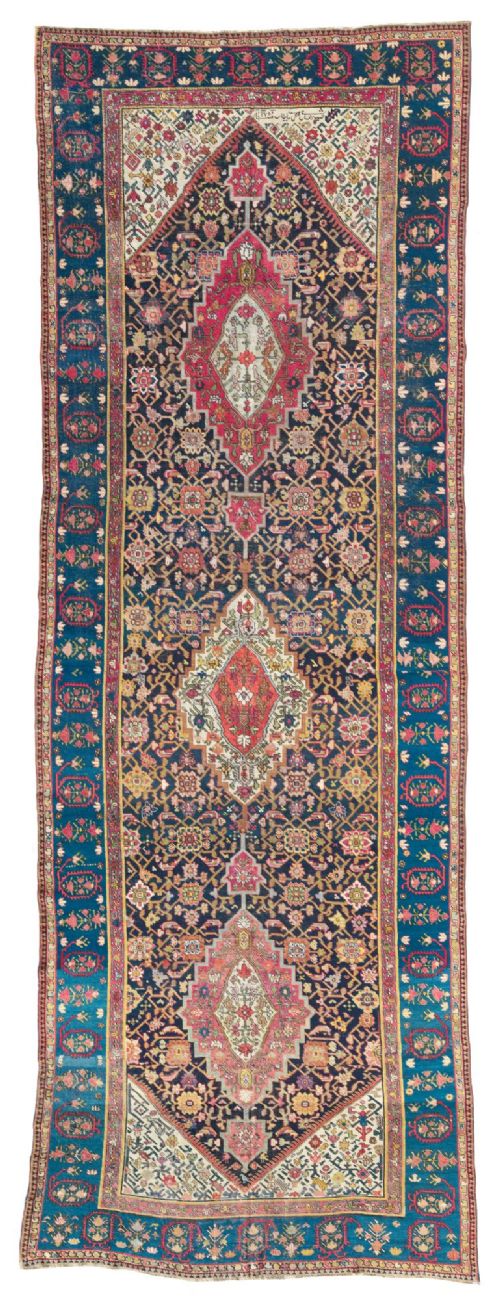
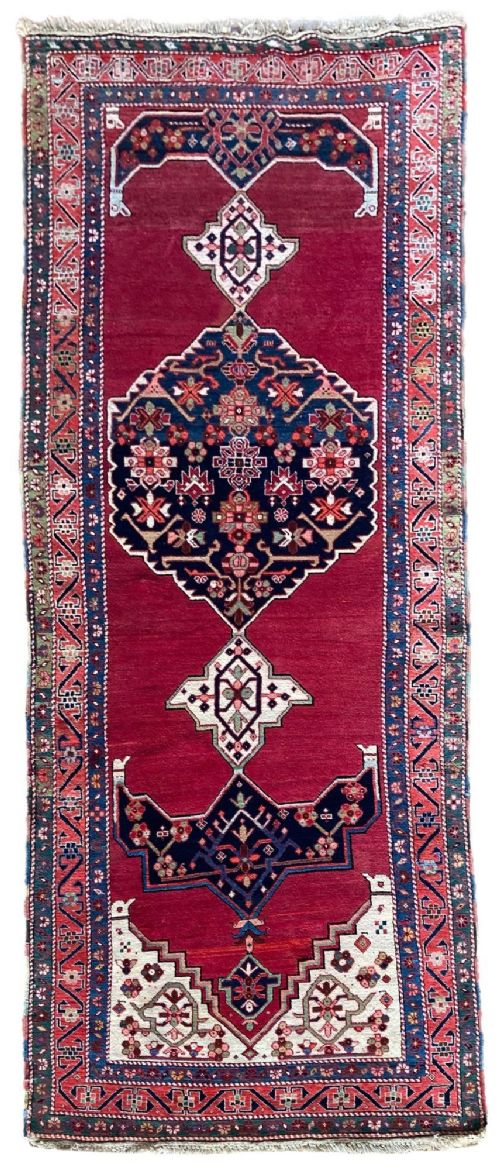
Quality in a karabagh rug runner rests upon the precision of the weave and the clarity of the design motifs. Finer examples display intricate botanical or geometric patterns, such as boteh, medallions, or cloud bands, executed with distinct colour separation.
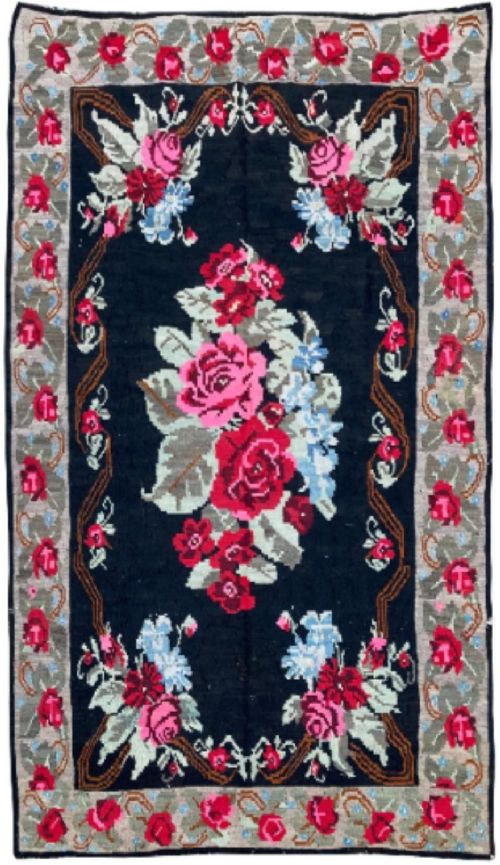
The sophistication of the design influences the standing of the piece. Karabagh weavings featuring European-inspired rose motifs, French floral influences, or unusual pictorial elements like people and animals demonstrate the versatility and high skill level of regional weavers.
Listings span several decades, ranging from eighteen-fifty to nineteen-thirty, utilising wool and cotton across Caucasian tribal styles.
The Karabagh Rug Runner Glossary
- Runner
- A long, narrow carpet format designed primarily for hallways, corridors, and stairs. These pieces provide floor coverage in linear spaces where standard rectangular rugs do not fit.
- Boteh
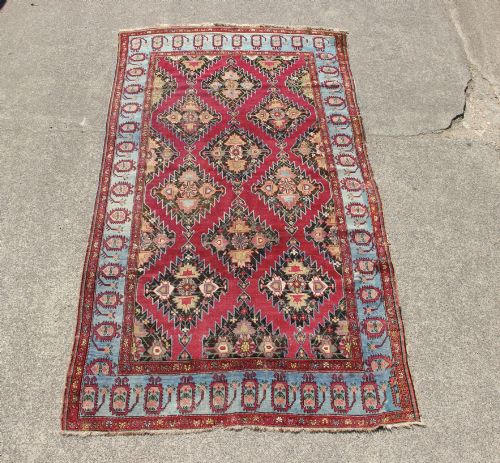
- A stylised almond or pear-shaped motif of Persian origin, frequently appearing in diagonal or striped arrangements across Caucasian weaving. This ancient symbol represents fertility and life.
- Kelleh
- A large, grand format of oriental rug, typically longer than a standard room rug but wider than a corridor runner. These substantial pieces served major reception rooms in traditional settings.
- Kilim
- A flat-woven textile produced without a pile by tightly interweaving warp and weft strands. Karabagh kilims offer a lighter, smoother texture than knotted pile carpets.
- Medallion
- A central ornamental design motif placed symmetrically in the field of a rug. Caucasian weavers often arranged single or multiple medallions down the central axis of the piece.
Karabagh Rug Runner: Frequently Asked Questions
Where should I place a runner?
A runner fits naturally in hallways, corridors, narrow entryways, and beside beds where narrow floor coverage is required. Their elongated dimensions guide movement and protect high-traffic wooden flooring.
Because these textiles were woven to withstand daily use, they handle normal domestic passage well when protected with a proper underlay to prevent slipping.
How do I identify a Karabagh piece?
Karabagh pieces share stylistic traits rooted in the Caucasus, often distinguished by specific medallion layouts, boteh motifs, or distinct French-influenced floral designs. Many pieces display rich colour palettes combined with Caucasian tribal structures.
Examining the materials in the foundation and pile helps confirm the regional origin and traditional methods of construction used by the village weavers.
What materials are used?
The listings show that traditional Karabagh runners utilise wool and cotton. Wool forms the soft pile and structural elements, providing warmth and resilience.
Cotton often appears in the foundation warp and weft threads, offering dimensional stability and strength to the elongated runner format.
How old are these runners?
The pieces seen here date from the mid-nineteenth century through the early twentieth century. Specific dates span from eighteen-fifty up to nineteen-thirty.
Runners from the late nineteenth century represent the core of the available selection, reflecting traditional village production periods in the Caucasus.