
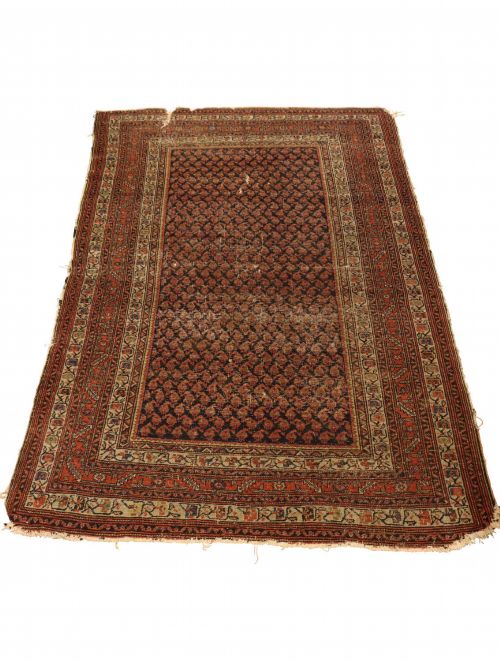


Antique Paisley Carpet
An antique paisley carpet brings intricate boteh motifs and rich textures into a room, offering deep historical character through hand-knotted wool.
Antique Paisley Carpet
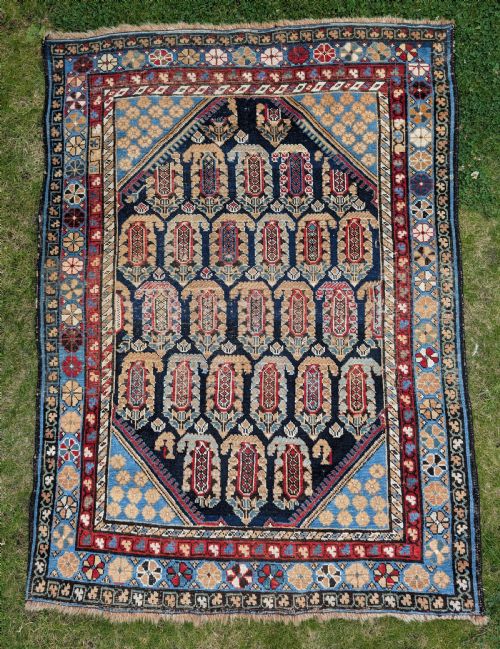
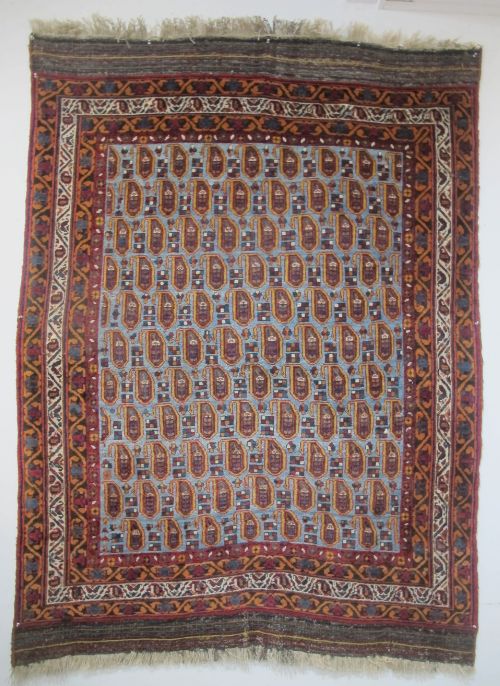
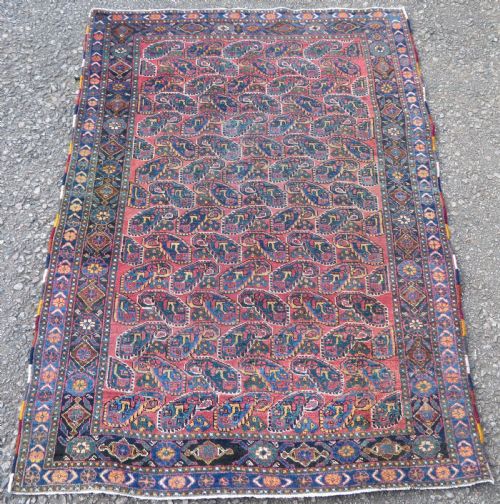
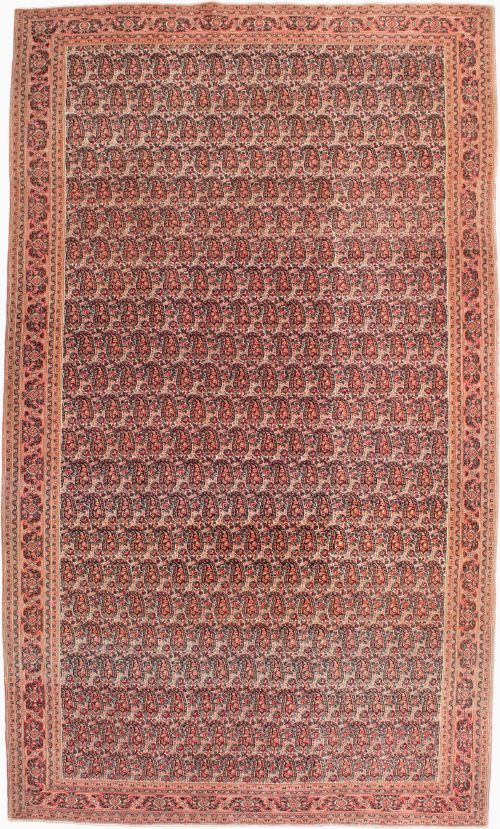
When searching for an antique paisley carpet, buyers encounter hand-knotted room-size carpets, long gallery runners, and smaller area rugs originating from Persian, Caucasian, and Turkish weaving traditions. The items on this page span the late nineteenth century to the early twentieth century, showing periods such as 1880, 1900, 1890, 1920, 1910, and 1930.
The most common design element across these textiles is the boteh motif, appearing in all-over layouts, repeat patterns, diagonal arrangements, and striped formats. Village and tribal pieces from regions like Afshar, Qashqai, Karabagh, and Hamadan sit alongside workshop carpets from Khorassan, Tabriz, and Kirman.
Formats range from square room proportions to extended runners designed for hallways and galleries. Buyers find pieces utilising traditional weaving structures created with wool, cotton, silk, and angora wool.
Materials and construction
Weavers constructed these carpets predominantly with hand-spun wool pile knotted onto cotton or wool foundations, ensuring a resilient structure that withstands decades of use. Specific regional pieces integrate fine silk or soft angora wool to achieve varied surface textures and subtle light reflections across the pile.
Natural dye stuffs provided the deep palette seen across Persian and Caucasian examples, interacting with the wool fibres to develop rich patinas over time. Hand-knotting techniques varied by origin, yielding tight, dense structures on village rugs and finer knot counts on city workshop carpets.
Listings feature rugs and carpets spanning the late nineteenth century to 1930, utilising wool, cotton, silk, and angora wool.
Evaluating craftsmanship
The standard of a woven textile depends on the density of the knotting and the precision of the design execution across the field. Finer execution allows complex boteh motifs and geometric borders to retain sharp definition.
Material selection significantly influences the tactile quality and durability of the piece, with high-grade wool and silk imparting superior resilience and depth of colour. The harmony of the dye palette and the integrity of the original wool pile determine the visual success of the carpet.
The Antique Paisley Carpet Glossary
- Boteh
- A stylised floral or almond-shaped motif representing a-seed, pine cone, or flame, frequently repeated across Persian and Caucasian carpets.
- Knot
- The individual loop of yarn tied around the warp threads by hand to form the pile of the carpet.
- Warp
- The vertical threads stretched tightly on the loom that carry the structural foundation of the woven textile.
- Weft
- The horizontal threads passed across the warp threads between rows of knots to secure the structure.
- Pile
- The upright cut or uncut loops of wool, cotton, or silk forming the soft upper surface of the rug.
Antique Paisley Carpet: Frequently Asked Questions
How do I clean an antique carpet?
Professional dusting and specialist gentle washing preserve the integrity of the natural fibres and dye compounds. Routine maintenance involves light vacuuming without a beater bar.
Avoid harsh chemical cleaning agents or excessive moisture, which weaken the cotton foundations and wool pile over years of display.
Are these carpets suitable for hallways?
Long runner formats and village carpets from the nineteenth and early twentieth centuries suit corridors and high-traffic circulation spaces. Their dense wool construction provides natural resilience underfoot.
Using a breathable underlay prevents slipping and protects the antique foundation fibres from friction against hard flooring.
What does boteh design mean?
The boteh motif is an ancient Persian symbol resembling a curved almond, palm leaf, or flame. It appears singly or repeated in rows across regional carpets.
Different weaving groups adapted this shape into geometric, floral, or striped layouts unique to their specific village or workshop traditions.
How can I tell regional styles apart?
Caucasian pieces tend to feature geometric boteh arrangements with bold contrasts, while Persian village rugs display softer village palettes and organic layouts. City workshop carpets from centres like Tabriz or Kirman exhibit finer detail and formal floral integration.
Examining the border structures, knot density, and foundation materials helps pinpoint the geographical origins of each textile.