
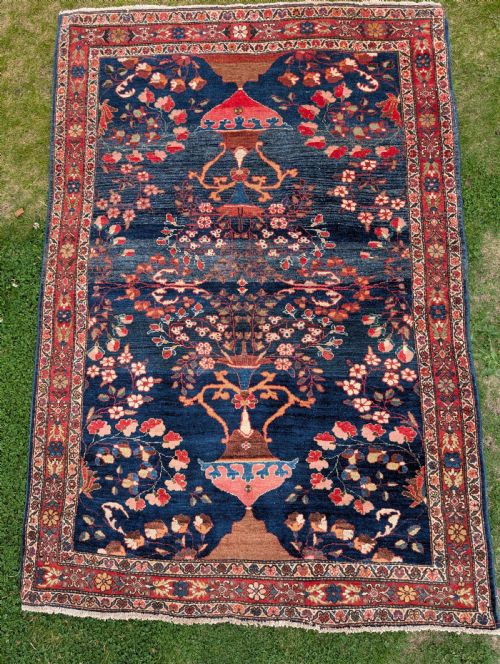
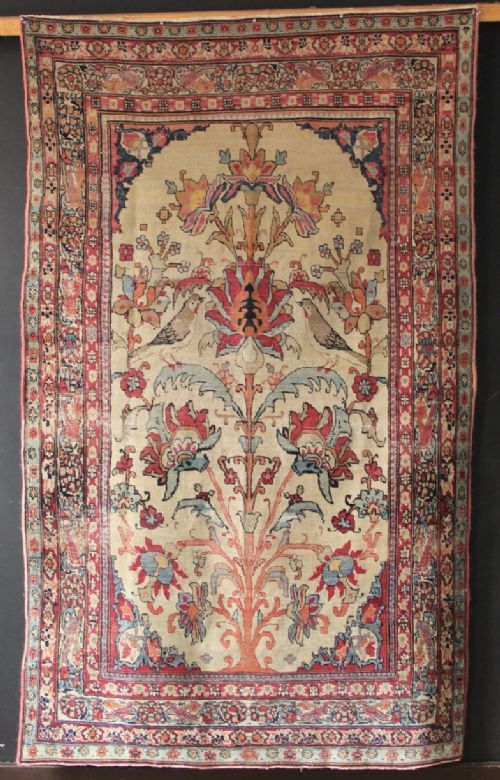
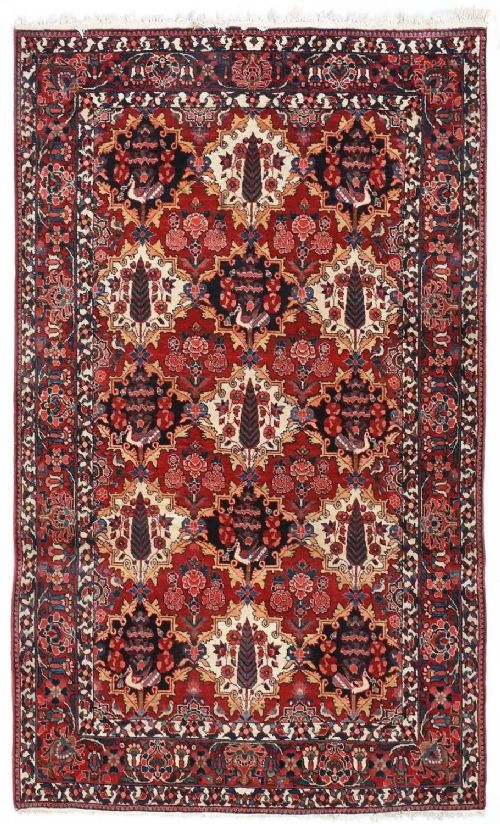
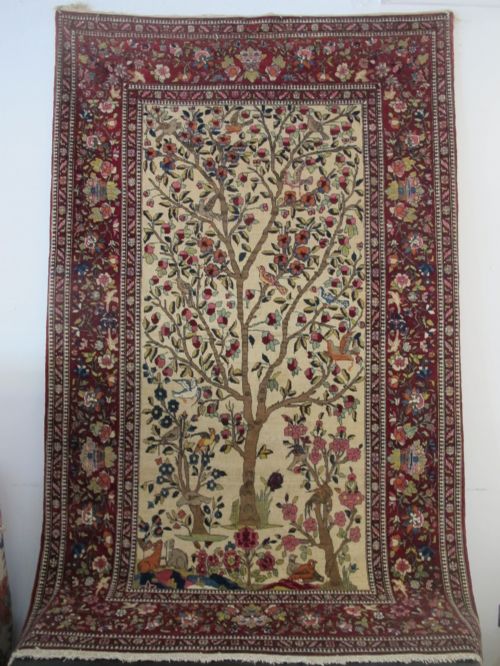


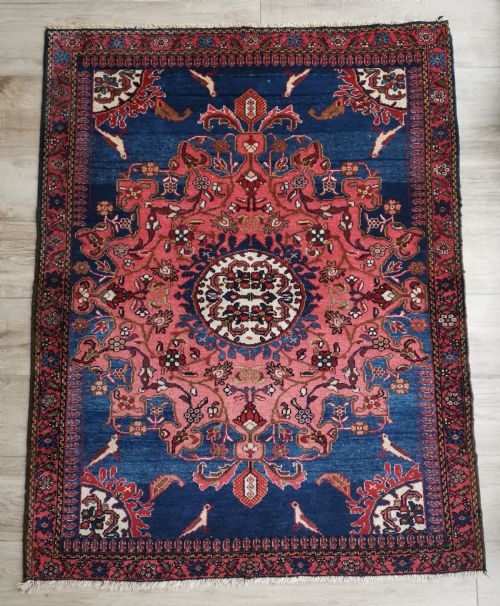

Floral Motif Area Rug
A floral motif area rug brings botanically inspired pattern and character to a room, drawing on traditions from Persia and Europe.
Floral Motif Area Rug
A floral motif area rug encompasses floor coverings featuring botanical designs, spanning regional traditions from Persian workshops to European kilims. Buyers seek these pieces to anchor a room with distinct historical pattern and texture.
The selections available here range from nineteenth-century room-size carpets to smaller scatter rugs, produced across periods including the late nineteenth century and the early twentieth century.
Origin points visible in the inventory include centres such as Kashan, Kirman, Isfahan, Ziegler production, and Bessarabia, offering various expressions of floral and vegetal ornament.
Construction and materials
These floor coverings utilise natural fibres, primarily wool pile woven onto cotton foundations, alongside occasional silk highlights and canvas backing structures. Artisans hand-knotted pile carpets or flat-wove kilims using traditional regional looms.
Dyers employed natural and early synthetic colourants to achieve the tones seen across the grounds and borders, whilst structural techniques varied from dense city knots to flat-woven tapestry structures.
Listings feature wool, cotton, silk, and canvas materials spanning the nineteenth and twentieth centuries.
Distinctions in quality
Quality depends upon the fineness of the knotting and the precision with which the botanical designs are articulated across the field. Finer execution allows for intricate rendering of floral sprays, boteh, and border details.
The integrity of the foundation materials and the evenly retained pile height across the surface determine how well a rug survives daily use while preserving its visual harmony.
Mohtasham Kashan
The Floral Motif Area Rug Glossary
- Boteh
- A stylised almond or pear-shaped floral motif originating in Persian design. It frequently appears repeating across the central field of traditional carpets.
- Kilim
- A flat-woven carpet produced without a pile, common in Bessarabian and Anatolian traditions. These pieces rely on interlocking weft threads to form geometric and floral patterns.
- Pile
- The upright yarn loops or cut ends that form the soft surface of a knotted rug. Pile density contributes to the weight and tactile feel of the textile.
- Foundation
- The structural framework of a carpet, consisting of warp threads running lengthwise and weft threads running across. Cotton and wool are standard materials for this hidden grid.
- Field
- The central background area of a rug enclosed by the outer borders. This space typically displays the primary floral motifs or medallion arrangements.
Floral Motif Area Rug: Frequently Asked Questions
How do I clean an antique rug?
Professional specialist cleaning is essential for historical textiles to prevent dye migration and fibre damage. Avoid harsh chemical treatments or domestic carpet cleaners.
Regular gentle vacuuming without a beater bar removes surface dust safely between professional washes.
Are these rugs suitable for high traffic?
Wool pile construction provides natural resilience for everyday use in living areas. Placing a suitable underlay beneath the textile prevents slipping and reduces wear.
Heavier room-size carpets tolerate general foot traffic well, whilst delicate silk examples suit quieter spaces.
How do I identify Persian regional designs?
Regional styles reveal themselves through specific palette choices, border arrangements, and floral drawing characteristics. Workshops in Kashan, Isfahan, and Kirman each developed distinct drawing styles.
Consulting structural details like knot type and edge finishing helps confirm the geographic origin of a piece.
What is the difference between a kilim and a rug?
A kilim is flat-woven without any raised pile, resulting in a lighter and thinner textile. Knotted rugs feature a cut wool or silk pile that provides a plush surface texture.
Both types incorporate floral motifs, but their production techniques and structural weights differ entirely.