


Persian Boteh Carpet
A Persian boteh carpet brings centuries of textile tradition into a room through repeated seed or almond motifs woven by hand.
Persian Boteh Carpet
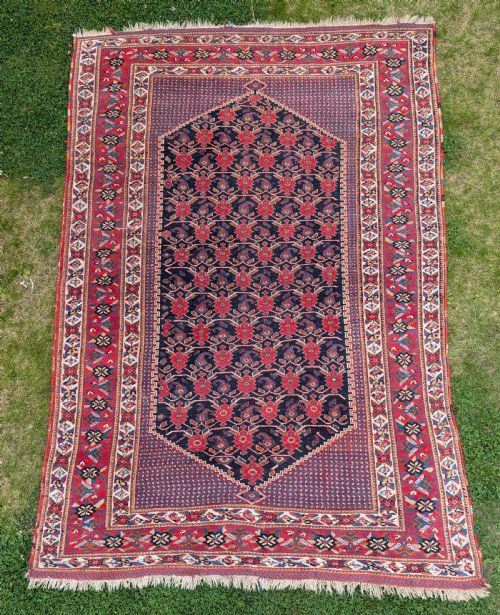
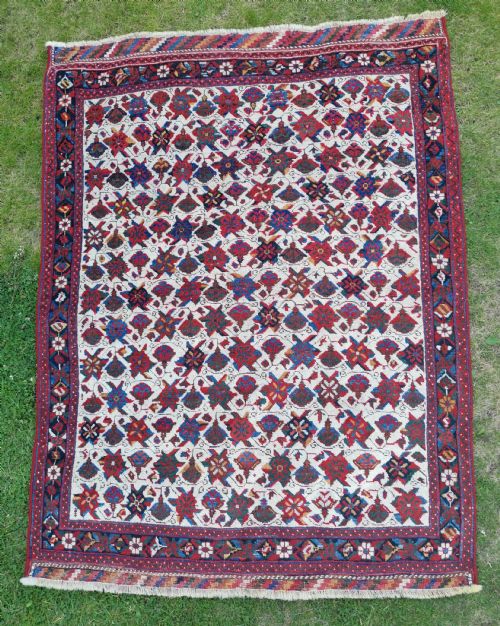
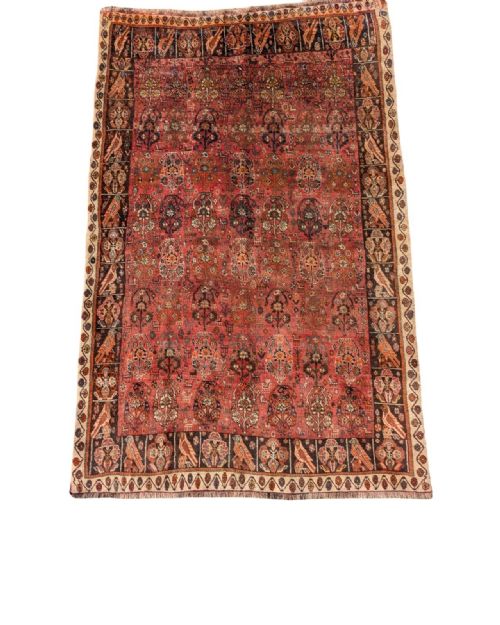
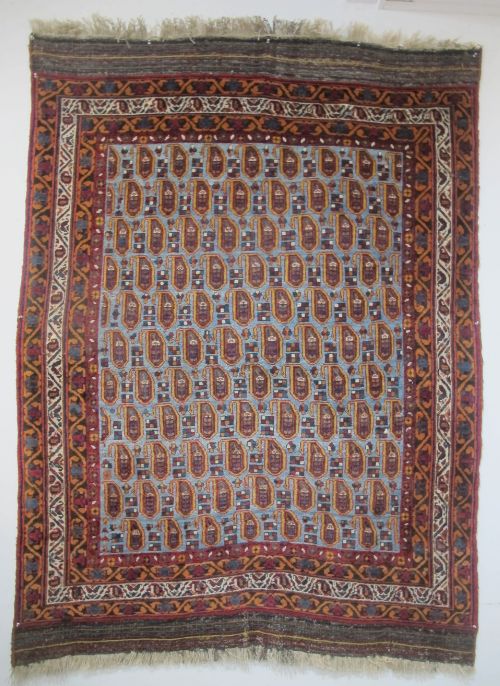
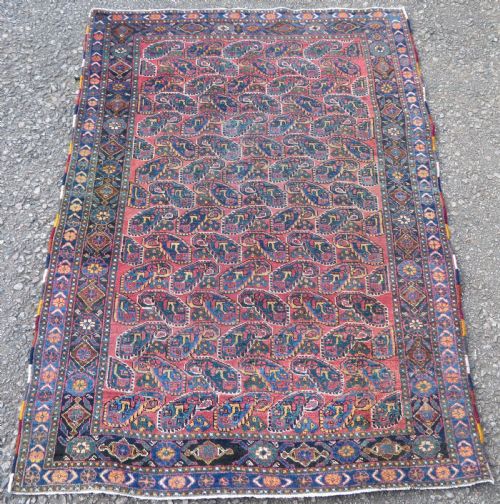
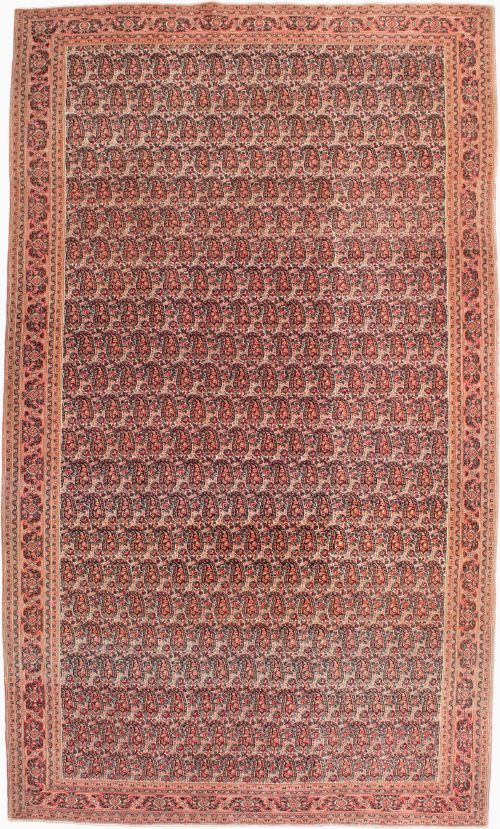
A persian boteh carpet is defined by its characteristic repeated almond-shaped motif, symbolising life and eternity across centuries of weaving. These floor coverings span various regional styles from tribal workshops to city centres, originating primarily during the nineteenth and early twentieth centuries.
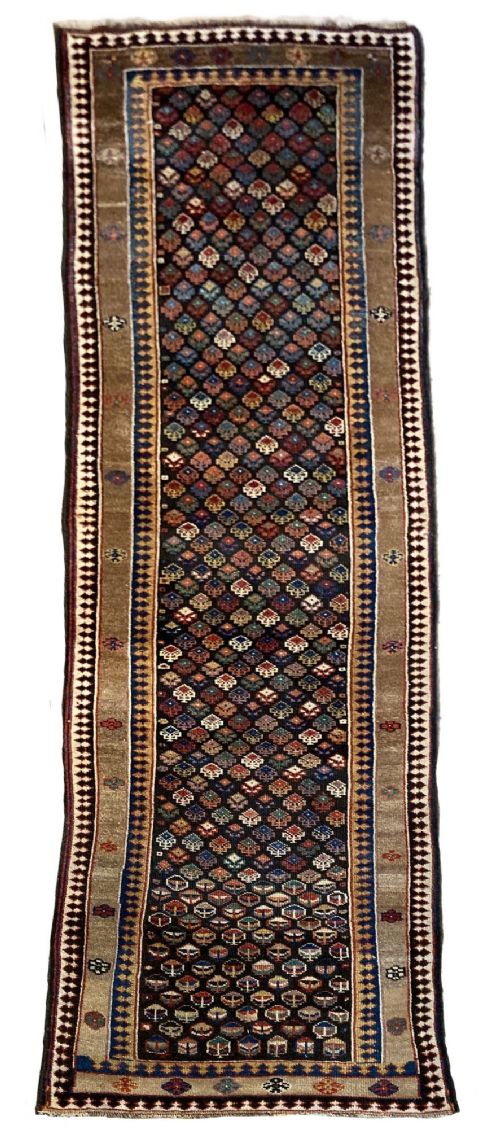
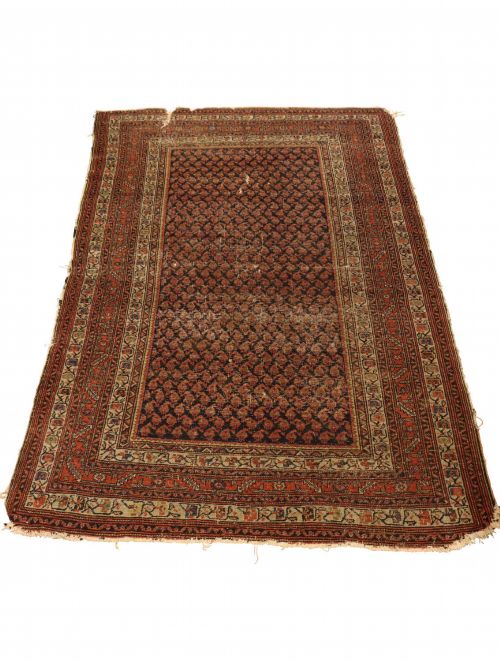
The pieces grouped under this search range from compact area rugs to long gallery runners. Makers from various traditions including Afshar, Kurdish, and Qum have utilised this enduring symbol within geometric fields or elaborate floral layouts.
Most examples found on this page date from the late nineteenth century up to the 1930s. They represent the diverse output of weavers across Persia and neighbouring Caucasian regions who employed wool, cotton, and occasionally silk foundations.
Materials and construction methods
Weavers traditionally employed hand-spun wool for the pile, dyed with natural pigments derived from plants and minerals to create rich, varied hues. Cotton was frequently utilised for the warp and weft threads to provide structural stability and crisp geometry.
The foundation relies on hand-knotting techniques executed on upright vertical looms. Each knot is tied individually by hand, securing the pile firmly to the cotton or woollen framework beneath.
Finer city pieces incorporate densely packed knots on silk or high-grade cotton foundations, allowing for intricate curvilinear drawing. Tribal counterparts feature coarser, heavier wool knots that yield a thicker handle and robust durability.
Persian Boteh Carpet Retail Price Guide 2026
Typical asking prices for persian boteh carpet among the pieces listed under this phrase on Sellingantiques today, from the lower quarter to the upper quarter. They describe what is for sale here now, not the wider market.
Wandering weavers often inserted small accidental colour changes into rows of botehs, playfully defying strict symmetry.
Factors determining quality and execution
Knot density and structural tightness dictate the longevity and definition of the woven pattern. Higher knot counts permit sharp delineation of the boteh motifs, whereas looser structures result in softer, more abstracted outlines.
The origin of the dye stuffs substantially influences the visual depth of the textile. Natural dyes mellow gracefully over decades, whereas certain early synthetic dyes exhibit abrupt fading or harsh tonal shifts.
Proportional balance and disciplined symmetry reflect the weaver's mastery of the loom. Master workshops and skilled tribal artisans achieved harmonious transitions between the central field and the surrounding borders.
The Persian Boteh Carpet Glossary
- Boteh
- A stylised floral or almond-shaped motif representing a palm leaf, bush, or seed pod. It appears singly, in rows, or arranged in elaborate all-over field patterns.
- Warp
- The stationary vertical foundation threads stretched lengthwise on the loom. Weft threads are subsequently passed horizontally between them to lock the knots in place.
- Weft
- The horizontal threads passed across the warp strands after every row of knots. They compress the pile and maintain the structural integrity of the textile.
- Pile
- The vertical or slanted ends of the knotted yarn that form the usable surface of the rug. Its height and density determine the tactile feel and visual texture.
- Seraband
- A specific West Persian weaving style renowned for producing rugs dominated by rows of small boteh motifs against a plain or patterned ground.
- Afshar
- A nomadic or settled tribal group originating in southern Persia, celebrated for geometric room-sized carpets and smaller rugs featuring bold medallions and boteh layouts.
Persian Boteh Carpet: Frequently Asked Questions
How do I clean an antique rug?
Gentle surface brushing and professional dusting by a specialist in antique textiles remains the safest approach. Avoid immersion washing or harsh chemical detergents that can strip natural lanolin from the wool.
Regular rotation prevents uneven wear from foot traffic and sunlight exposure. Prompt attention to accidental spills by blotting rather than rubbing protects the delicate natural fibres.
Are these rugs suitable for high traffic areas?
Sturdily constructed wool tribal pieces withstand moderate daily movement across hallways and living spaces quite well. The natural resilience of hand-spun wool fibres absorbs friction without breaking down easily.
Finer city carpets woven with delicate silk or exceptionally high knot counts benefit from placement in quieter rooms. Using a quality underlay prevents slipping and cushions the foundation against hard flooring.
What does boteh mean?
The boteh represents an ancient Persian motif resembling a bent shrub, cypress tree, or flowering almond. It serves as one of the most widespread decorative symbols in oriental textile history.
Different weaving regions render this shape either geometrically with straight edges or curved with elaborate floral sprays. Its presence links diverse tribal and urban traditions across centuries of craftsmanship.
How can I distinguish tribal from city rugs?
Tribal rugs typically display bolder geometric patterns, saturated primary colours, and thicker wool handles woven on smaller village looms. Their designs rely on memory and traditional tribal motifs rather than precise paper cartoons.
City carpets feature intricate curvilinear floral arrangements, finer knot densities, and sophisticated medallion layouts. Workshops in centres like Qum, Isfahan, or Kirman maintained strict standards for symmetrical draftsmanship.