




Paisley Motif Carpet
A paisley motif carpet brings the intricate woven heritage of Persian and Caucasian workshops directly to your floor.
Paisley Motif Carpet
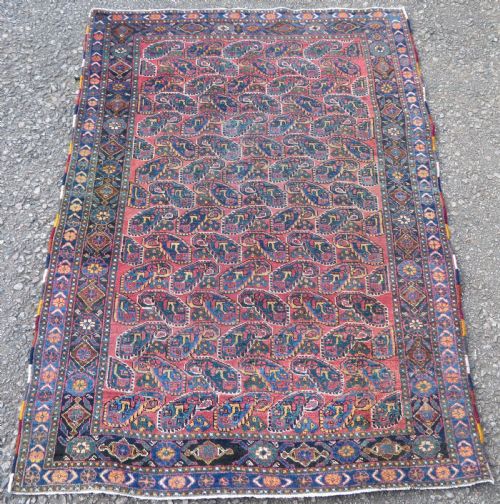
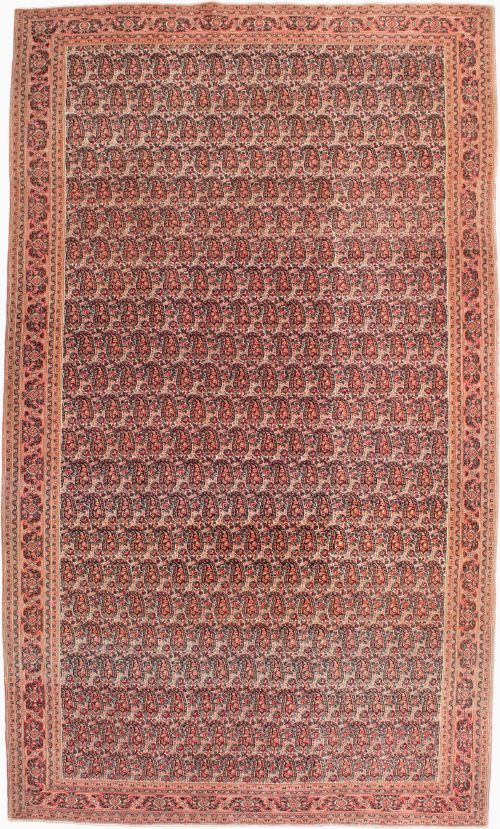
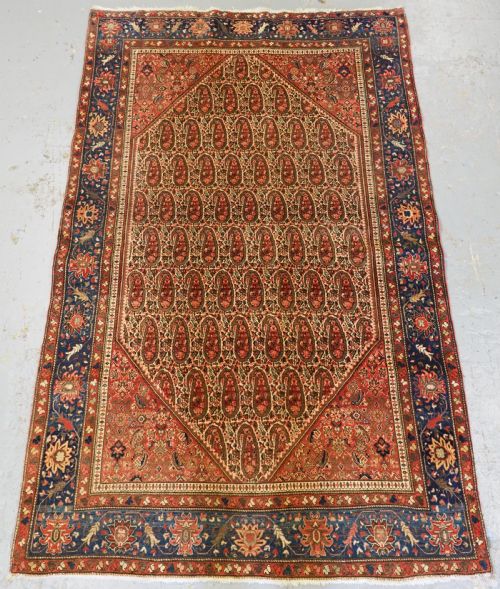
A paisley motif carpet displays the iconic curved almond-shaped boteh design that has defined oriental weaving for generations. When you search for a paisley motif carpet, you encounter traditional room-sized carpets, long runners, and smaller area rugs originating from Persia and the Caucasus. These woven pieces date from the nineteenth and early twentieth centuries, spanning periods such as 1880, 1890, 1900, 1910, and 1920.
The regional variations include examples attributed to specific weaving traditions like Afshar, Serapi, Kirman, Sultanabad, Sarouk, Shirvan, Kurdish, and Malayer. Certain pieces present all-over boteh arrangements across the field, while others incorporate repeated floral variations or specialised depictions such as mother and child boteh motifs. Tribal and village workshops produced these floor coverings to withstand practical daily use while retaining intricate cultural symbolism.
Most pieces you meet on this page utilise wool as the primary pile material, often combined with cotton foundations for structural stability. The formats range widely from compact square proportions to expansive gallery runners exceeding four metres in length. Examining these carpets reveals how diverse regional weavers interpreted the same fundamental botanical motif through distinct regional colour palettes and knotting densities.
Factors of Quality
The refinement of the drawing and the complexity of the boteh design dictate much of the visual success in these textiles. Master weavers in urban workshops achieved crisp, highly detailed outlines, whereas village and tribal pieces often display charmingly quirky, abstracted interpretations of the same motif. The precision of the knotting density further separates standard domestic output from exceptional workshop commissions.
Material selection and dye execution play crucial roles in how a carpet ages and holds its visual appeal. Finer pieces demonstrate skilful use of diverse colour palettes, maintaining harmonious transitions across the field even as soft patination occurs through age. The structural integrity of the wool pile and the suppleness of the foundation determine how well the textile rests upon the floor.
Listings feature wool and cotton across pieces dated from the nineteenth century up to 1920, representing Persian and Caucasian traditions.
The Paisley Motif Carpet Glossary
- Boteh
- The curved, almond-shaped floral motif resembling a pinecone or palm leaf that dominates these carpets. This ancient Persian symbol represents life and eternity.
- Runner
- A long, narrow carpet format specifically designed for hallways, corridors, or alongside large furniture. These pieces measure significantly longer than they are wide.
- Kelleh
- A large format runner or intermediate room-sized carpet produced primarily by tribal and village weavers. They offer an elongated rectangular proportion suited to specific architectural spaces.
- Foundation
- The underlying grid of warp and weft threads that supports the knotted wool pile. Cotton and wool are the predominant materials used for this structural base.
- Patination
- The natural softening of colours and wear of the pile accumulated over decades of existence. This gradual ageing process enhances the visual depth of historical textiles.
Paisley Motif Carpet: Frequently Asked Questions
What is a paisley motif carpet?
A paisley motif carpet is an antique woven floor covering featuring the traditional boteh design, originating from Persian and Caucasian weaving centres during the nineteenth and early twentieth centuries.
These textiles range from intimate village rugs to expansive gallery carpets, each displaying distinct regional interpretations of the curved almond-shaped pattern.
Where were these carpets made?
These carpets were produced across various regions of Persia and the Caucasus by diverse tribal groups, village communities, and urban workshops. Specific production areas include Afshar, Serapi, Kirman, Sultanabad, Sarouk, Shirvan, and Malayer.
Each weaving culture imparted unique characteristics to their carpets through distinct colour choices, structural proportions, and drawing styles.
How do I style a runner?
Runners are traditionally utilised in narrow architectural spaces such as hallways, entryways, or along the sides of large bedroom furniture. Their elongated proportions draw the eye through a space while adding warmth and texture to bare floors.
When placing a antique runner, ensure it has appropriate underlay to protect the wool pile and prevent slipping on hard surfaces.
How do I care for antique wool?
Caring for antique wool carpets involves regular gentle vacuuming without rotary brush heads to remove grit from the pile without damaging the fibres. Professional cleaning should be undertaken periodically by specialists familiar with historical textiles and natural dyes.
Keep these pieces out of direct, prolonged sunlight to prevent uneven fading of the natural wool colours over time.