
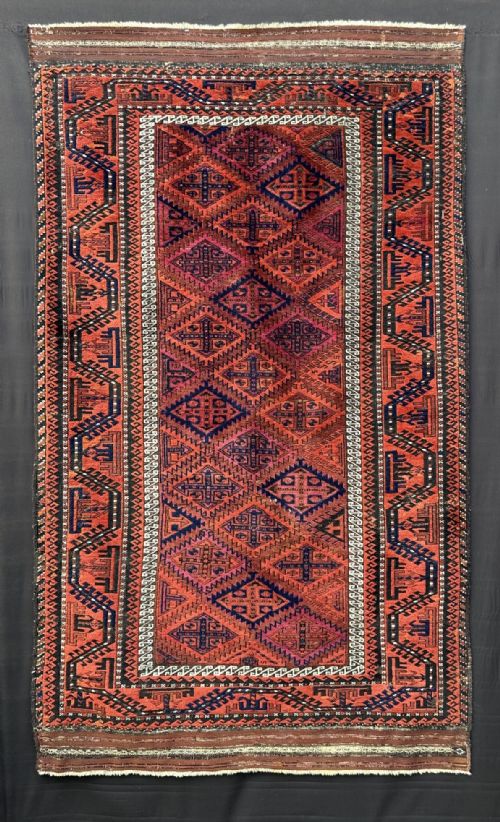
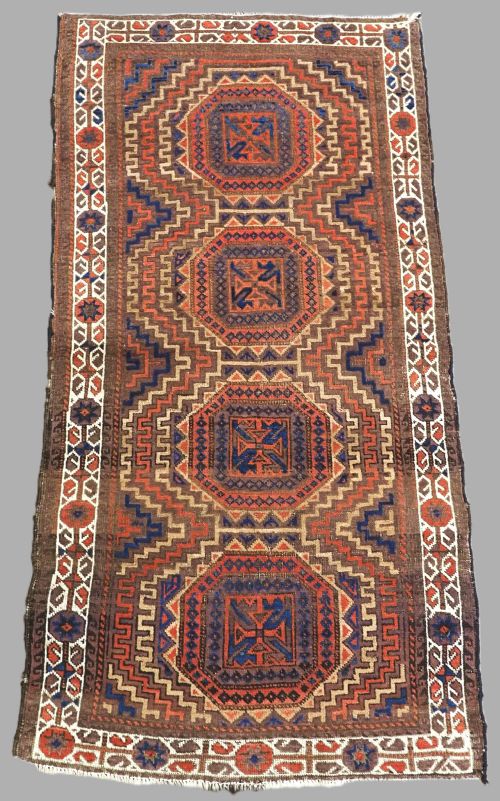
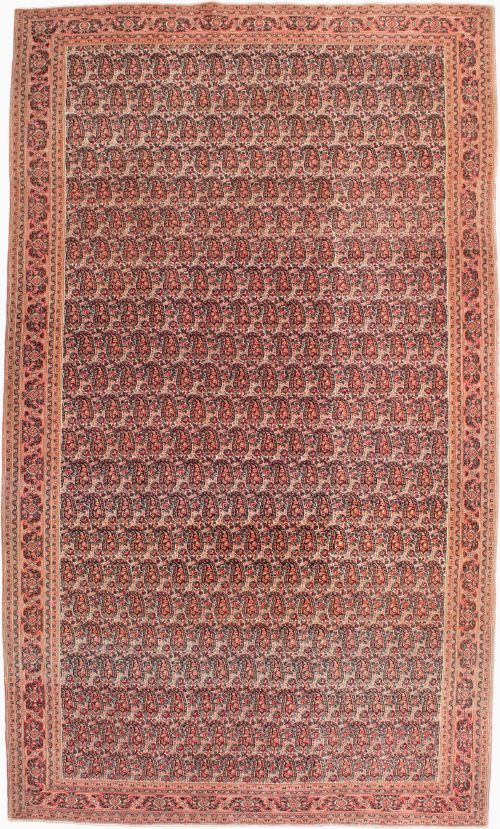


Khorasan Oriental Rug
A khorasan oriental rug brings dense tribal character into a room, offering rich wool piles and geometric patterns woven across northeast Persia.
Khorasan Oriental Rug
When you search for a khorasan oriental rug, you encounter hand-knotted tribal carpets originating from northeast Persia during the nineteenth and early twentieth centuries. These floor coverings bridge nomadic weaving traditions and settled town workshops, reflecting distinct regional aesthetics.
The pieces you meet on this page include room-sized carpets alongside smaller area rugs and runner formats. Tribal sub-groups such as the Baluch, Kurdish weavers of Quchan, and specific regional artisans dominate the available forms.
Designs range from large guls and Mina Khani variants to expressive Salar Khani patterns. The typical palette draws upon deep natural tones, incorporating camel wool and durable cotton foundations.
Materials and construction methods
Weavers construct these carpets using wool pile knotted tightly onto sturdy cotton or wool warp and weft foundations. Certain rustic examples utilise undyed camel wool, which imparts a distinct tactile softness and natural colour variation across the surface.
The production relies on traditional vertical looms situated within nomadic camps and provincial villages of the Khorasan region. Knot density and wool quality vary according to whether the piece stems from a settled workshop or a tribal encampment.
Some nineteenth-century tribal weavers incorporated irregular camel wool tufts that stubbornly resisted commercial dye pots, leaving charming golden patches.
Assessing quality in regional carpets
Quality separates along the precision of the weave and the integrity of the materials employed by the weaver. Finer examples display meticulous knotting that preserves intricate geometric motifs without distortion.
The handle of the wool and the depth of the pile dictate the tactile richness of the carpet. Preserved foundation integrity and uniform wear across the surface indicate superior longevity in older specimens.
The Khorasan Oriental Rug Glossary
- Gul
- A repeating medallion or octagonal motif frequently found in tribal and nomadic weaving traditions. It serves as an identifying crest for specific clans.
- Mina Khani
- A recurring lattice pattern composed of connected floral motifs and rosettes. This classical design appears frequently across Persian provincial carpets.
- Warp
- The longitudinal threads stretched vertically on the loom before knotting begins. These foundation threads form the structural fringe at each end of the rug.
- Weft
- The horizontal threads passed alternately through the warp threads to secure the rows of knots. They tighten the structure of the woven textile.
- Pile
- The upright yarn surface formed by the cut ends of knots. Pile height influences both the softness underfoot and the visual clarity of the pattern.
Khorasan Oriental Rug: Frequently Asked Questions
How do I date a khorasan oriental rug?
Dating relies upon stylistic markers, structural analysis, and material wear patterns observed across nineteenth and early twentieth-century examples. Natural dye palettes and specific tribal attributions help narrow the period.
Comparison with documented pieces from eras such as the 1880s or 1900s provides a reliable chronological anchor for unlabelled specimens.
Where were these rugs made?
These textiles originate from the Khorasan province in northeast Persia, encompassing towns and tribal territories such as Quchan. Weavers from Kurdish and Baluch communities produced much of this regional output.
Production spanned both settled workshops creating oversize carpets and nomadic camps weaving smaller tribal rugs.
What is camel wool used for?
Camel wool provides an undyed, naturally resilient fibre utilised in rustic tribal carpets for its warmth and distinct golden-brown hue. It brings a softer handle and unique texture to the weave.
Its presence often signals a more utilitarian or nomadic tribal origin within the Khorasan tradition.
How do I style a tribal carpet?
Place these rugs on wooden floors to ground contemporary or traditional interiors with rich geometric patterns and deep natural tones. Their varied sizes suit hallways, living spaces, and studies.
Allow the architectural details of the room to complement the earthy palette of the wool pile without competing motifs.