






Hand Knotted Qum Rug
A hand knotted qum rug brings exquisite central Persian artistry and rich traditional pattern directly to your floor.
Hand Knotted Qum Rug
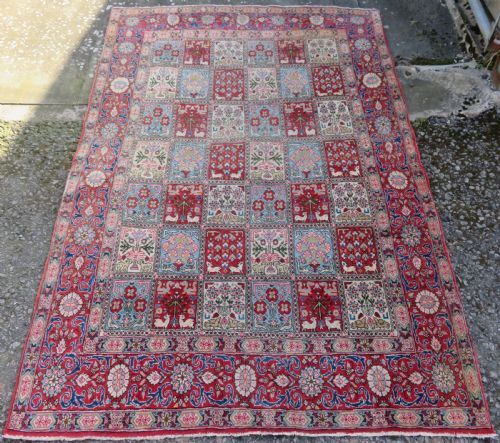
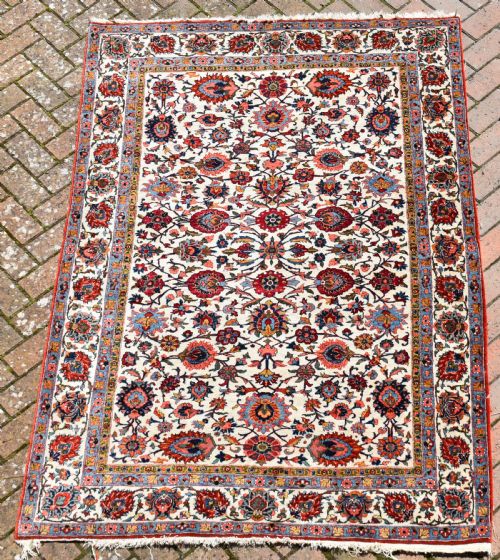
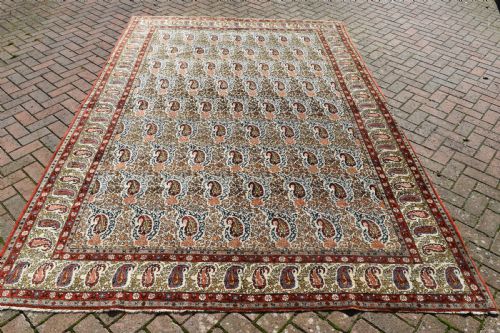
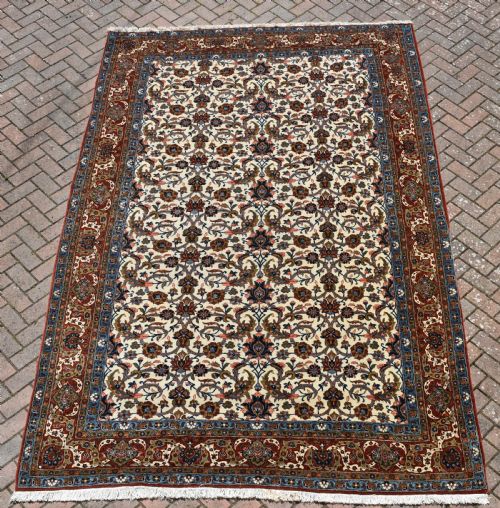
When you search for a hand knotted qum rug, you look at fine floor coverings originating from central Persia. The examples on this page span several decades from the early twentieth century, specifically covering the nineteen tens through to the nineteen forties.
You will encounter pieces ranging in scale from smaller scatter rugs measuring around two metres to large roomsize carpets exceeding four metres in length. Many items display traditional Persian tile patterns woven with precision and care.
The dominant forms listed are rugs and carpets, designed to anchor a room with sophisticated design and historic depth. These floor coverings reflect the established weaving heritage of the Qum region.
Materials and construction
The makers utilised durable cotton for foundations alongside fine wool and lustrous silk for the pile. These natural materials provide both structural integrity and a soft texture underfoot.
Skilled artisans tied each knot by hand to build dense, enduring surfaces and intricate geometric or tile patterns. This intensive labour creates resilient textiles that retain their form and visual impact over generations.
Listings feature cotton foundations paired with wool and silk pile across multiple decades from the early twentieth century.
Assessing quality in weaving
The distinction between standard examples and the finest pieces rests on knot density and material selection. Higher quality works often incorporate abundant silk to achieve a brilliant sheen and sharper detail in the motifs.
Condition and scale also define the hierarchy, with larger roomsize carpets requiring monumental effort and precise planning from the weavers. The crispness of the tile pattern and the harmony of the palette elevate a rug above ordinary production.
The Hand Knotted Qum Rug Glossary
- Qum
- A city in central Persia renowned for producing high quality knotted rugs and carpets. It stands as a major centre for traditional weaving.
- Pile
- The vertical or slanted yarn that forms the textured surface of a rug. It is created by knotting wool or silk onto the warp and weft threads.
- Warp
- The stationary longitudinal threads stretched on a loom before weaving begins. The pile knots are tied around these foundational elements.
- Weft
- The horizontal threads passed across the warp to hold the knots in place. Together with the warp, it forms the stable backing of the textile.
- Tile pattern
- A geometric layout featuring repeating compartment or garden motifs resembling ceramic tiles. This design is frequently seen in central Persian weaving.
Hand Knotted Qum Rug: Frequently Asked Questions
How do I clean an antique rug?
Gentle surface vacuuming without a beater bar removes loose dust effectively. Professional specialist cleaning remains essential for deep maintenance to protect fragile silk and wool fibres.
Avoid harsh chemical detergents or soaking the textile at home. Proper moisture management preserves the natural dyes and structural integrity of the weave.
Are these rugs suitable for high traffic areas?
Dense wool constructions handle moderate daily footfall well in living spaces or studies. Regular rotation ensures even wear patterns across the surface over time.
Delicate silk examples deserve more protected placement in low traffic rooms. Using a quality underlay prevents slipping and cushions the fibres against hard floors.
How can I tell the age of a piece?
The structure, dye palette, and material wear offer strong clues to the period of origin. Listings frequently date pieces to specific decades from the early twentieth century based on these stylistic traits.
Comparing knot style and design motifs with established Persian traditions helps verify the era. Expert examination of the foundation threads confirms whether a rug belongs to the nineteen tens, twenties, thirties, or forties.
What is the difference between a rug and a carpet?
Carpets generally refer to larger floor coverings designed to fill a significant portion of a room. Rugs often denote smaller formats used as accents or focal points in specific zones.
Both terms describe hand knotted Persian textiles sharing similar materials and techniques. The distinction rests entirely on dimensions rather than the quality of craftsmanship.