






Persian Qum Carpet
A persian qum carpet brings intricate central Persian artistry into a room, offering dense knotting and refined decorative schemes.
Persian Qum Carpet
A persian qum carpet is a woven textile originating from the city of Qum in central Persia, known for precise craftsmanship. When exploring this selection, buyers encounter formats ranging from smaller area rugs to large roomsize carpets.
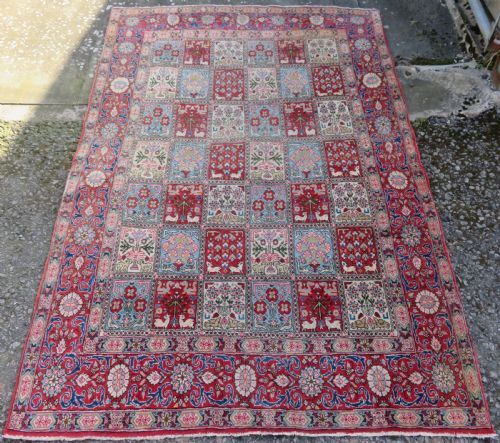
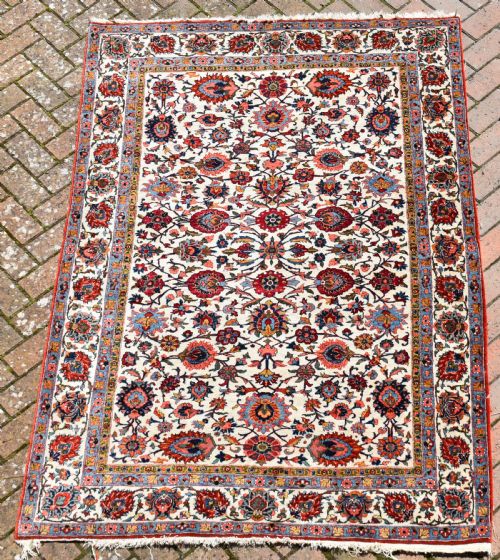
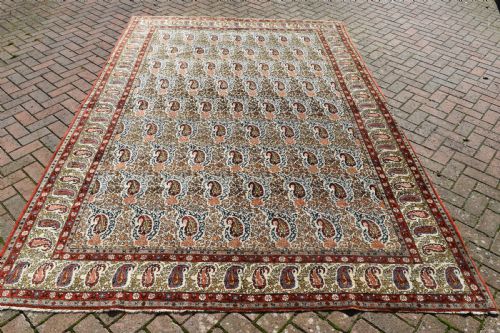
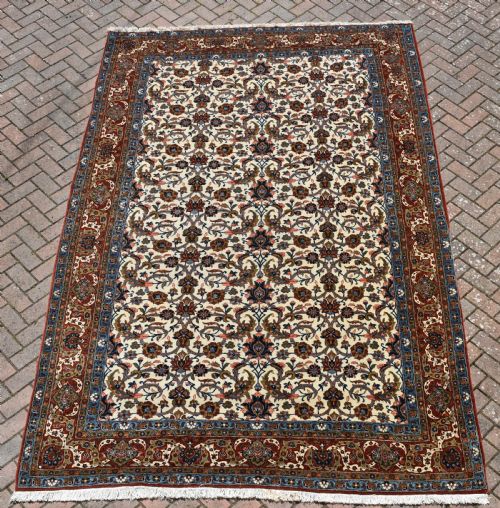
The pieces appearing here date across several decades from the early twentieth century, specifically from the 1910s through to the 1940s. Traditional Persian designs dominate these items, including all-over boteh motifs and structured tile patterns.
Materials and construction
These carpets and rugs utilise natural textile fibres, with cotton and wool featuring prominently alongside fine silk in select examples. The combination of these materials allows for both structural durability and detailed pictorial clarity.
Weavers in central Persia employed traditional knotting techniques to achieve the intricate patterns seen in tile designs and boteh motifs. The precision of the weave determines the definition of the central medallion and border geometry.
Listings for this phrase include items constructed from cotton, wool, and silk, originating across four decades from 1910 to 1940.
Judging quality in weaving
The primary distinction in quality lies in the density of the knotting and the fineness of the materials selected by the weaver. Silk elements and exceptionally tight wool foundations elevate the sophistication of the piece.
Execution of design also dictates the standard of the work, where crisp geometric transitions in tile patterns and balanced proportions define superior examples. Older specimens from the early decades of the twentieth century show varying degrees of preservation in the pile.
The Persian Qum Carpet Glossary
- Boteh
- A stylised almond or pear-shaped motif representing a floral shoot or cypress tree. This ancient Persian design appears frequently across field patterns.
- Pile
- The vertical or diagonal loops of yarn that form the usable surface of the carpet. The height and density of this layer affect both texture and durability.
- Foundation
- The underlying structure of warp and weft threads that support the knotted pile. Cotton and wool serve as the standard base materials in these weaves.
- Medallion
- A large central ornamental design set into the middle of the carpet field. It acts as the focal point for traditional Persian composition.
Persian Qum Carpet: Frequently Asked Questions
How do I date a persian qum carpet?
Dating relies on recorded production periods, stylistic indicators, and material analysis within the evidence. Pieces seen here span from the 1910s to the 1940s.
Comparison of weave structure and design motifs against known timelines helps establish the approximate decade of manufacture.
Where were these carpets made?
These textiles originate from Qum, a major city located in central Persia. The region has a distinct heritage of producing finely knotted floor coverings.
Workshops in this area draw upon traditional Persian design repertoires, including tile patterns and boteh layouts.
What materials are used in Qum carpets?
The listings show a combination of cotton, wool, and silk. Cotton and wool provide the structural foundation and durable pile for standard roomsize carpets.
Silk is utilised in specific antique rugs to achieve finer detail and a lustrous surface finish.
How do I care for an antique rug?
Preservation involves gentle cleaning methods suitable for natural fibres like wool, cotton, and silk. Professional textile cleaning prevents damage to the foundation and pile.
Placing the rug in low-traffic areas or using appropriate underlays protects the antique structure from excessive wear.