




Persian Garden Rug
A persian garden rug brings structured botanical geometry and centuries of weaving tradition straight to the floor.
Persian Garden Rug
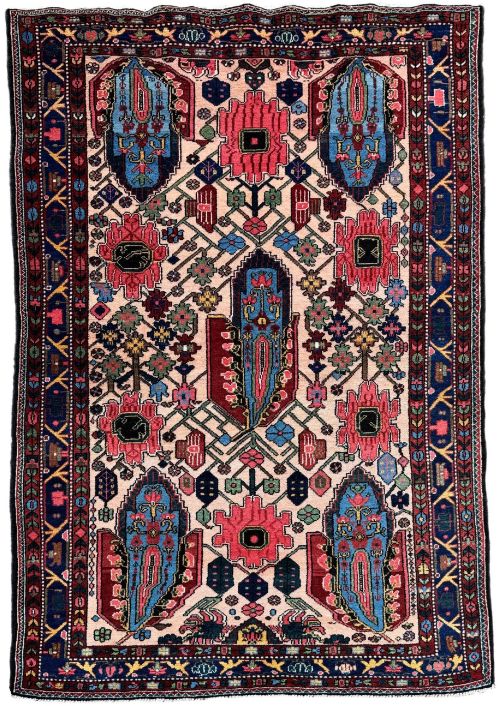
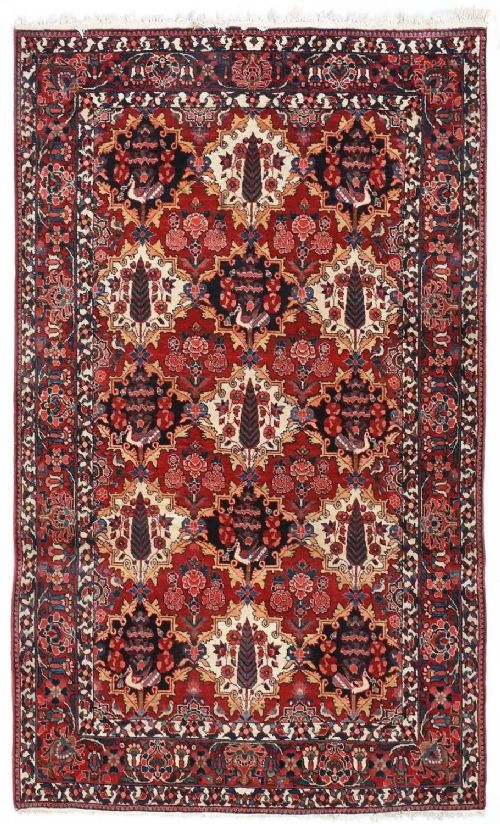
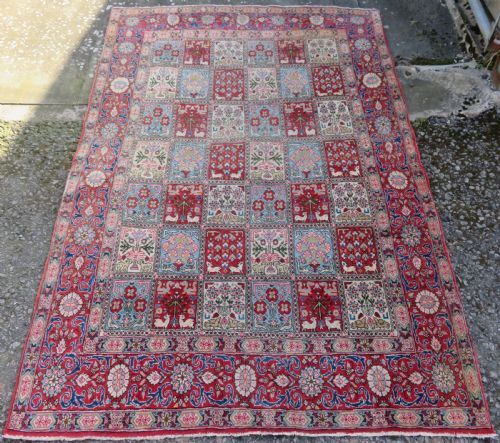
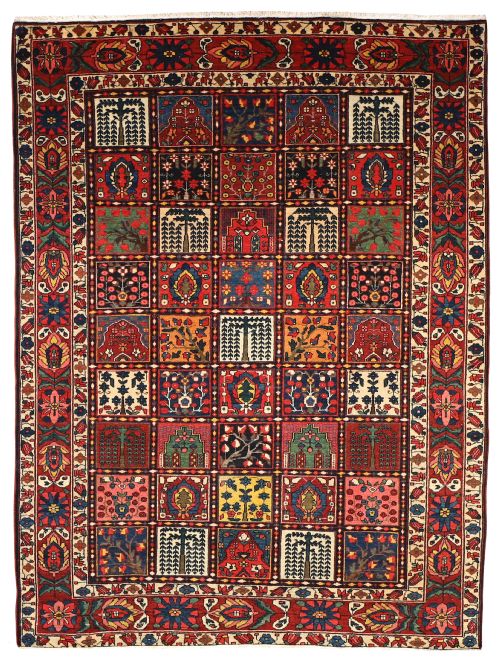
A persian garden rug divides the field into compartmentalised tiles, flowerbeds, or panels mirroring classical walled garden layouts. The examples handled here span from the nineteenth century through to the mid twentieth century, featuring both room size carpets and smaller area rugs.
Buyers seeking a persian garden rug most frequently encounter pieces attributed to the Bakhtiari tradition, alongside Turkish Kula carpets utilising similar design schemes. These textiles present structured floral motifs, cypress trees, and occasionally birds or animals arranged within a geometric grid.
Originating primarily from Persian weaving centres, these floor coverings utilise traditional formats such as repeating tile layouts or central medallion compositions. The surviving examples demonstrate enduring regional preferences for compartmentalised botanical ornament.
Materials and construction
Construction relies upon wool pile knotted onto cotton foundations, a combination providing structural stability and resilience for daily use. Natural dyes supply the characteristic colour palette found across these historical carpets and textiles.
Weavers employed hand knotted techniques to secure the wool pile, creating dense surfaces capable of holding intricate botanical geometry. Block printed and painted textiles also appear within this group, offering alternative decorative methods from the nineteenth century.
The listings on this page span from the mid nineteenth century to 1940, incorporating wool, cotton, and natural dyes across various regional Persian and Turkish traditions.
Judging quality and character
Quality rests upon the crispness of the compartmentalised layout and the depth of the natural dyes utilised in the wool pile. Finer knotting allows intricate floral and tile patterns to maintain sharp definition across the field.
The sophistication of the palette and the preservation of the pile determine the distinction between standard examples and exceptional survivals. Regional variations in wool quality and dye saturation further influence the visual impact of each piece.
The Persian Garden Rug Glossary
- Bakhtiari
- A regional style of Persian weaving renowned for structured garden tile patterns and robust wool construction. These carpets often divide the field into distinct rectangular compartments filled with floral motifs.
- Natural Dyes
- Organic colorants derived from plants and minerals used to colour the wool before weaving. They produce nuanced shades that mature gracefully over decades of light exposure.
- Pile
- The upright yarn loop surface of the rug formed by individual knots tied to the foundation. Pile density dictates both the tactile feel and the visual clarity of the woven design.
- Foundation
- The underlying grid of warp and weft threads that supports the knotted wool pile. Cotton is commonly utilised for this structural framework in Persian carpet production.
Persian Garden Rug: Frequently Asked Questions
How do I date a persian garden rug?
Dating relies upon structural analysis, including the materials of the foundation, the maturity of the natural dyes, and stylistic conventions associated with specific periods.
Examining the knotting technique and regional motifs helps place an example within the nineteenth or early twentieth century timeframe seen across these listings.
Are these rugs suitable for high traffic areas?
Wool pile constructed on cotton foundations provides durability suited for normal household placement when given appropriate care. Placing a quality underlay beneath the carpet reduces friction and distributes foot pressure evenly.
Rotating the rug periodically ensures even wear patterns develop across the entire surface over years of use.
What does a tile pattern signify?
The tile pattern represents a formal Persian paradise garden divided by water channels into distinct symmetrical quadrants or compartments. Each compartment typically depicts flowers, cypress trees, or shrubs symbolising natural abundance.
This geometric division distinguishes garden carpets from standard medallion or all over floral field designs.
How should I clean my rug?
Routine maintenance requires gentle vacuuming without the beater bar engaged to prevent snagging the wool pile. Professional cleaning by specialists in antique textiles is necessary when deep washing becomes required.
Harsh chemical detergents and excessive moisture must be avoided to protect the natural dyes and historical foundation fibres.