




Antique Bakhtiari Carpet
An antique bakhtiari carpet brings the bold geometric layouts and rich vegetal dyes of western Persian weaving straight into a room.
Antique Bakhtiari Carpet
An antique bakhtiari carpet is a floor covering originating from the Chahar Mahal region of western Persia, created by village and tribal weavers. These textiles appear primarily in formats ranging from smaller mats and village rugs to larger room-size carpets and long runners.
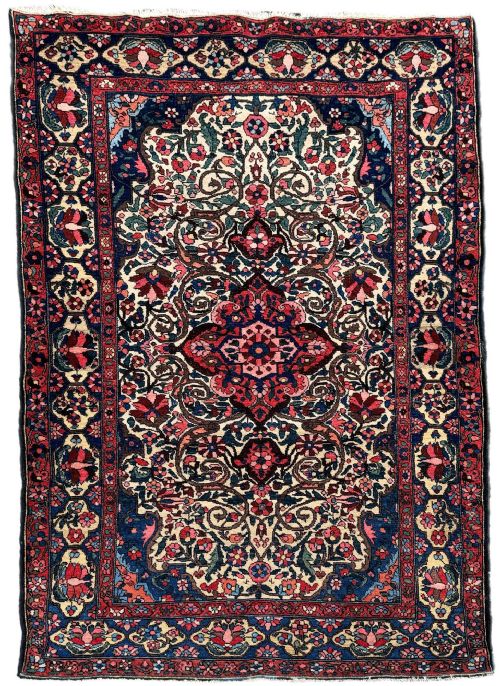
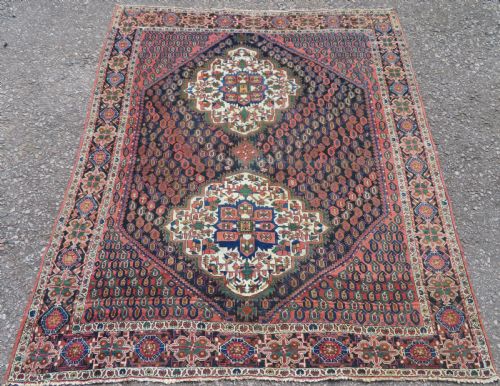
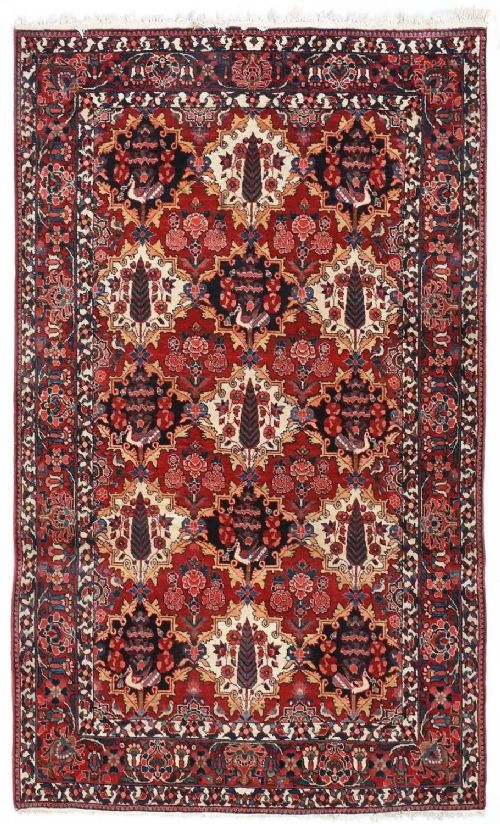
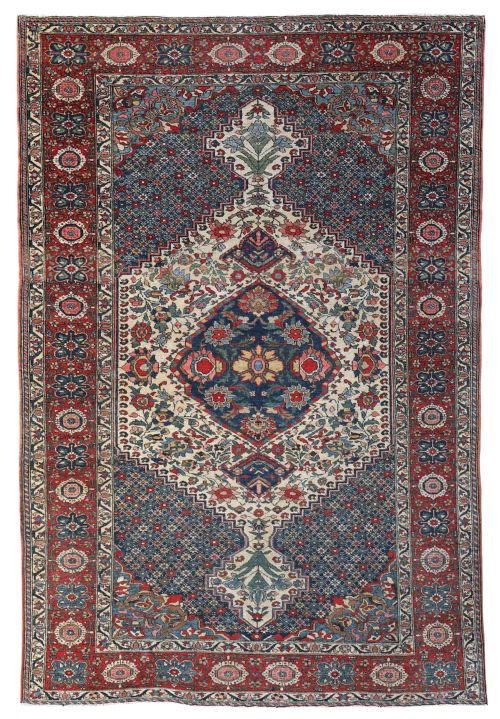
The most common examples encountered on this page date from the late nineteenth century through to the early decades of the twentieth century. Weavers in this region utilised distinct formats, including medallion layouts and garden designs divided into compartments.
How They Were Made
Makers constructed these floor coverings using a wool pile set upon cotton foundations, yielding a heavy and robust fabric suited to domestic use. Artisans dyed the yarns using natural materials, achieving deep shades that hold their saturation over decades of wear.
Weavers knotted the wool by hand in village workshops and tribal settlements across western Persia, occasionally incorporating influences from Kurdish groups in the region.
Listings feature examples dated across the nineteenth and early twentieth centuries, spanning from eighteen-eighty to nineteen-thirty.
What Varies in Quality
The density of the knotting and the crispness of the drawn motif dictate the fineness of the weaving, separating simpler village pieces from more ambitious room-size examples. Greater precision in the execution of geometric medallions and floral fields marks out superior production.
The depth and variety of natural dyes also determine visual success, as complex palettes with well-matched secondary shades provide greater harmony across the surface of the carpet.
The Antique Bakhtiari Carpet Glossary
- Kelleh
- A long, narrow format of Persian carpet, typically longer than a standard rug but wider than a runner. This shape suits narrow hallways and long gallery spaces.
- Chahar Mahal
- The high-altitude valley region in western Persia where bakhtiari weaving traditions developed. Local villagers produced sturdy wool textiles here for generations.
- Garden design
- A carpet layout divided into geometric compartments or panels representing traditional enclosed gardens. Each individual square contains floral or vegetal motifs.
- Natural dyes
- Colourants derived from plants, roots, and minerals rather than synthetic compounds. These traditional substances produce the nuanced, shifting tones seen in older Persian textiles.
Antique Bakhtiari Carpet: Frequently Asked Questions
Where were antique bakhtiari carpets made?
These carpets originated in the Chahar Mahal valley region of western Persia, produced by village and tribal weavers.
Local communities utilised local wool and natural dyes to create durable floor coverings with distinct regional character.
How do I care for an antique wool rug?
Vacuum the rug gently without using a rotating brush bar to protect the wool pile from unnecessary friction.
Keep the piece out of direct sunlight to prevent natural dye fading and rotate it periodically for even wear.
How do I date an older Persian rug?
Dating relies on assessing the palette of natural dyes, the style of the drawing, and the structural materials.
Pieces from the nineteenth century often show softer wool handling and distinct regional wool characteristics compared to later twentieth-century examples.