






Antique Qum Rug
An antique qum rug brings finely knotted Persian artistry into a room, offering intricate floral designs and remarkable durability.
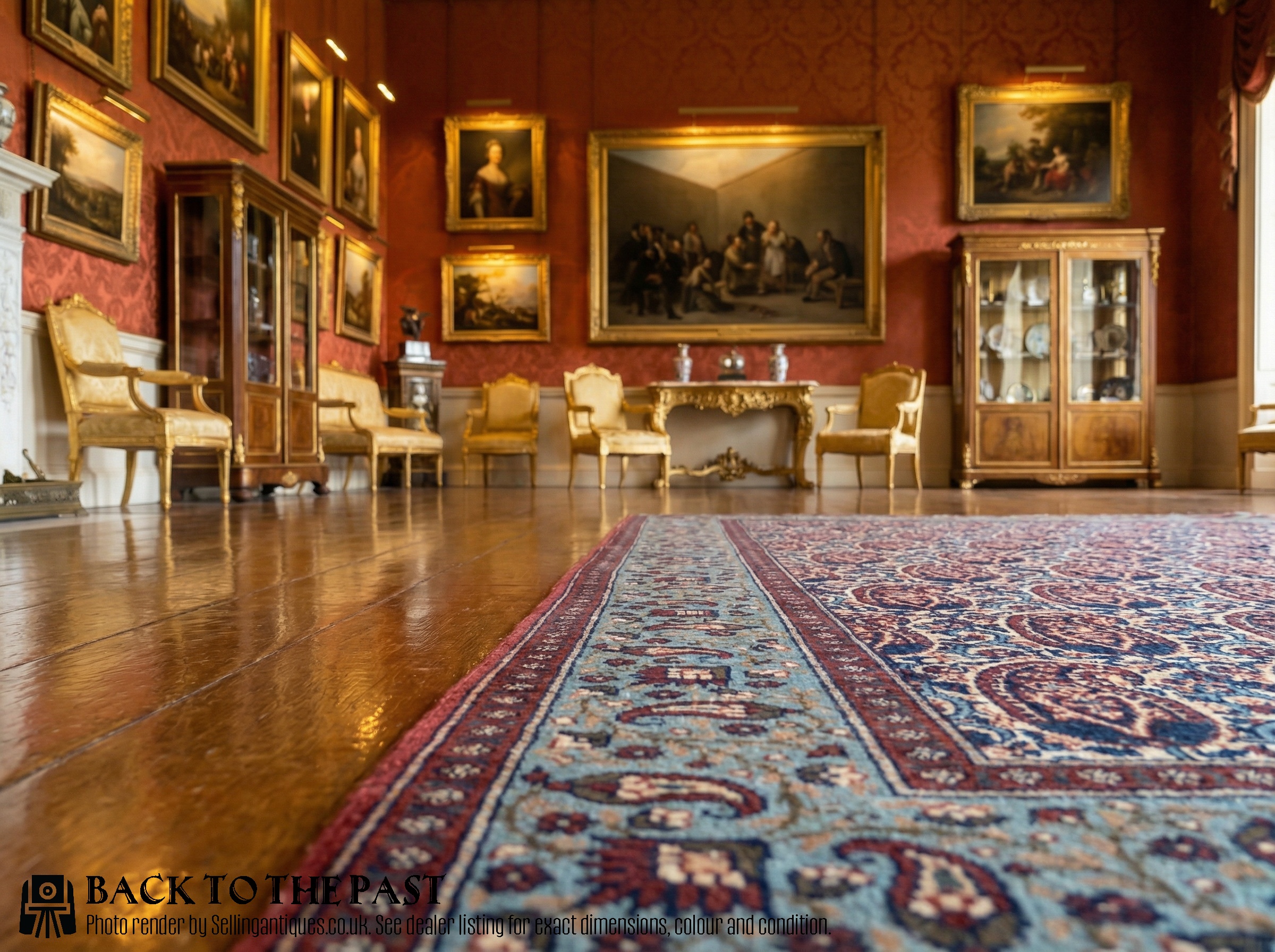
Antique Qum Rug
An antique qum rug is a hand-knotted floor covering originating from the city of Qum in central Persia. These pieces date across several decades in the early twentieth century, spanning from nineteen-ten up to nineteen-forty.
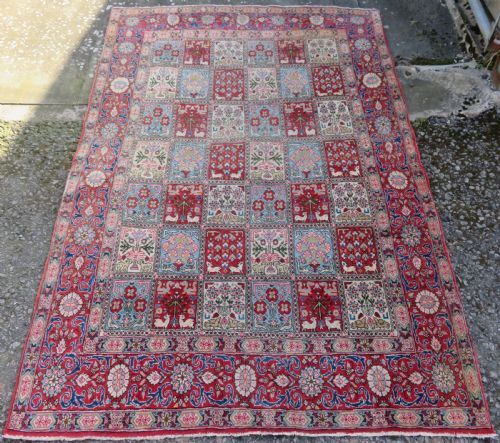
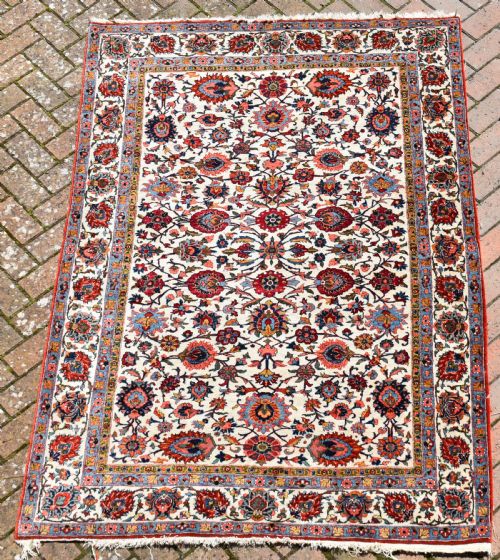
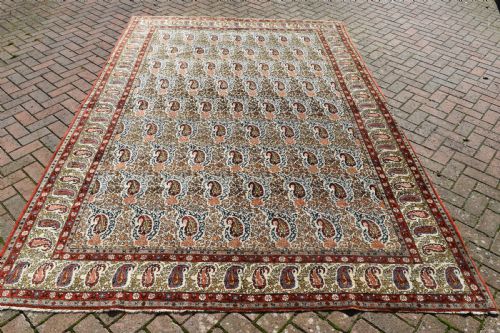
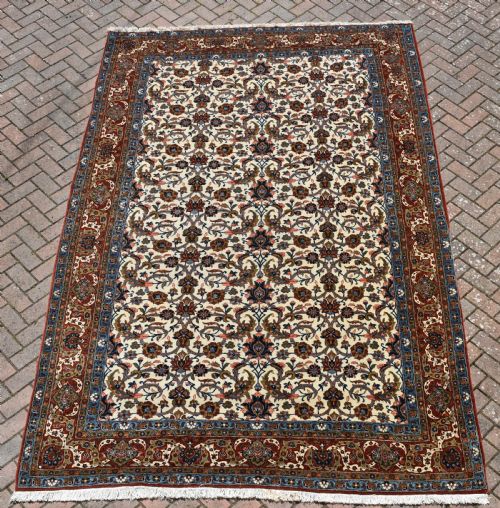
Buyers encounter formats ranging from smaller area carpets to room-size pieces, often displaying traditional Persian tile patterns or all-over floral designs. The work represents a specific regional weaving tradition known for precise detail.
Most examples found here fall into the rug and carpet category, providing structured central Persian ornamentation. The scale varies from intimate dimensions to large room-size floor coverings.
How they were made
Weavers constructed these carpets using cotton foundations alongside wool and silk pile materials. Silk appears in finer examples, creating a reflective surface and enabling higher knot densities.
The technique relies on traditional hand-knotting methods executed in central Persia. Artisans built up complex pictorial and geometric layouts knot by knot on vertical looms.
Antique Qum Rug Retail Price Guide 2026
Typical asking prices for qum rug among the pieces listed under this phrase on Sellingantiques today, from the lower quarter to the upper quarter. They describe what is for sale here now, not the wider market.
What varies in quality
Quality depends upon the choice of pile material and the density of the knotting. Silk construction and finer wool execution command greater attention for their visual depth and handling.
Design clarity and the sophistication of the floral or tile patterns dictate the standard of execution. The balance of the composition reveals the weaver's skill within the traditional Persian idiom.
The Antique Qum Rug Glossary
- Qum
- A city in central Persia renowned for producing high-knot-density rugs and carpets. Weaving here developed significantly during the twentieth century.
- Pile
- The upright yarn loops forming the usable surface of a carpet. This layer consists of wool, silk, or a combination of both materials.
- Tile pattern
- A geometric layout dividing the field into repeating compartment motifs. This design structure draws directly on traditional Persian architectural and decorative arts.
- Foundation
- The structural support system of a rug, comprising warp and weft threads. Cotton serves as the standard foundation material for these Persian carpets.
Antique Qum Rug: Frequently Asked Questions
Where were these rugs made?
These pieces originated in the city of Qum, located in central Persia. The region developed a distinct reputation for sophisticated hand-knotted carpet production.
Weavers there utilised traditional techniques and materials such as silk and wool to create detailed floral and tile motifs.
What materials are used?
The listings show carpets constructed from cotton, wool, and silk. Cotton forms the stable structural foundation for the pieces.
Wool and silk provide the soft pile on the surface, with silk often appearing in finer examples to enhance the visual detail.
How do I date them?
Dating relies on recorded production periods spanning from nineteen-ten to nineteen-forty. Stylistic traits and structural evidence help place individual pieces within this timeframe.
Comparing the materials and regional design characteristics assists in establishing the approximate decade of manufacture.
What sizes are available?
The selection includes smaller area formats alongside large room-size carpets. Dimensions range from compact rugs up to substantial room-sized floor coverings.
Buyers can find formats suited to various spatial requirements, from intimate settings to large reception rooms.