
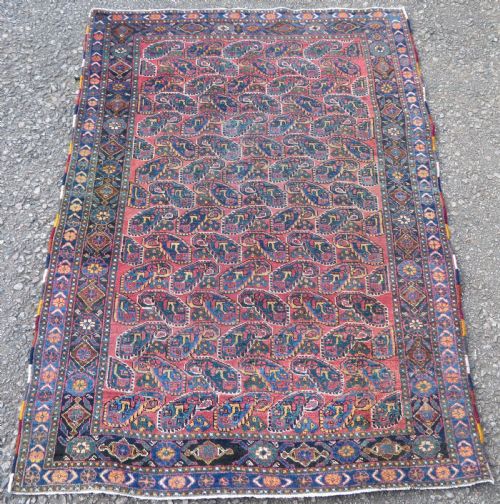
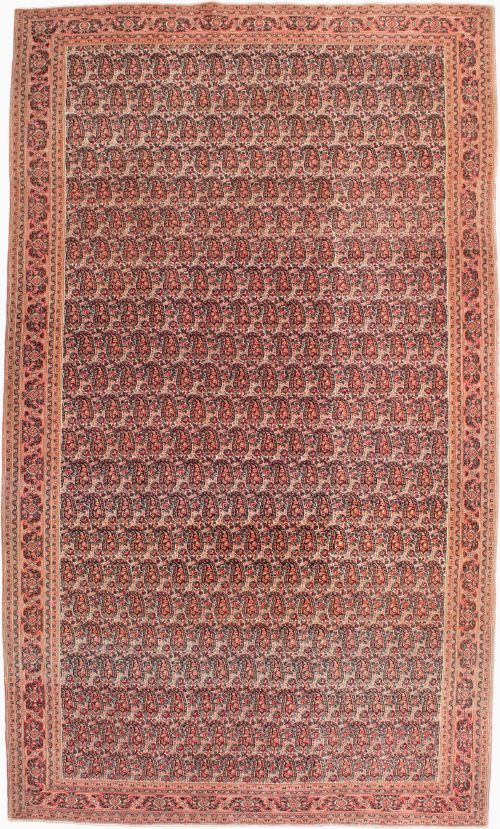


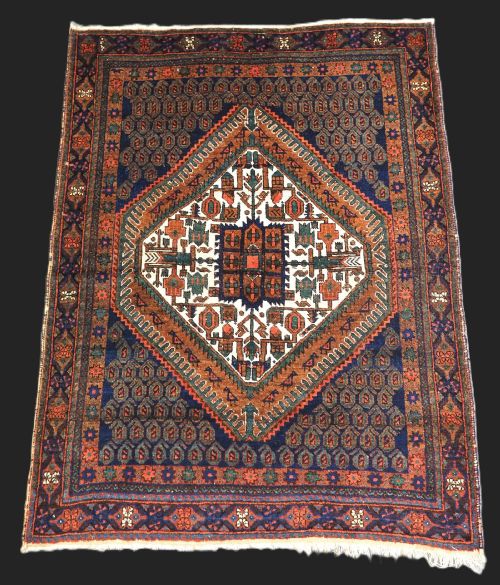


Persian Boteh Motif Rug
A persian boteh motif rug brings centuries of woven symbolism into a room through the enduring tear-drop motif.
Persian Boteh Motif Rug
A persian boteh motif rug centres on the ancient curved pine-cone or almond-shaped symbol, which represents fertility, life and eternity across centuries of weaving. These floor coverings and small tribal weavings arrive from various provinces and workshops spanning the nineteenth and early twentieth centuries.
The buyer encounters everything from small vanity bags and saddle bag faces to room-sized gallery carpets and long runners. Regional variations emerge clearly across the selection, ranging from the geometric tribal expressions of Afshar and Kurdish weavers to the finer urban output of cities like Kirman and Qum.
Materials and Construction
These textiles rely on hand-spun wool for the pile, chosen for its lanolin content and resilience under foot, whilst cotton serves as the foundation warp and weft for structural stability. Weavers tied symmetric or asymmetric knots by hand across these natural foundations, building dense piles designed to endure daily household use.
Dyers utilised natural organic substances to achieve rich palettes, embedding deep indigos, madder reds and soft ivory grounds that mellow gracefully over decades. The interplay of wool and natural dye creates the characteristic depth and shifting tone unique to older woven pieces.
Persian Boteh Motif Rug Retail Price Guide 2026
Typical asking prices for persian boteh motif rug among the pieces listed under this phrase on Sellingantiques today, from the lower quarter to the upper quarter. They describe what is for sale here now, not the wider market.
The inventory encompasses diverse formats, ranging from small saddle bag faces and tribal vanity bags to expansive gallery carpets and long runners.
Judging Quality and Execution
Knot density and structural precision dictate the refinement of a piece, separating village tribal pieces with rustic charm from finely detailed urban workshop carpets. Tighter knotting allows for sharper delineation of the boteh pattern and complex surrounding floral borders.
The harmony and saturation of the palette determine visual success, where skillfully dyed wool retains vitality without harsh synthetic undertones. Consistency in the hand-spun yarn and uniform tension across the foundation indicate disciplined workshop or village production.
The Persian Boteh Motif Rug Glossary
- Boteh
- The iconic curved floral or almond-shaped motif seen throughout these Persian and Caucasian textiles. It remains one of the oldest decorative symbols in oriental carpet weaving.
- Kelleh
- A large format runner or narrow carpet traditionally woven for specific room dimensions in Persian households. These pieces offer an elongated format distinct from standard rectangular room carpets.
- Warp
- The longitudinal threads stretched vertically on the loom before knotting begins. Cotton serves as the standard warp material in the majority of these nineteenth and early twentieth-century examples.
- Weft
- The horizontal threads passed alternately through the warp threads to lock the rows of knots in place. Proper beating of the weft ensures the structural integrity of the finished rug.
- Pile
- The upright yarn surface formed by individual knots clipped to a uniform height. The quality and preparation of this wool dictate how the textile handles wear over time.
Persian Boteh Motif Rug: Frequently Asked Questions
How do I care for a vintage rug?
Vacuum gently without a rotating brush roll to protect the wool pile from unnecessary friction and fibre loss. Rotate the piece periodically to ensure even exposure to foot traffic and natural light.
Professional specialist cleaning remains essential every few years to remove embedded grit safely without damaging the foundation fibres or natural dyes.
Where were these rugs woven?
Production spans numerous distinct regions across Persia, including southern tribal territories occupied by Afshar and Kurdish groups, alongside urban centres like Kirman, Isfahan and Qum. Certain pieces also reflect neighbouring Caucasian weaving traditions influenced by similar aesthetic motifs.
Each weaving region developed characteristic colour palettes, wool qualities and structural traits that distinguish village work from city output.
Are these pieces suitable for hallways?
Long runners and gallery formats provide durable flooring solutions for corridors, landings and high-traffic transitional spaces within a home. The dense wool pile naturally resists crushing while offering underfoot comfort.
Placing an appropriate slip-resistant underlay beneath the textile prevents shifting and protects the cotton foundation from premature wear against hard flooring.
How can I tell the age of a rug?
Examination of the materials, natural dye palette and structural construction reveals clues regarding the period of manufacture. Nineteenth-century examples often display subtle variations in tone and hand-spun irregularities absent in later machine-spun counterparts.
Edge finishes, end borders and the overall patina of the wool pile further indicate the passage of time and historical use.