







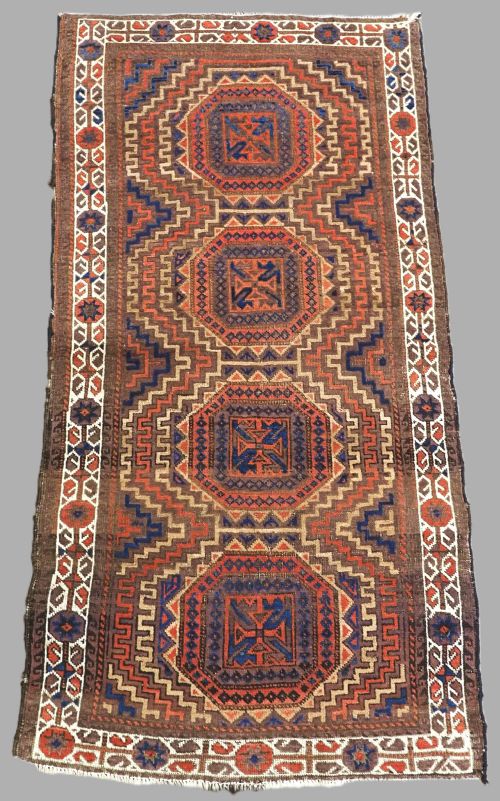
Persian Wool Runner Rug
These persian wool runner rug examples bring lasting texture and traditional pattern to long hallways and narrow spaces.
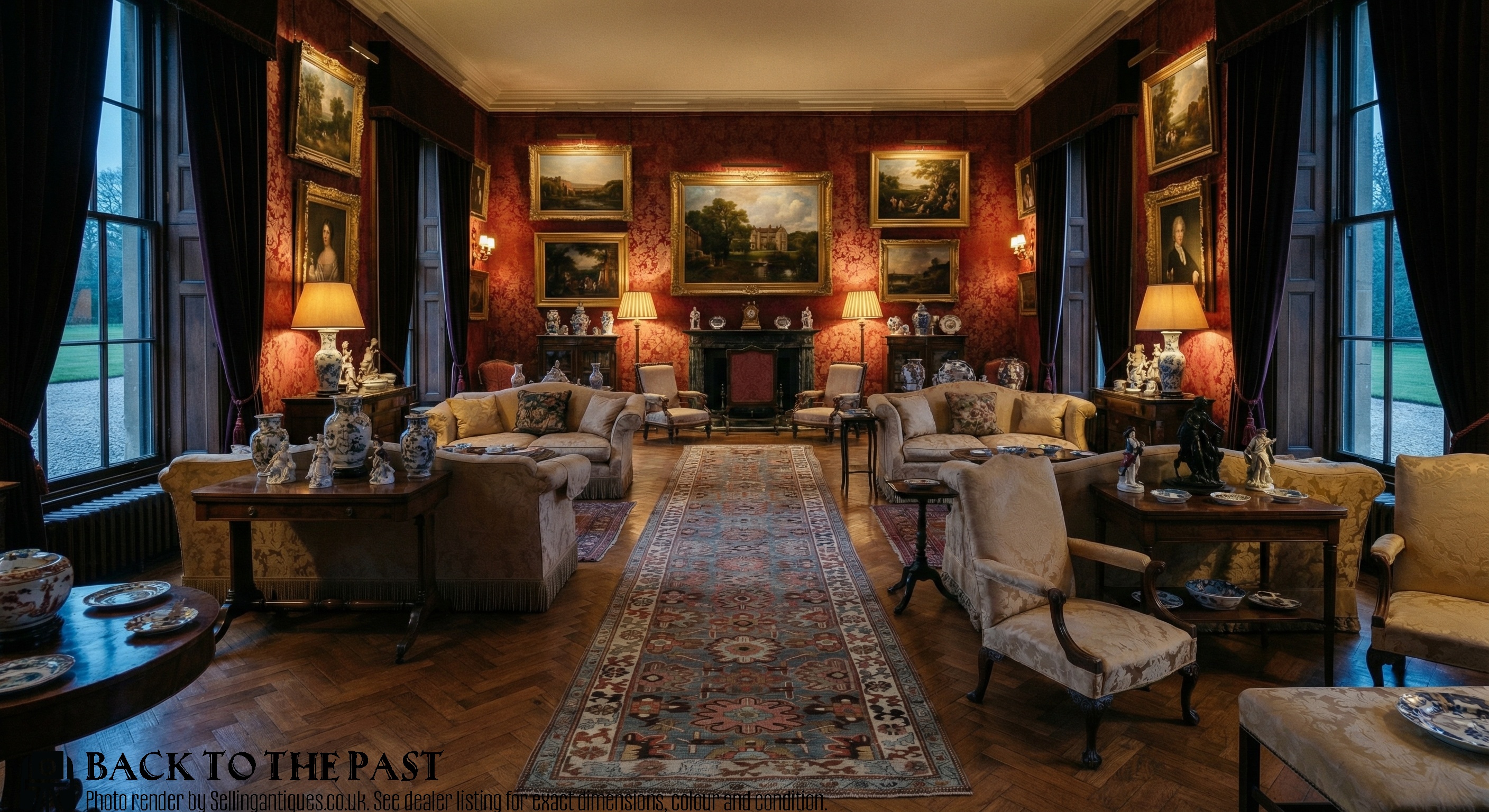
Persian Wool Runner Rug
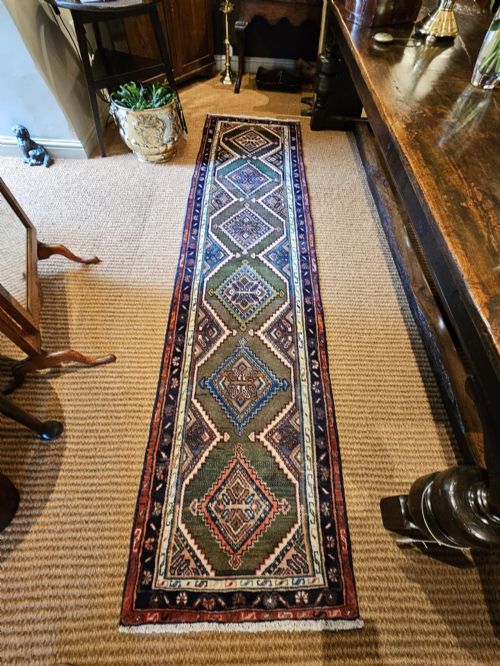
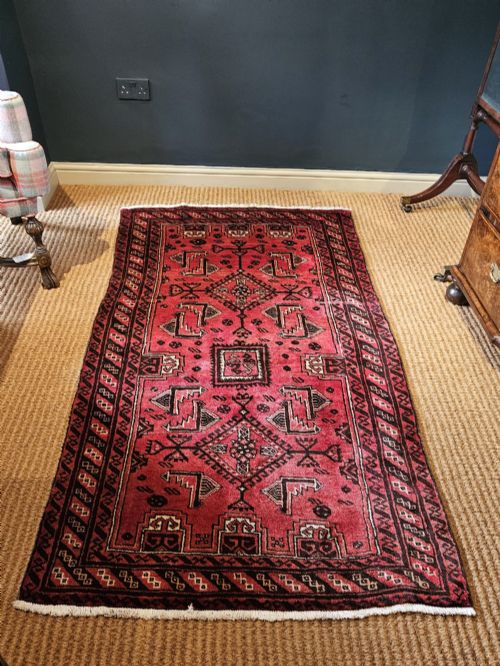
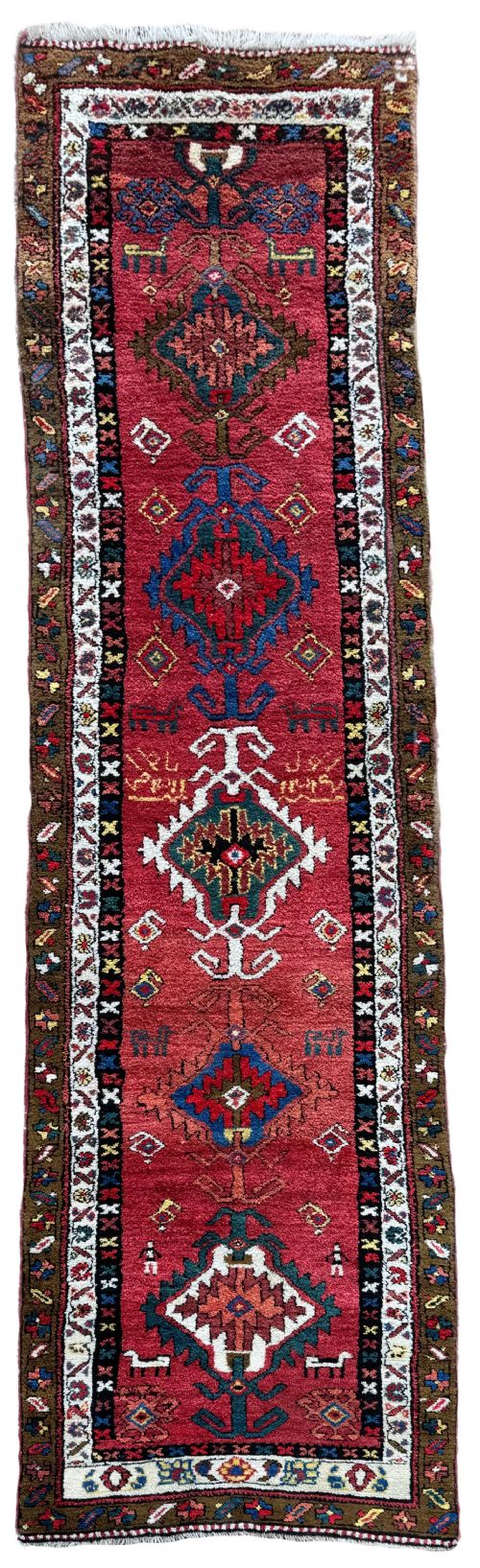
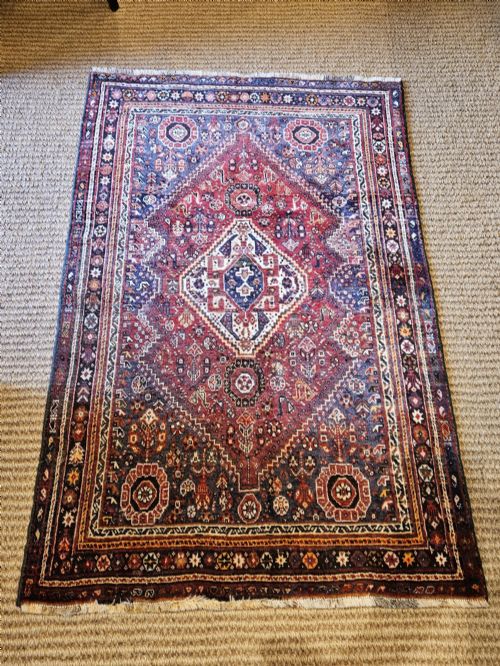
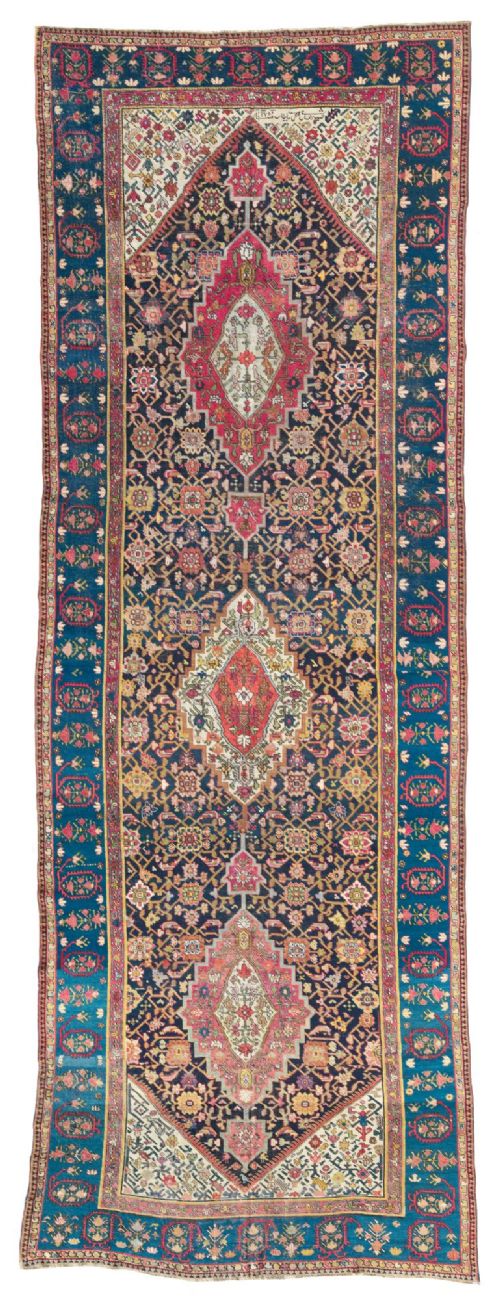
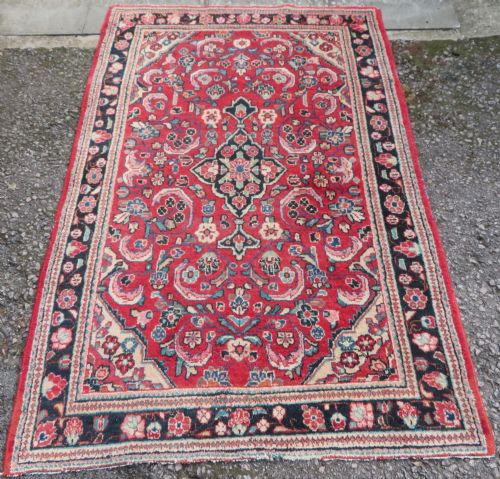
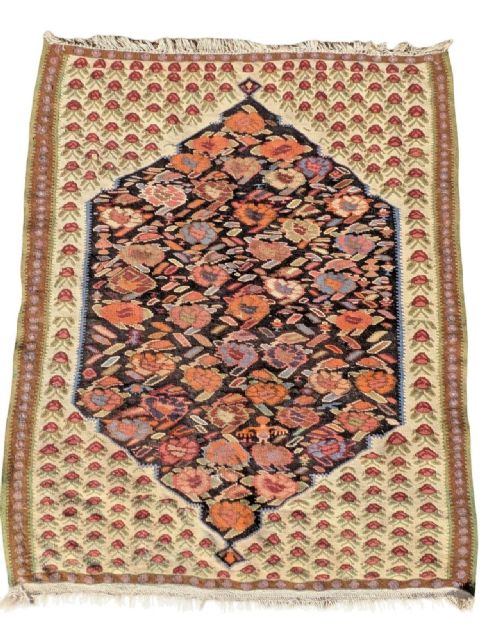
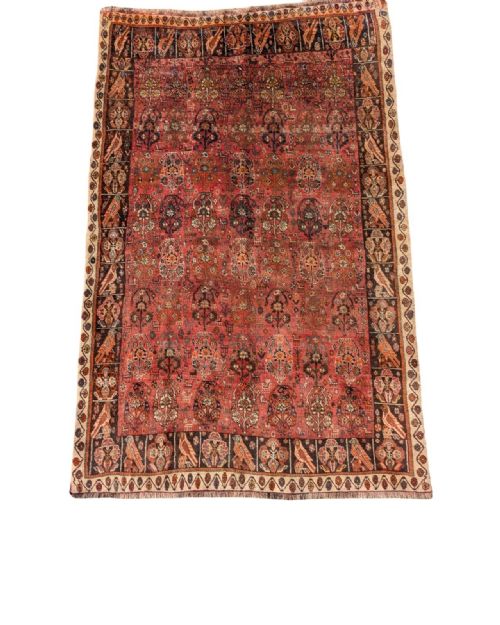
When you search for a persian wool runner rug, you enter a field of elongated woven floor coverings originating from Persia and dating across the late nineteenth and early twentieth centuries. These pieces encompass regional types such as Heriz Karaja, Bidjar, Bakhtiari, and Mohajeran Saroukh, alongside broader tribal weaves from the north-west.
The most common formats on this page are narrow runners and long carpets designed specifically for corridors, galleries, and landings. Each item reflects the distinctive aesthetic traditions of its specific weaving centre, balancing geometric motifs with floral or medallion layouts.
How they were made
Makers constructed these textiles primarily using wool pile knotted onto cotton foundations, with certain examples incorporating soft kork wool for a finer handle. The materials were sourced locally and spun by hand before undergoing traditional vegetable or aniline dyeing processes.
Weavers tied dense knots by hand across varied regional structures, creating durable surfaces designed to withstand generations of heavy foot traffic. The resulting edge finishes and end boundaries reflect the specific workshop traditions of the Persian region of origin.
Persian Wool Runner Rug Retail Price Guide 2026
Typical asking prices for persian wool runner rug among the pieces listed under this phrase on Sellingantiques today, from the lower quarter to the upper quarter. They describe what is for sale here now, not the wider market.
Current listings feature Persian wool runner rug examples spanning from the 1870s through the 1920s, utilising cotton foundations and soft kork wool.
What varies in quality
The distinction between standard examples and the finest pieces lies in the density of the knotting and the subtlety of the colour palette. Finer specimens utilise superior grades of wool, such as kork wool, which yields a softer handle and greater resilience.
Execution of design also dictates standing, where deliberate spacing and precise execution of geometric or floral motifs elevate a piece. The integrity of the foundational structure and the preservation of original wool pile directly influence the overall calibre of each runner.
The Persian Wool Runner Rug Glossary
- Kork wool
- High-grade wool combed from the neck and shoulders of sheep, yielding a particularly soft and lustrous pile. This material appears in finer nineteenth and early twentieth-century Persian weaves.
- Runner
- An elongated rectangular rug format specifically proportioned for corridors, hallways, and stairs. These pieces balance length with a narrow width to fit architectural transitional spaces.
- Foundation
- The underlying structural grid of warp and weft threads that supports the knotted wool pile. In many Persian pieces, this foundation consists of spun cotton.
- Bidjar
- A renowned weaving centre in western Persia known for producing dense, heavy carpets and runners with exceptionally durable structures. Pieces from this tradition often feature geometric or Herati patterns.
- Heriz Karaja
- A stylistic grouping associated with north-west Persian workshops, celebrated for bold geometric medallion designs and robust wool construction.
Persian Wool Runner Rug: Frequently Asked Questions
Where should I place a runner?
These narrow floor coverings suit long hallways, corridors, and narrow landings where architectural length calls for linear floor art. Their proportions also work effectively beside beds or within galley kitchens.
Ensure you measure the available floor space carefully, accounting for door clearance and baseboards, before selecting a specific length.
How do I care for wool pile?
Regular gentle vacuuming without a beater bar removes trapped grit from the wool pile and prevents fibre damage. Professional cleaning by specialists in antique oriental textiles ensures the preservation of natural dyes.
Keep these textiles out of direct, prolonged sunlight to prevent fading of the traditional wool colours over time.
What defines regional Persian styles?
Regional identities emerge through distinct design vocabularies, knotting densities, and structural materials. Workshops in Bidjar produce heavy, robust weaves, whilst Saroukh or Kashan pieces often favour refined floral compositions.
North-west tribal weavers typically lean towards geometric medallions and abstracted motifs executed in rich, saturated wools.
How do I date these textiles?
Dating relies on stylistic analysis, structural examination, and the evaluation of dye types used in the wool pile. Pieces from the late nineteenth century often display softer, vegetable-dyed palettes and organic irregularities.
Early twentieth-century examples frequently exhibit more standardised motifs and refined knot counts reflecting changing commercial demands.