


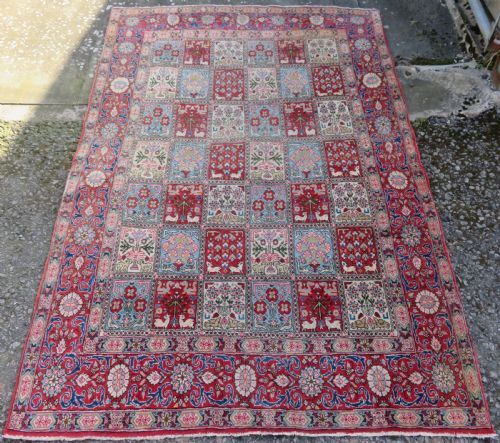

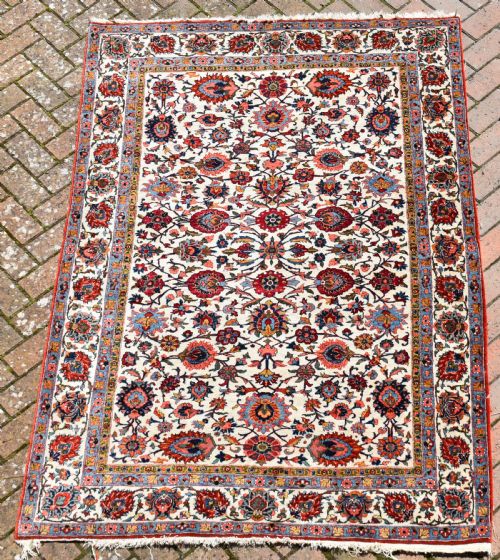

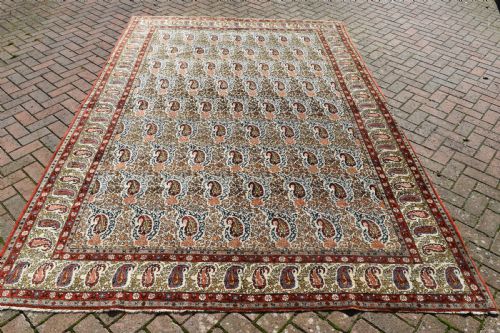
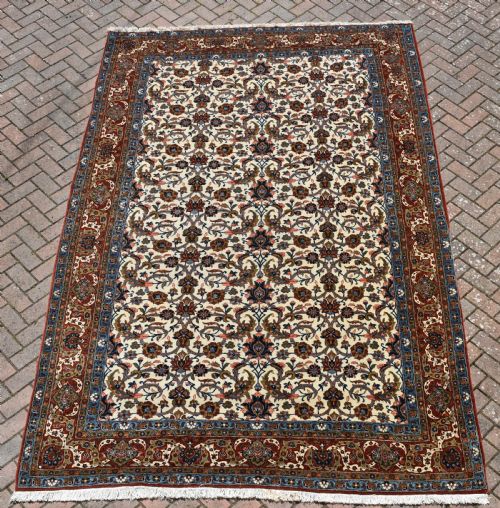


Vintage Qum Carpet
These vintage qum carpets bring central Persian artistry into a room, offering intricate floor coverings prized for their fine wool, cotton, and silk foundations.
Vintage Qum Carpet
A vintage qum carpet represents the traditional Persian weaving craft originating from the city of Qum in central Persia. Buyers search for these pieces to acquire roomsize carpets or smaller rugs that display characteristic regional motifs.
The versions most commonly met on this page date from the decades between 1910 and 1940. These pieces range from modest area rugs measuring around two metres to large roomsize formats exceeding four metres in length.
What varies in quality
Finer examples distinguish themselves through the precision of the woven tile patterns and the integration of silk materials. Superior pieces often display greater density in the pile and more complex compositional balance across the field.
The choice of foundation materials and the crispness of the traditional Persian design execution separate standard rugs from exceptional carpets. Scale also influences the character of the piece, with larger roomsize formats requiring sustained complexity from the weaver.
Listings feature periods spanning from 1910 to 1940, utilising wool, cotton, and silk across Persian and traditional Persian styles.
The Vintage Qum Carpet Glossary
- Tile pattern
- A geometric design layout divided into individual compartments or squares across the carpet field. This structured format forms a repeating motif seen in central Persian weaving.
- Roomsize
- A descriptor for carpets large enough to anchor a primary living space or central room furniture arrangement. These pieces typically measure over three metres in length.
- Foundation
- The underlying structure of warp and weft threads that supports the knotted pile of the carpet. Cotton and silk frequently serve this structural purpose in Persian rugs.
- Area rug
- A smaller format floor covering distinct from full roomsize carpets, generally measuring around two metres.
Vintage Qum Carpet: Frequently Asked Questions
Where were vintage qum carpets made?
These carpets originate from Qum, a major city located in central Persia. The region has a distinct tradition of producing fine floor coverings.
Local workshops developed specific styles utilising silk, cotton, and wool materials that define the output of the area during the early twentieth century.
How do I style a qum carpet?
A roomsize qum carpet functions well as the anchor piece in a principal living space or dining room. The traditional Persian designs complement both classic and contemporary interiors.
Smaller rugs suit studies, hallways, or bedroom settings where detailed tile patterns can be viewed closely.
What materials make up these carpets?
The pieces utilise natural fibres including wool, cotton, and silk. Silk often highlights specific details or comprises the entire pile in finer examples.
Cotton typically forms the strong foundation threads that support the weight of the knotted surface.
How do I date an antique qum carpet?
Dating relies on stylistic indicators and documented production periods spanning from 1910 to 1940. Structural examination of the materials provides further context.
Comparing the weave density and pattern execution against documented pieces helps place the rug within its correct historical decade.