

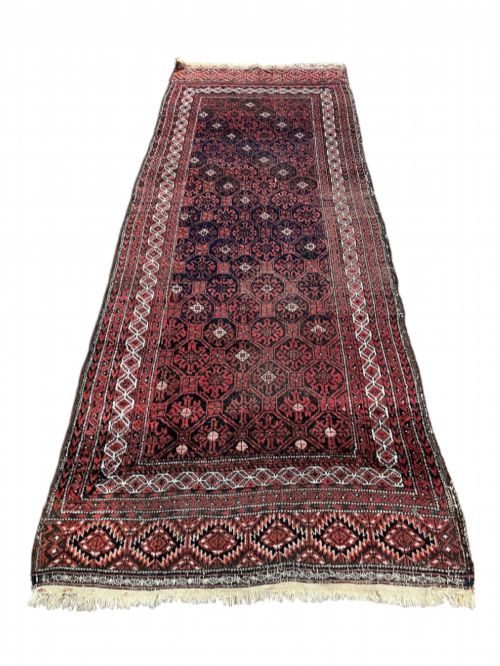

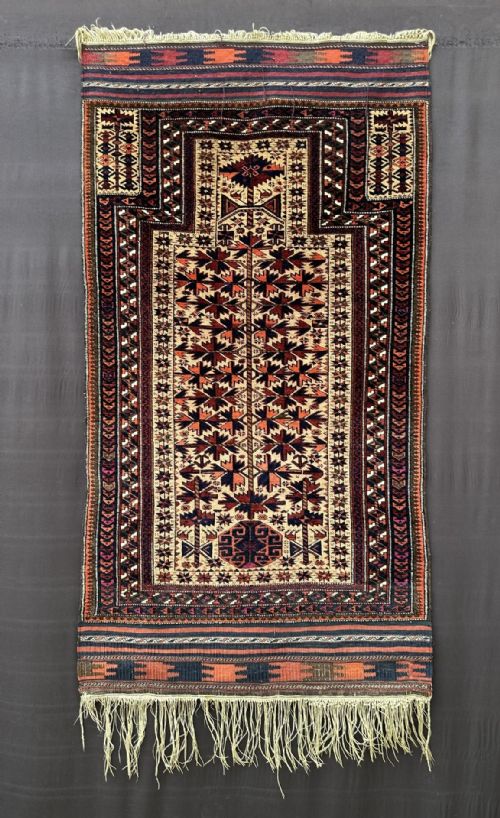
Wool Baluch Rug
When you handle a wool baluch rug, you hold a piece of nomadic weaving shaped by the borderlands of Persia and Afghanistan.

Wool Baluch Rug
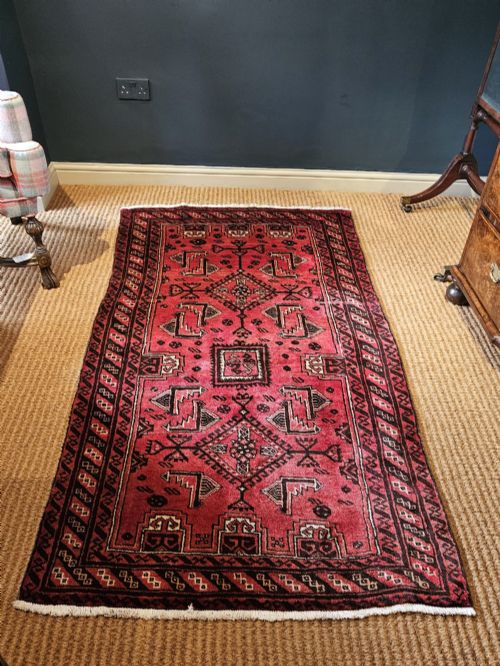
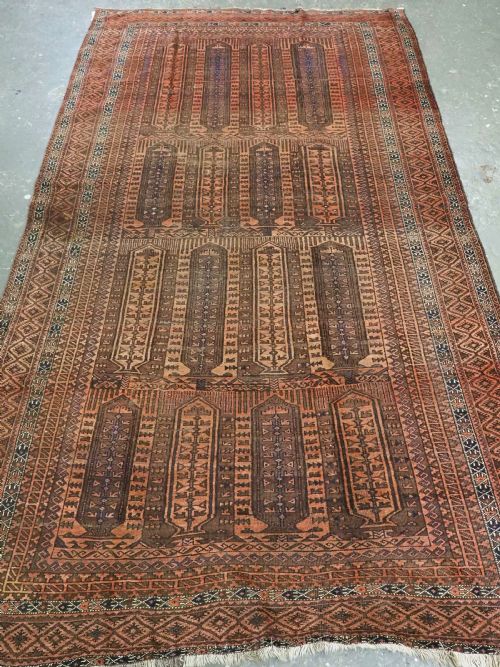
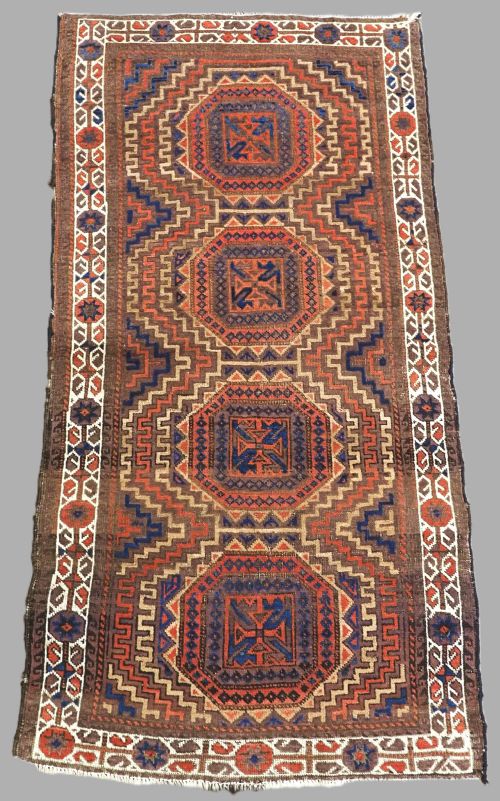
A wool baluch rug is a woven textile created by nomadic and semi-nomadic tribes across the borderlands of Persia and Afghanistan, encompassing styles identified as Baluch, Timuri, and Taimani. These pieces serve practical purposes as floor coverings, prayer rugs, dining sofreh cloths, and storage bags.
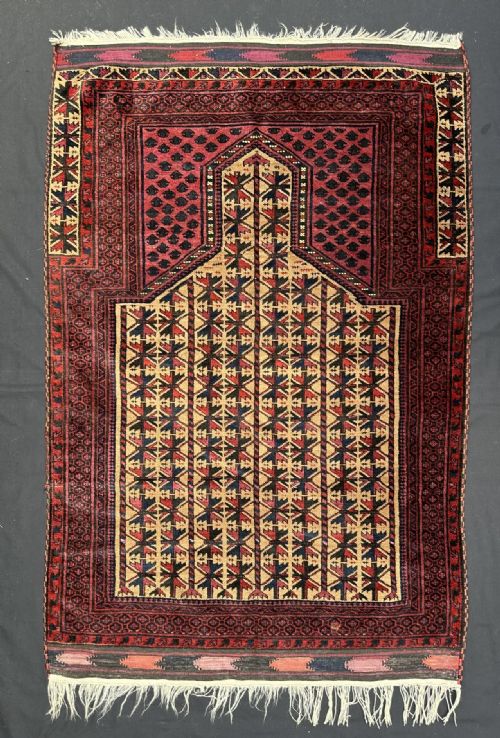
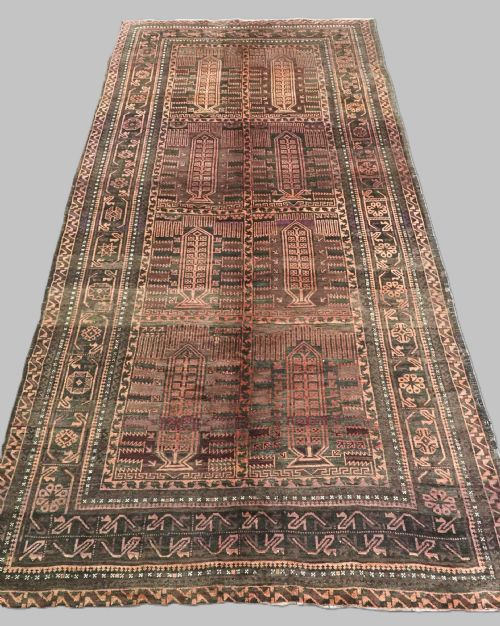
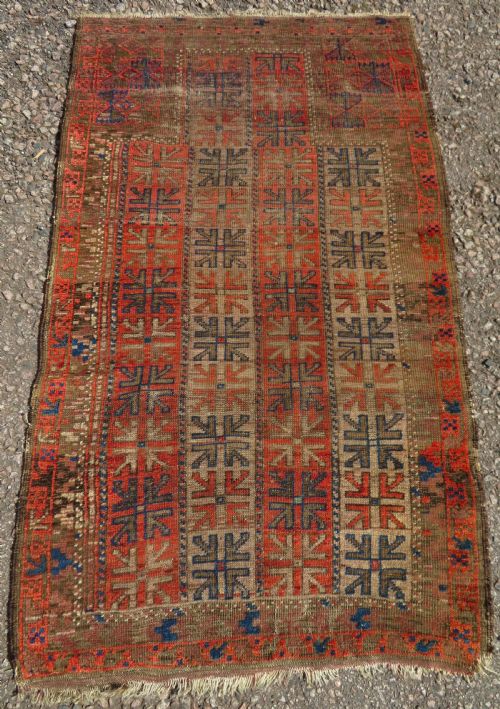
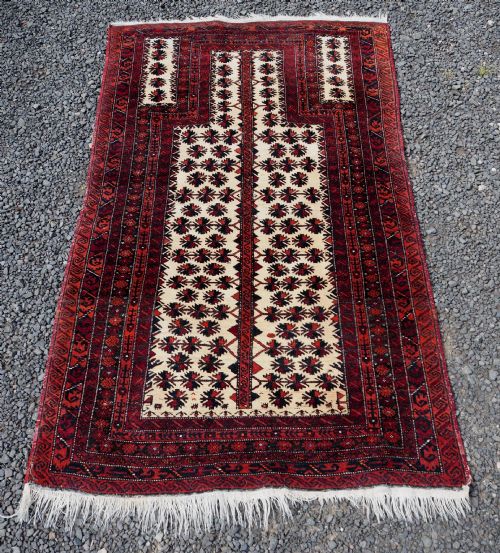
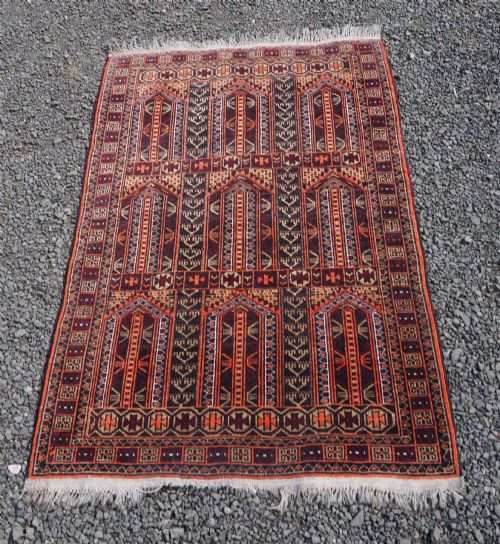
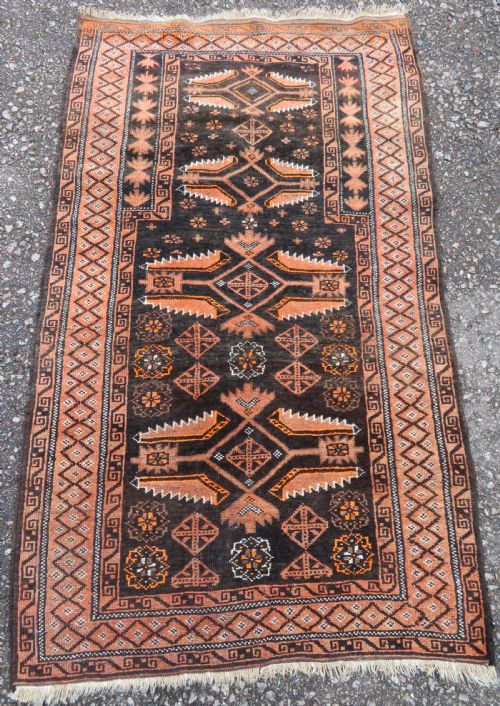
The version most commonly met on this page is the rug or prayer rug format from the late nineteenth century and the early twentieth century. These examples frequently display motifs such as guls, tree of life patterns, double mihrabs, and pencil box designs.
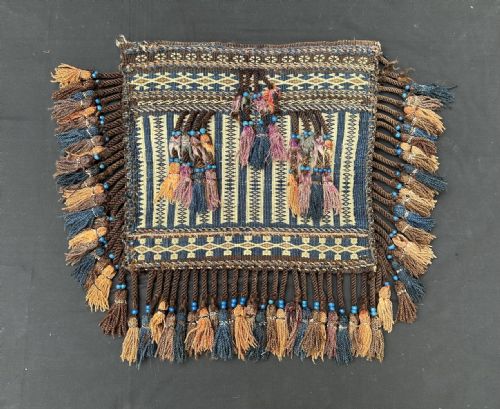
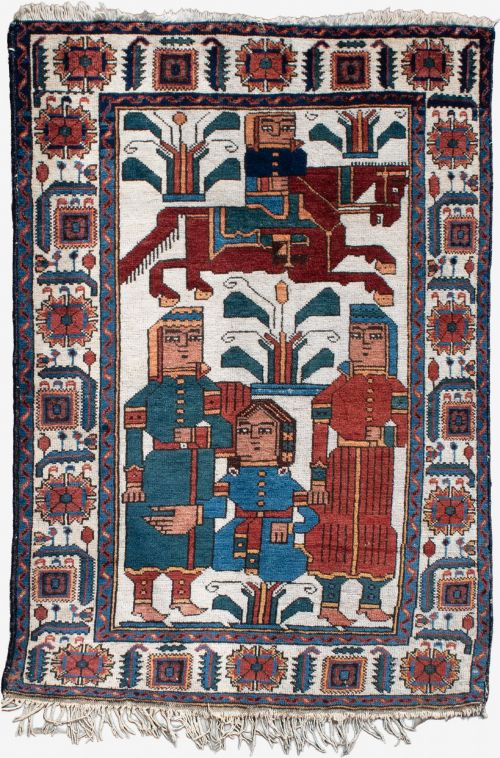
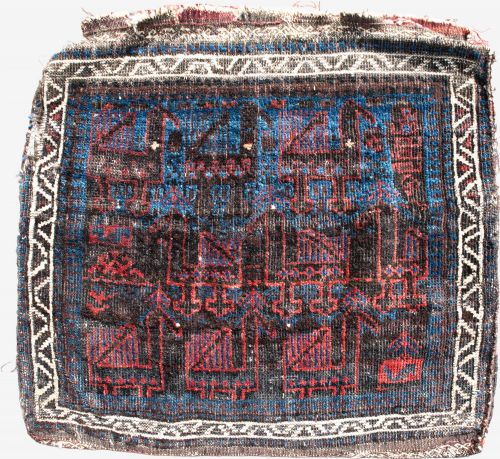
Beyond standard floor rugs, the category extends to specialised tribal objects including storage bags, vanity bags, bird bags, and cushions. Each piece carries the distinct visual vocabulary of regional groups such as the Salar Khani, Bahluli, and Yaqoub Khani tribes.
How they were made
Weavers relied primarily on hand-spun wool, cotton foundations, and occasionally camel wool or goat hair for durability. Natural dyes provided the deep, saturated palette characteristic of these tribal textiles.
Construction techniques combined pile weaving for rugs and carpets with flat weave backs for storage items, sometimes incorporating mixed techniques or glass bead embellishments. The handle of each piece depends directly on the quality of the fleece and the tightness of the knotting.
Wool Baluch Rug Retail Price Guide 2026
Typical asking prices for wool baluch rug among the pieces listed under this phrase on Sellingantiques today, from the lower quarter to the upper quarter. They describe what is for sale here now, not the wider market.
Listings span the nineteenth and early twentieth centuries, featuring wool, cotton, natural dyes, and camel wool across rugs, prayer formats, and storage bags.
What varies in quality
Quality in these textiles rests upon the handle and lustre of the wool, where supple, lanolin-rich fleece distinguishes finer examples from drier or coarser material. The clarity of natural dye colours and the precision of the tribal motifs also divide standard pieces from superior works.
Format and structural integrity further determine the standing of a piece, with uncommon prayer formats, scarce designs like the kalam donneh, and intact original finishes representing the upper tier of the range.
The Wool Baluch Rug Glossary
- Mihrab
- A niche design symbolising the direction of prayer, frequently seen on tribal prayer rugs with single or multiple arches.
- Gul
- A repeating medallion motif often associated with central Asian and tribal carpet traditions.
- Sofreh
- A flat-woven or piled cloth utilised for sharing meals or preparing bread within nomadic households.
- Balisht
- A traditional tribal storage or grain bag, usually featuring a pile face and a plain weave back.
- Kalam Donneh
- A traditional motif resembling a stylised cone or leaf shape, appearing in finer carpet designs.
Wool Baluch Rug: Frequently Asked Questions
How do I identify a prayer rug?
Prayer rugs feature a distinct architectural niche, known as a mihrab, which indicates the direction of Mecca during daily worship. You will often see single, double, or multiple arches woven into the field of the rug.
These formats tend to be smaller in scale, designed for personal devotion rather than covering a large floor space. The pile and wool quality on prayer examples are frequently exceptionally fine.
Where were these textiles made?
The weaving originates from the borderlands of north-east Persia and north-west Afghanistan, spanning regions such as Khorassan and Sistan. Nomadic and semi-nomadic groups including the Timuri, Taimani, and Bahluli tribes produced these works.
Because these communities moved across porous borders, the rugs share stylistic influences from both Persian and Afghan traditions while retaining distinct tribal identities.
How should I care for an old rug?
Protect your textile by placing it in a low-traffic area where it will not experience heavy friction or direct, harsh sunlight. Gentle vacuuming without a rotating brush helps remove dust without damaging the wool pile.
Allowing the textile to breathe and avoiding excessive moisture will preserve the natural animal fibres and dyes for years to come. Professional cleaning should only be undertaken by specialists experienced in antique tribal pieces.
What is a balisht bag?
A balisht is a traditional tribal storage or grain bag made by nomadic weavers for domestic use inside a tent or dwelling. They typically combine a decorative piled face with a sturdy, plain-woven wool or goat hair back.
Collectors prize these items for their compact formats and the concentrated artistry found in their smaller design fields.