




Timuri Prayer Rug
When you unfold a timuri prayer rug, you hold a piece of nomadic tribal weaving shaped along the borders of Persia and Afghanistan.
Timuri Prayer Rug
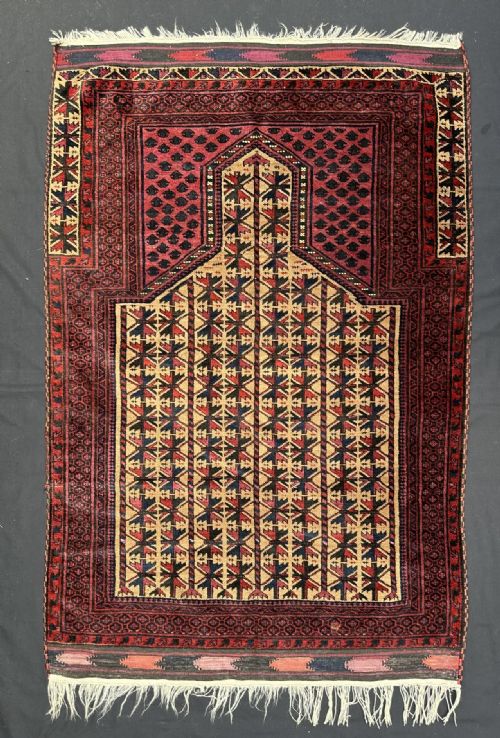
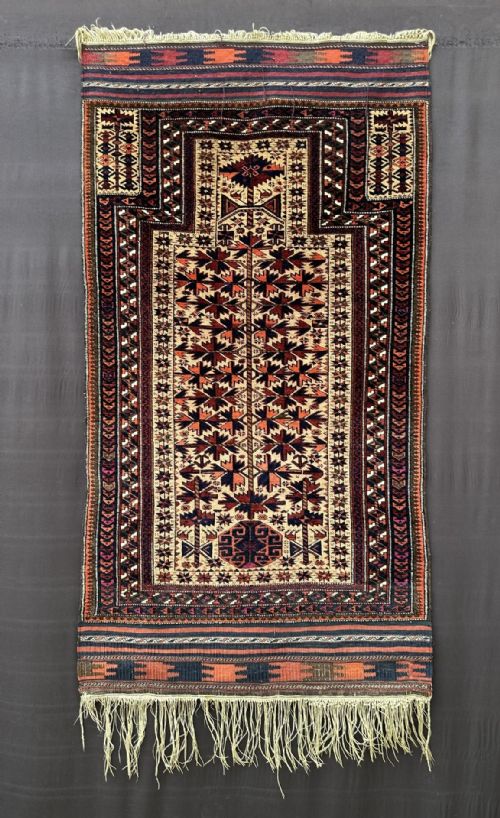
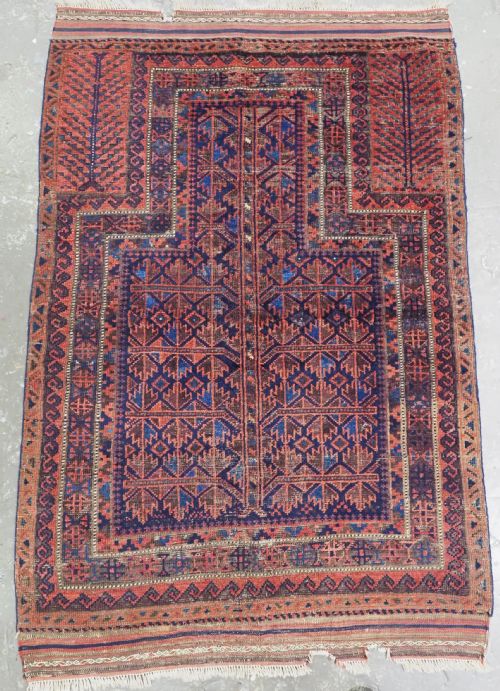
A timuri prayer rug represents the portable devotional weaving of nomadic and semi-nomadic groups working in the borderlands of north-east Persia and western Afghanistan. These textiles typically feature a dedicated mihrab or arch design intended for personal daily prayer, produced by weavers responding to the visual traditions of their specific kin groups.
The pieces appearing on this page span the late nineteenth century and the early decades of the twentieth century, originating from tribal confederations such as the Dokhtar-e-Qazi and Yaqoub Khani. Buyers encounter formats ranging from compact devotional mats to larger rugs displaying repeat leaf patterns, tree of life motifs, or box designs on blue, camel, and aubergine grounds.
How They Were Made
Weavers constructed these rugs using hand-spun wool foundations and pile, frequently incorporating goat hair for structural durability along the selvedges and occasionally camel hair in the un-dyed background fields. The natural dyes utilised by these tribal makers yielded deep, rich colour palettes spanning dark indigos, warm earth tones, and muted aubergines.
Some weavers added tiny touches of silk just to catch the lamplight during evening prayers.
What Varies in Quality
Quality in these tribal pieces rests upon the precision of the wool preparation, the depth and saturation of the natural dyes, and the crispness of the woven design details. Early examples with secondary structural fibres or scarce formats display greater refinement in knot density and pictorial balance.
The handling of specific sub-tribal patterns, such as the Dokhtar-e-Qazi or box designs, dictates the distinction between standard utilitarian pieces and finer collector specimens. Consistency in the hand-spun pile and the integrity of the camel ground or blue field further separate ordinary weaving from exceptional survivals.
The Timuri Prayer Rug Glossary
- Mihrab
- The arched architectural niche depicted on prayer rugs that indicates the direction of Mecca during daily worship. It forms the central focal point of the design layout.
- Dokhtar-e-Qazi
- A sub-tribal group and associated design tradition originating from the Khaf region along the Persian and Afghan borderlands. Weavings bearing this name often exhibit specific geometric leaf motifs.
- Camel Ground
- An un-dyed background field utilising the natural light brown or golden fleece of camels. This material provides a soft, warm neutral tone behind the main design.
- Natural Dyes
- Colourants derived from plant and mineral sources prior to the widespread introduction of synthetic alternatives. They age with a harmonious patina across the wool pile.
- Yaqoub Khani
- A specific sub-tribe of the Timuri peoples known for distinctive tribal formats and colour combinations. Pieces attributed to them appear in regional borderland inventories.
Timuri Prayer Rug: Frequently Asked Questions
How do I identify a timuri prayer rug?
Look for the characteristic prayer arch design combined with wool construction and regional motifs associated with the borderlands of Persia and Afghanistan. Sub-tribal attributions often point towards specific design groupings like Dokhtar-e-Qazi.
Examine the palette for natural indigo blues, camel grounds, and deep aubergine tones, which indicate traditional tribal production methods from the nineteenth or early twentieth century.
Where were these rugs made?
These textiles originate from the semi-nomadic Timuri tribes inhabiting the border regions between north-eastern Persia and western Afghanistan. Key locations include the Khaf valley and Adraskand region.
Different sub-tribes within these territories maintained distinct regional weaving variations while sharing common nomadic design vocabularies and material resources.
Can I use an antique rug on the floor?
These antique devotional rugs were originally made for functional use on the ground by nomadic peoples, though surviving examples require mindful placement today. Low traffic areas allow the hand-spun wool pile to endure without excessive wear.
Placing them away from direct, strong sunlight preserves the natural dyes and prevents the delicate wool fibres from drying out over time.
What does camel ground mean?
A camel ground indicates that the background field of the rug utilises un-dyed wool sourced from camels rather than sheep. This natural fibre yields a warm, durable neutral tone.
Over decades, this un-dyed material develops a distinct soft texture that contrasts with the darker indigo or madder-dyed elements of the geometric patterns.