
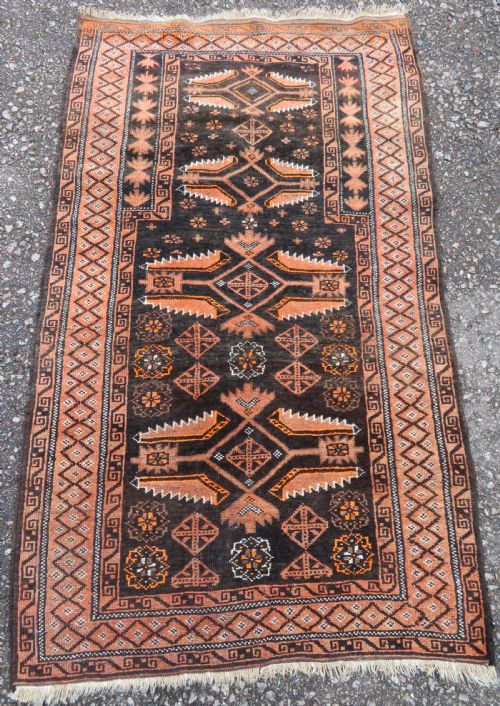
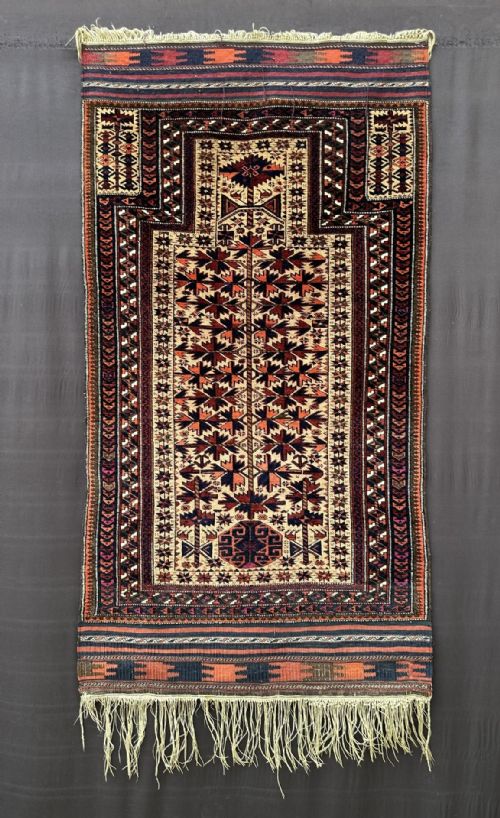


Brown Wool Prayer Rug
A brown wool prayer rug offers a tangible piece of tribal weaving history, combining rich earthen tones with traditional mihrab designs.
Brown Wool Prayer Rug
A brown wool prayer rug serves primarily as a portable place for daily devotion, distinguished by a central arched niche or mihrab pointing toward Mecca. These woven pieces emerge predominantly from tribal and nomadic groups across regions of Afghanistan, Persia, and Anatolia.
The selections available here lean heavily toward nineteenth and early twentieth-century examples, encompassing Baluch, Timuri, Taimani, and Kizil Ayak traditions. Buyers encounter various formats, from single niche compositions to complex multi-mihrab layouts featuring long kilim ends.
Village weavers constructed these smaller formats for personal use or local community requirements, frequently incorporating camel hair grounds and distinctive motifs like the tree of life or lotus leaf designs.
Materials and construction techniques
Weavers relied on hand-spun sheep wool and camel wool for the pile, yielding a dense, tactile surface that endured decades of kneeling and movement. Natural dyes extracted from local flora and minerals provided the foundational brown, red, and ivory colour palette.
Foundations often integrated cotton or goat hair for warp and weft threads, ensuring structural stability across tribal workshops and nomadic encampments. Artisans utilised mixed techniques, sometimes incorporating supplementary cotton whites or extended kilim end weaves to finish the textile margins.
Listings span periods from the 1870s through the 1930s, showcasing wool, camel hair, and natural dyes across tribal traditions.
Distinguishing quality in tribal weavings
The integrity of the fleece and the depth of the natural dyes dictate the tactile and visual caliber of each textile. Superior examples display dense, lustrous wool - frequently utilising camel hair - that retains suppleness over generations of handling.
Knot density and precision in executing complex motifs, such as the seh mihrab or figural elements, separate standard utility pieces from exceptional tribal artistry. The complexity of the border arrangements and the preservation of original kilim ends further influence the standing of an individual weaving.
Baluch Tribes·Timuri Tribe·Taimani Sistan Baluch·Kizil Ayak Turkmen·Yaqoub Khani Tribe
The Brown Wool Prayer Rug Glossary
- Mihrab
- The arched niche found on prayer rugs, designed to indicate the direction of prayer. Its apex typically points toward Mecca during ritual use.
- Seh Mihrab
- A design layout featuring three distinct arches or niches across the prayer field. This multi-niched format appears frequently in Baluch and Taimani traditions.
- Kilim
- A flat-weave textile structure used here for the extended ends of the rug beyond the knotted pile. These woven ends protect the main body from fraying.
- Camel Ground
- A foundational background area woven using undyed or naturally pigmented camel wool. This material imparts a warm, durable, fawn-brown tone to the pile.
- Tree of Life
- A traditional symbolic motif depicting branches and leaves rising from a base, representing eternal life and spiritual growth. Weavers often place this central symbol within the prayer niche.
Brown Wool Prayer Rug: Frequently Asked Questions
What is a brown wool prayer rug?
A brown wool prayer rug is a small, hand-knotted textile created by tribal and nomadic weavers for personal religious devotion. These pieces typically feature a mihrab design and utilise natural wool or camel hair.
Originating largely from nineteenth and early twentieth-century communities in regions like Persia and Afghanistan, they reflect traditional regional motifs and spinning methods.
How were these rugs used originally?
Weavers and owners utilised these portable textiles as clean, dedicated surfaces for daily Islamic prayers. Because they were lightweight and rolled easily, nomads carried them across regions.
Over time, the domestic function blended with tribal identity, incorporating specific tribal symbols and family weaving patterns into the field design.
How do I care for an antique prayer rug?
Living with these textiles requires gentle maintenance, primarily consisting of careful, low-suction vacuuming without a rotating brush roll. Keeping them out of direct, prolonged sunlight protects the natural dyes from fading.
Rotating the rug periodically ensures even wear patterns from foot traffic, preserving the pile and structural integrity of the foundation.
How can I tell different tribal styles apart?
Distinguishing between styles involves examining the specific structure, palette, and recurring motifs within the field and borders. Baluch and Timuri rugs often feature deep brown camel wool grounds and geometric border arrangements.
Other groups, such as the Kizil Ayak, display distinct mosque designs and double niches that mark them out from standard village production.