
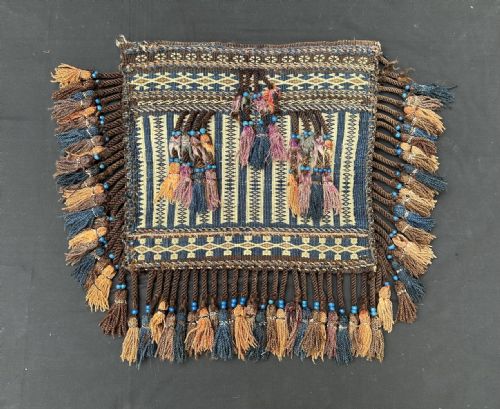
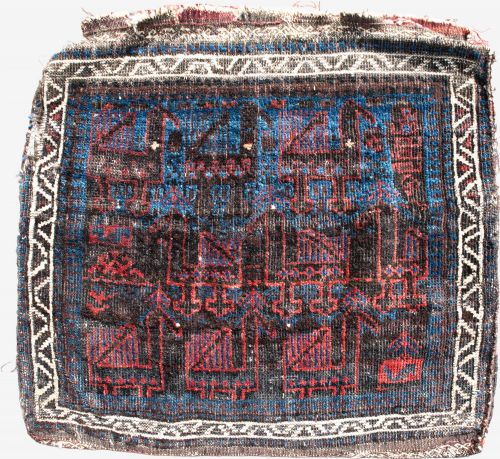


Indigo Baluch Rug
These woven textiles are an indigo baluch rug, offering deep blues and tribal motifs created by nomadic weavers.
Indigo Baluch Rug
An indigo baluch rug represents tribal weaving traditions from regions spanning Afghanistan and Persia. These pieces include floor coverings, prayer rugs with distinct mihrab arches, and utility bags.
Formats range from small format pushti faces to larger main carpets. Many examples incorporate deep blue fields alongside geometric repeat patterns.
How they were made
Weavers utilised hand-spun wool and natural dyes to build durable pile foundations. Artisans frequently integrated goat hair for selvedges and occasionally incorporated glass beads.
Dye baths yielded dark indigo grounds that define the palette of these textiles. Working on portable horizontal looms, makers knotted dense piles using traditional tribal patterns.
Some storage bags doubled as comfortable cushions when stuffed with wool during long migrations.
What varies in quality
The handle of the wool and the saturation of the natural indigo dye distinguish finer examples from standard pieces. Handling reveals the tightness of the weave and the precision of the knotting.
Complexity of the design, such as Herati or Kalam Donneh motifs, dictates the visual depth of the rug. Preservation of original borders and selvedges maintains the integrity of the piece.
Timuri·Salar Khani·Mahdad Khani·Bahluli·Taimani
The Indigo Baluch Rug Glossary
- Mihrab
- The arched niche design found on prayer rugs, which symbolises a gateway. This element often points towards Mecca during ritual use.
- Sofreh
- An eating cloth or spread utilised for communal meals in nomadic households. These flatweaves share structural techniques with carpets.
- Pushti
- A small mat or face piece used for sitting or leaning against inside a tent. They display concentrated tribal patterns due to their reduced scale.
- Herati
- A repeating floral and leaf lattice pattern surrounding a central rosette. This motif appears frequently across Persian and tribal weaving traditions.
- Kilim
- A flatweave textile produced without a pile by tightly interweaving warp and weft threads. Artisans utilised this technique for durable storage bags and floor coverings.
Indigo Baluch Rug: Frequently Asked Questions
Where were these rugs made?
Woven by nomadic and village groups, these textiles originate from South-West and Western Afghanistan, alongside Khorassan and Ferdows provinces in Persia.
Tribal populations moved across these borderlands, bringing shared motifs and dyeing techniques to their carpet production.
How do I date these pieces?
Dating relies on wool quality, natural dye saturation, and structural characteristics typical of nineteenth and early twentieth-century production. Stylistic markers such as specific border arrangements and tribal attributions also assist in establishing age.
Comparative analysis with documented examples helps narrow down the decade of creation.
How should I live with one?
These rugs suit low-traffic areas where the natural wool and indigo dyes can be appreciated without excessive wear. Placing them on breathable underlays protects the flatweave or pile structure.
Regular gentle vacuuming without a beating bar maintains the wool foundation over time.