

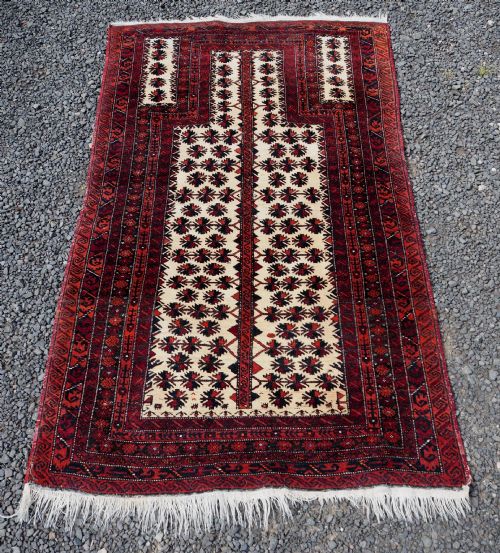
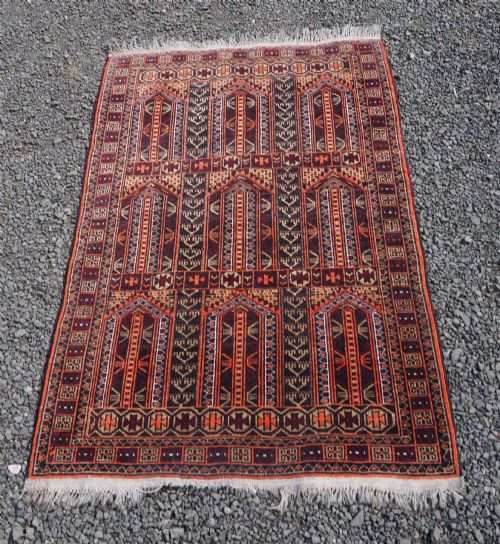
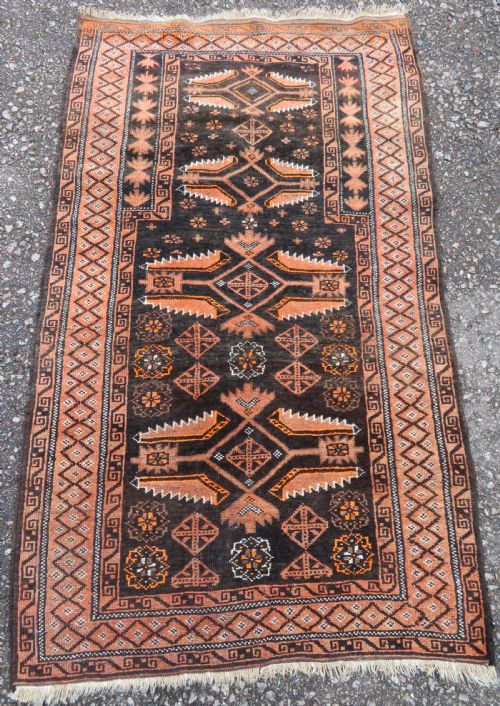
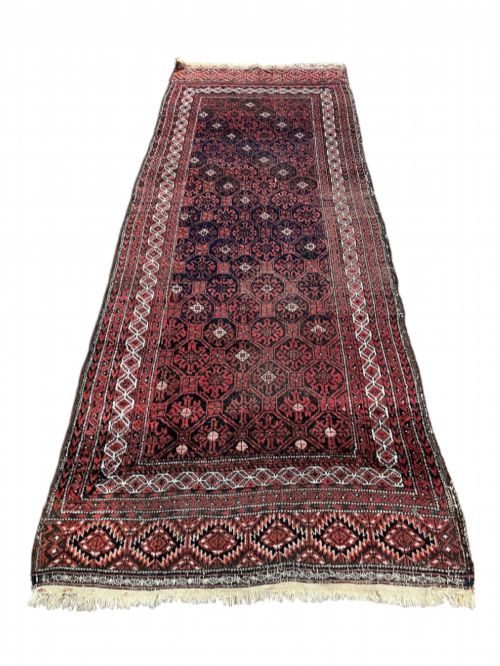

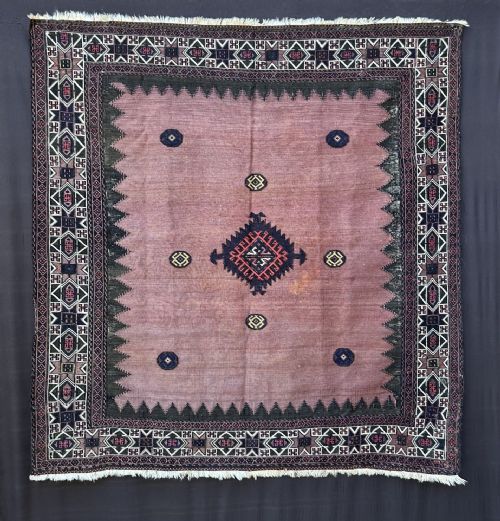


Geometric Baluch Rug
A geometric baluch rug brings nomadic tribal artistry into an interior through intricate patterns and saturated tones.
Geometric Baluch Rug
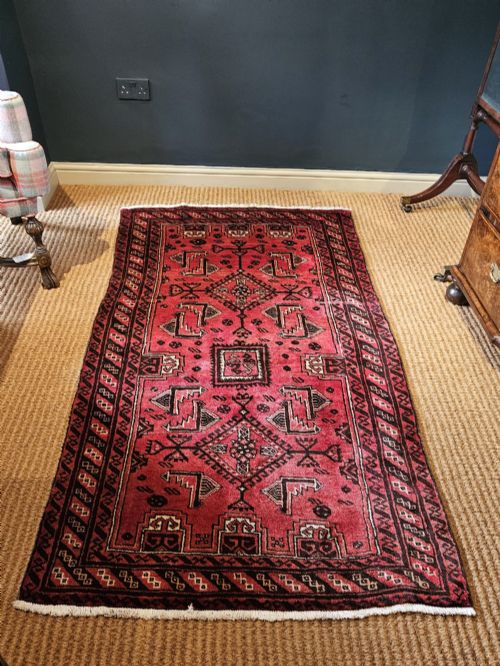
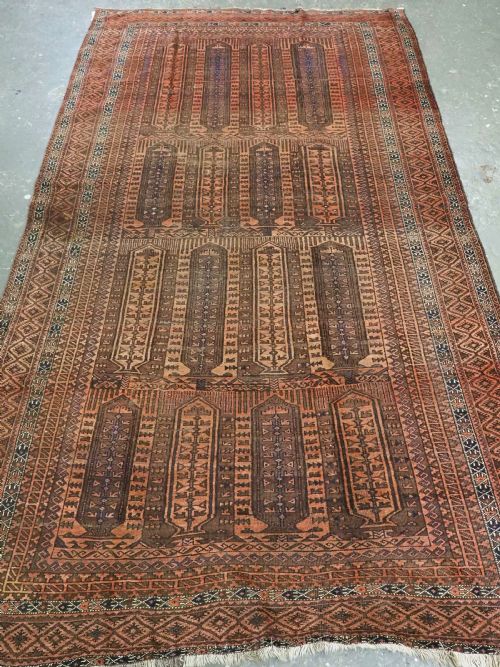
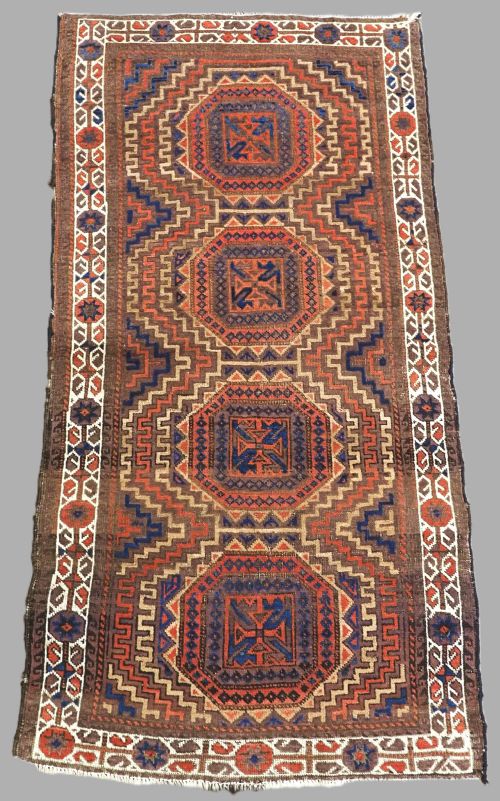
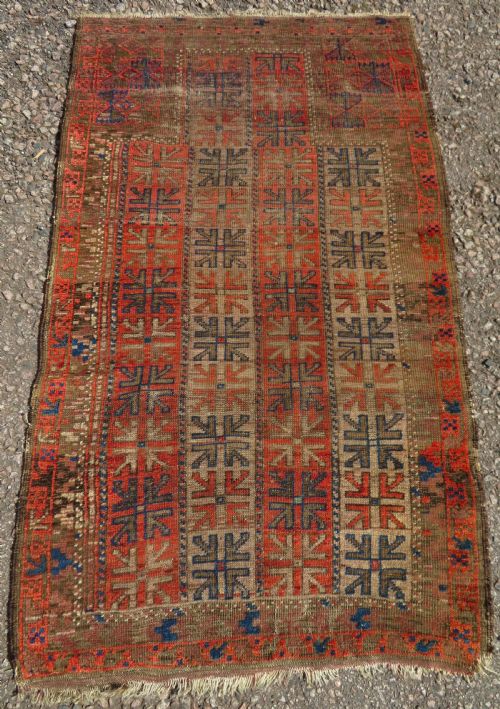
When you search for a geometric baluch rug, you encounter hand-woven textiles produced by nomadic and village weavers across the borderlands of Persia and Afghanistan. These floor coverings and utility pieces span periods from the nineteenth century into the early decades of the twentieth century. The selection includes prayer rugs featuring architectural mihrab designs, larger carpets displaying guls, and smaller utilitarian items like storage bags and eating cloths.
The most common formats on this page are floor rugs and prayer rugs displaying tribal motifs and repeat patterns. Weavers utilised traditional formats such as the double mihrab, or incorporated specific tribal designations including Taimani, Timuri, and Bahluli. Alongside standard floor rugs, the inventory contains runners, cushions, and flatwoven kilims originating from Khorassan and wider regional weaving centres.
How they were made
These textiles rely principally on wool and hand-spun wool foundations, often combined with cotton details and occasional goat hair for structural durability. Weavers constructed the pile and flatweave structures by hand, integrating natural dyes to achieve deep regional colour palettes. Artisans utilised supplementary weftwork and plain weave techniques for functional storage bags and eating cloths alongside knotted-pile carpets.
The integration of goat hair and durable wool fibres served to reinforce edges and backs on functional items like balisht storage sacks and sofres. Natural dye applications produced the rich, saturated tones visible across nineteenth-century and early twentieth-century examples. Hand-spun wool provided the tactile density characteristic of authentic tribal weaving traditions from the Afghan and Persian border regions.
Nomadic weavers frequently repurposed grain sacks into floor coverings, ensuring that yesterday's harvest storage became today's fireside rug.
What varies in quality
Quality in these tribal textiles rests on the fineness of the knotting, the precision of the geometric layout, and the depth of the natural dye palette. Pieces at the upper end exhibit tightly packed piles, crisp structural execution, and complex repeat motifs such as the Kalam Donneh or Mina Khani designs. Weaving density and the condition of original flatwoven backs or selvedges further separate standard village productions from finer collector examples.
The handling of regional designs, from Turkmen-inspired patterns to specific shrub and gul arrangements, dictates the distinction between ordinary and exceptional items. The integrity of the hand-spun wool and the retention of vibrant natural colours without excessive fading or structural compromise establish the hierarchy among surviving pieces. Format rarity, such as uncommon prayer formats or unusual runners, plays a decisive role in distinguishing particular examples.
Salar Khani Tribe·Bahluli Tribe·Djhan Beghi Tribe
The Geometric Baluch Rug Glossary
- Mihrab
- The arched niche design found on prayer rugs, often pointing toward Mecca during worship. Examples in this inventory feature single, double, or multiple mihrab arches.
- Gul
- A medallion or repeating octagonal motif traditional to tribal weaving traditions across Central Asia and Persia. These forms anchor the primary field composition on numerous carpets.
- Sofre
- A flatwoven or piled cloth utilised traditionally for communal dining or food preparation among nomadic groups. These utilitarian textiles frequently display banded weftwork and geometric stripes.
- Balisht
- A traditional tribal storage sack or grain bag constructed with a functional flatweave back and a piled front face. These items served nomadic households for domestic storage.
- Kilim
- A flatwoven textile produced without a pile by tightly interweaving warp and weft strands. These pieces rely on sharp geometric colour bands and structural slit-weave techniques.
Geometric Baluch Rug: Frequently Asked Questions
What is a baluch rug?
A baluch rug is a hand-knotted or flatwoven textile created by nomadic and semi-nomadic tribes inhabiting the border regions of Persia, Afghanistan, and Baluchistan. These pieces traditionally feature geometric motifs, prayer niches, and rich, dark wool palettes.
Weavers utilised local materials including hand-spun wool, cotton, and natural dyes to produce durable floor coverings, bags, and eating cloths for daily nomadic life.
How do I identify a prayer rug?
A prayer rug is distinguished by the presence of a mihrab, an arched architectural niche that represents the direction of prayer. These rugs are typically smaller in format to allow for individual personal use.
Makers often incorporated double mihrabs or multiple arches into Afghan and Persian tribal designs, creating a distinct visual focus at one or both ends of the central field.
Where were these rugs made?
These textiles originated across the historical Khorassan province in north-east Persia and the bordering tribal territories of western and northern Afghanistan. Nomadic groups such as the Timuri, Taimani, and Bahluli produced these works within their seasonal encampments and villages.
Geographic origins heavily influenced the choice of specific geometric patterns, structural weaves, and natural dye combinations unique to each tribal group.
How should I care for an antique rug?
Antique tribal rugs require gentle maintenance, including regular vacuuming without a rotating beater bar to protect the hand-spun wool pile and delicate foundations. Professional cleaning tailored to antique textiles preserves the natural dyes and structural integrity.
Keeping the textile out of direct sunlight prevents fading of the saturated wool tones, while using a quality rug underpad ensures stability and reduces friction on hardwood floors.