




1900s Afghan Carpet
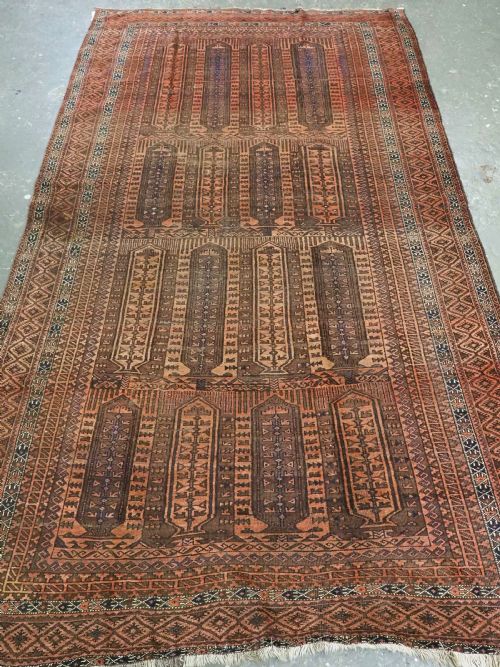
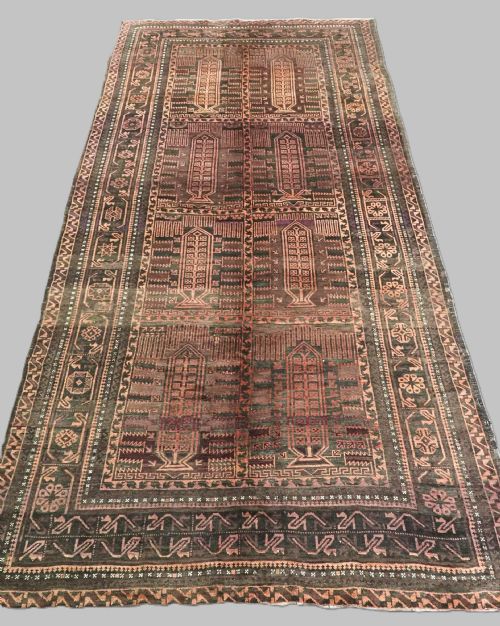
A 1900s afghan carpet brings robust tribal character and deep madder red tones directly into a room.
1900s Afghan Carpet
A 1900s afghan carpet is a hand-knotted textile originating from tribal and nomadic weavers in Central Asia. These floor coverings bridge multiple regional traditions, including Baluch, Turkmen, and Taimani aesthetics.
The selection on this page centres on pieces created around the turn of the twentieth century, specifically from 1900 through 1920. Forms range from small area rugs and double mihrab prayer rugs to large country house main carpets.
Buyers encounter distinct tribal vocabularies, such as the Kalam Donneh motif, pencil box patterns, and lattice designs. These patterns reflect the specific heritage of makers working across western and broader Afghan regions.
How they were made
Weavers constructed each 1900s afghan carpet using sturdy wool foundations and pile yarns. Natural dyes provided the saturated palette, dominated by warm reds and rich earthy undertones.
Nomadic and village workshops relied on hand-knotting techniques passed down through generations. This slow manual labour resulted in dense, resilient floor coverings built to withstand decades of daily use.
1900s Afghan Carpet Retail Price Guide 2026
Typical asking prices for 1900s afghan carpet among the pieces listed under this phrase on Sellingantiques today, from the lower quarter to the upper quarter. They describe what is for sale here now, not the wider market.
Current listings exclusively feature pieces dated to 1900 and 1920, utilising wool and natural dyes across tribal styles.
What varies in quality
Quality in a 1900s afghan carpet rests upon the tightness of the knotting and the precision of the tribal design execution. Finer knots permit greater clarity in geometric motifs and intricate borders.
The vibrancy and depth of the natural dyes also set examples apart. Rich, evenly saturated warm red tones demonstrate superior material preparation and dye mastery by the weaver.
The 1900s Afghan Carpet Glossary
- Mihrab
- A niche design found on prayer rugs that indicates the direction of prayer. Double and triple mihrab formats feature multiple arches.
- Main carpet
- A large-format floor covering traditionally produced for domestic use within a tribal household or tent. These pieces command significant floor space compared to smaller mats.
- Baluch
- A tribal designation for weavers originating from the borderlands of Afghanistan and Iran. Their work frequently incorporates deep indigo and dark red fields.
- Ersari
- A major Turkmen tribal group known for large carpets featuring güllü gol motifs and warm red grounds. Their weaving is distinguished by its substantial room scale.
- Natural dyes
- Colourants derived from plants, insects, and minerals prior to the widespread adoption of synthetic aniline dyes. They age gracefully, developing subtle patinas over time.
1900s Afghan Carpet: Frequently Asked Questions
How do I clean an old carpet?
Surface dust should be removed gently using a low-suction vacuum without a beater bar, moving carefully across the pile.
Professional specialist cleaning is required for deep washing to protect the natural wool and traditional dyes.
Can I place these on heated floors?
Natural wool and traditional foundations tolerate moderate ambient heat well when paired with a breathable underlay.
Excessive direct heat can dry out the natural lanolin in the wool fibres over extended periods.
What is a prayer rug used for?
Prayer rugs were traditionally utilised for daily Islamic ritual devotions, featuring a distinct niche motif to guide the user.
Their smaller dimensions also made them portable and suitable for personal use inside nomadic tents.
How do I identify a Turkmen piece?
Turkmen carpets typically display prominent repeated guls and deep warm red colour fields across the main carpet body.
Specific sub-tribes like the Ersari and Kizil Ayak exhibit unique border arrangements and secondary geometric fillers.