

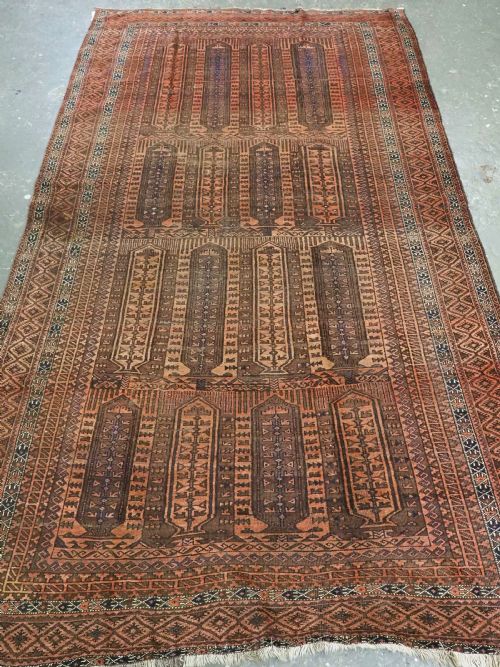
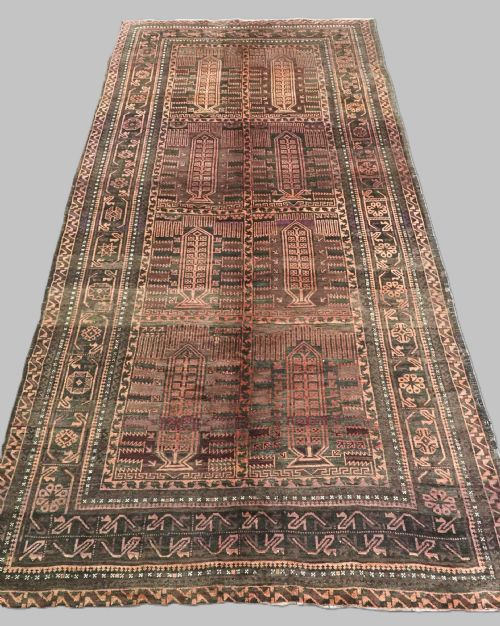


1900s Baluch Rug
These 1900s baluch rug examples are authentic tribal and nomadic textiles offering rich historical character for the home.
1900s Baluch Rug
A 1900s baluch rug represents traditional tribal weaving from nomadic and village makers operating across Afghan and Khorasan regions. Buyers searching for this phrase encounter various formats, most commonly smaller area rugs and prayer rugs featuring distinctive tribal motifs.
The selections span distinct regional subclassifications such as Mahdad Khani, Salar Khani, Taimani Sistan, and Timuri pieces. These examples display characteristic tribal designs including prayer mihrabs, box medallions, and tile patterns created around nineteen hundred.
Beyond standard floor coverings, the groupings include specialised items like saddle bag faces and large main carpets. Each specimen reflects the nomadic heritage of its makers through specific traditional layouts and field patterns.
Materials and construction
Weavers utilised natural materials including wool, cotton, goat hair, and camel hair to construct these floor textiles. These organic fibres provided the durable foundation and pile necessary for nomadic daily life.
Natural dyes imparted the characteristic palette found across these traditional carpets and rugs. The interaction of these plant and mineral colorants produced the deep aubergine grounds, camel tones, and contrasting white stripes.
Nomadic weavers occasionally inserted unexpected white stripe details to break the dark field, ensuring no two tribal carpets looked identical.
Evaluating the range
Quality differences emerge in the execution of specific regional designs, such as the precision of a pencil box pattern or a double mihrab layout. Finer examples display crisper geometry within motifs like Turkmen guls and octogen arrangements.
The handling of natural dyes and the selection of fibre materials, including scarce camel hair or goat hair accents, influence the visual depth of the pile. Superior execution results in a more striking presence on the floor or wall.
Mahdad Khani·Salar Khani·Yaqoub Khani·Taimani Sistan·Timuri
The 1900s Baluch Rug Glossary
- Mihrab
- A niche design element symbolic of a prayer arch, frequently seen repeated in single, double, or triple formats on devotional rugs. This feature oriented the worshipper during prayer.
- Gul
- A medallion or floral-like stamp motif traditional to Turkmen and related tribal weaving traditions. These repeating forms anchor the field design of the carpet.
- Kalam Donneh
- A traditional teardrop or boteh motif incorporating intricate interior detailing. This pattern recurs across classic tribal carpet fields.
- Seh Mihrab
- A design layout featuring three distinct prayer arches grouped across the upper field. This configuration is characteristic of specific regional weaving groups.
- Saddle bag face
- The decorative front panel of a utilitarian nomadic storage bag retained as an independent rug fragment. These pieces showcase compressed tribal designs in a small format.
1900s Baluch Rug: Frequently Asked Questions
What is a baluch rug?
A baluch rug is a traditional tribal textile produced by nomadic and semi-nomadic groups originating from regions spanning Afghanistan, Iran, and Khorasan. These pieces are recognised by their geometric motifs, dark palettes, and cultural symbolism.
Most examples date from the early twentieth century and were created for domestic use or travel by pastoralists. Their distinctive designs reflect generations of inherited tribal craftsmanship.
How do I identify a prayer rug?
Prayer rugs feature a prominent arch-shaped design known as a mihrab at one end of the field, which mimics the direction of Mecca. These smaller format textiles were utilised for daily devotion.
Some regional variants include double or triple mihrabs within the upper field design. This layout distinguishes them from standard main carpets and area rugs.
Where were these rugs made?
These textiles were produced by tribal groups inhabiting the borderlands between Afghanistan and the Khorasan region of Persia. Specific sub-tribes like the Taimani, Timuri, and various Khani groups each maintained distinct design vocabularies.
Nomadic movement across these regions influenced the blending of motifs and dyeing techniques found in individual carpets.
How do I live with antique tribal rugs?
Antique tribal rugs suit both traditional and modern interiors when placed in low-traffic areas or used as wall hangings to protect the pile. Pairing them with a quality underlay prevents slipping and reduces wear.
Regular gentle vacuuming without a beating bar keeps the wool and natural dyes clean. Avoiding direct, harsh sunlight preserves the rich aubergine and camel ground colours over time.