


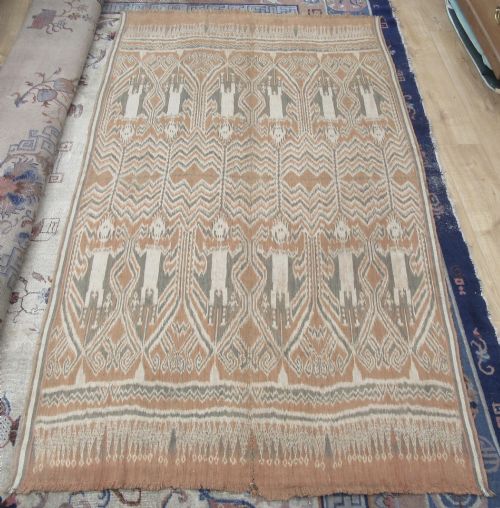


Natural Dye Tribal Rug
A natural dye tribal rug brings the rich traditions of nomadic weaving into a room, offering tactile warmth and complex historical patterns.
Natural Dye Tribal Rug
A natural dye tribal rug represents the weaving traditions of nomadic and village groups from Persia, Anatolia, the Caucasus, and Central Asia. These floor coverings and wall hangings span from the early nineteenth century through the early twentieth century, showing regional motifs passed down through generations.
Buyers exploring this selection encounter diverse formats, ranging from long runner rugs and square prayer formats to large carpets and kilims. Persian tribal groups such as the Afshar, Qashqai, Khamseh, and Bakshaish appear frequently among the listings, alongside Caucasian, Turkish, and Afghan examples.
The aesthetic relies on geometric patterns, medallions, and symbolic tribal designs rather than rigid court aesthetics. Each piece reflects the specific cultural landscape of its maker, utilising traditional formats suited for nomadic life or village use.
Materials and construction methods
Weavers constructed these textiles predominantly using wool, hand-spun wool, and camel wool, paired with handspun cotton for foundations or detailing. The natural wool provides durability and a rich lanolin texture that ages gracefully over decades of use.
Colour comes entirely from natural dyes derived from plants, roots, and minerals, which yield deep tones that soften harmoniously over time. Artisans tied these dyed yarns onto traditional upright looms, employing knotting techniques characteristic of specific tribal workshops.
Natural Dye Tribal Rug Retail Price Guide 2026
Typical asking prices for natural dye tribal rug among the pieces listed under this phrase on Sellingantiques today, from the lower quarter to the upper quarter. They describe what is for sale here now, not the wider market.
Listings feature items from the nineteenth and early twentieth centuries, constructed using wool, cotton, and camel wool with traditional natural dyes.
Distinctions in quality and execution
Quality in these textiles rests upon the precision of the knotting, the fineness of the wool, and the complexity of the dye work. Superior examples exhibit tightly packed foundations and well-balanced palettes where the natural colours interact without muddying.
The artistic merit of the design layout and the integrity of the tribal iconography also separate standard village pieces from masterworks. Tighter construction and careful preparation of hand-spun materials ensure greater longevity and visual depth.
The Natural Dye Tribal Rug Glossary
- Kilim
- A flat-woven carpet or rug produced without a pile, created by tightly interweaving warp and weft strands. These textiles often feature sharp geometric patterns.
- Prayer rug
- A small format rug featuring a mihrab or niche design, traditionally used for personal devotion. Collectors prize these for their symbolic iconography.
- Warp
- The vertical threads stretched tightly on a loom before weaving begins. These foundational strands carry the structural tension of the textile.
- Weft
- The horizontal threads passed across and through the warp strands to secure the knots. They form the stable grid of the finished rug.
- Medallion
- A central ornamental motif positioned in the middle of the field. Tribal weavers often use stepped or hexagonal versions to anchor the composition.
- Lanolin
- The natural wax present in unwashed sheep wool. It contributes to the soft sheen and resilient texture characteristic of older tribal pieces.
Natural Dye Tribal Rug: Frequently Asked Questions
How do I identify a tribal rug?
Tribal rugs typically display geometric motifs, asymmetrical tribal designs, and rustic weaves rather than formal court patterns. They originate from nomadic or village communities rather than urban workshops.
Look for regional characteristics in the wool and motifs, such as the distinct medallions found in Afshar or Kazak pieces.
What are natural dyes?
Natural dyes are colourants extracted from plant roots, bark, insects, and minerals rather than synthetic chemical compounds. They produce rich, nuanced hues that mellow gracefully over decades.
In older rugs, these dyes often display subtle tonal variations known as abrash, caused by variations in dye baths.
Where were these rugs made?
These textiles were woven across regions including Persia, Anatolia, the Caucasus, Central Asia, and Afghanistan. Nomadic tribes and village artisans produced them for domestic use, trade, or tribal ceremonies.
Each geographic area developed distinct colour palettes and structural techniques associated with local groups.
How should I care for an antique rug?
Protect antique wool textiles by vacuuming them gently without a beater bar and keeping them out of direct sunlight. Professional cleaning tailored for antique pile rugs preserves the natural fibres.
Using a quality underlay prevents slipping and reduces friction between the rug and the floor.
What is camel wool used for?
Camel wool provides a naturally soft, undyed brown or golden tone that weavers incorporated into rustic tribal carpets. It adds durability and a distinct texture to the pile.
Pieces containing camel wool often date to the nineteenth or early twentieth century.