






Baluch Woven Carpet
When you unfold a baluch woven carpet, you meet the nomadic craft of the borderlands between Persia and Afghanistan.
Baluch Woven Carpet
A baluch woven carpet brings nomadic tribal weaving into the domestic interior through formats such as main carpets, prayer rugs, kilims, and small bags. These pieces emerge from the nineteenth and early twentieth centuries, spanning periods from eighteen seventy up to nineteen thirty.
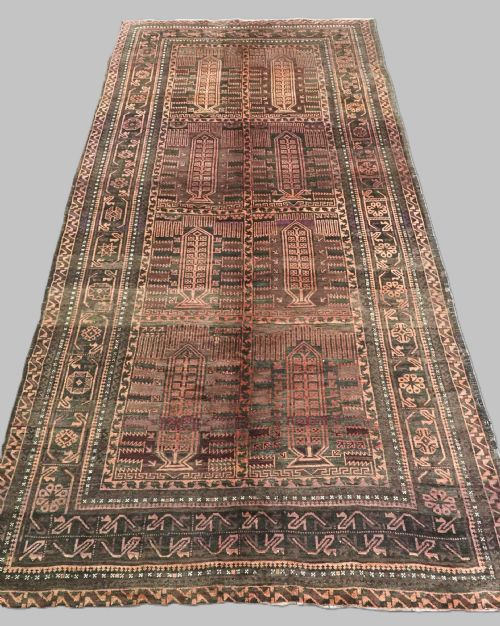
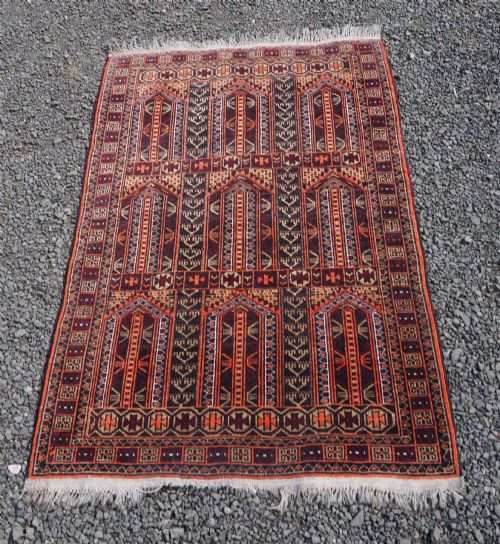
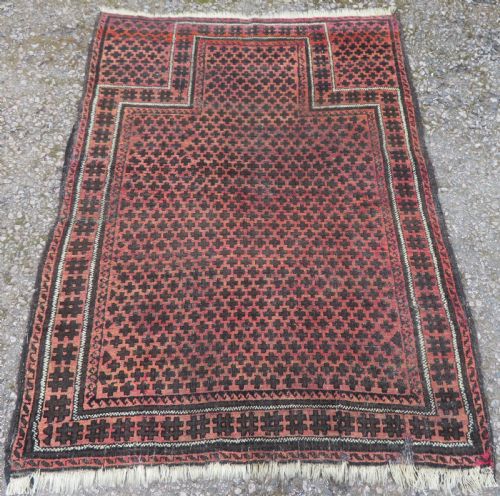
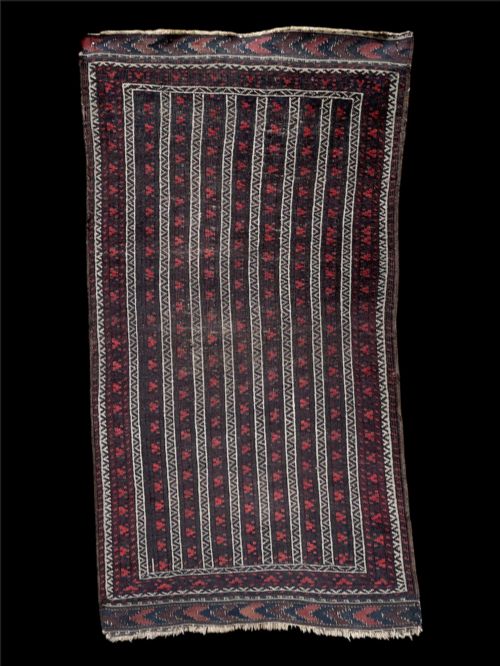
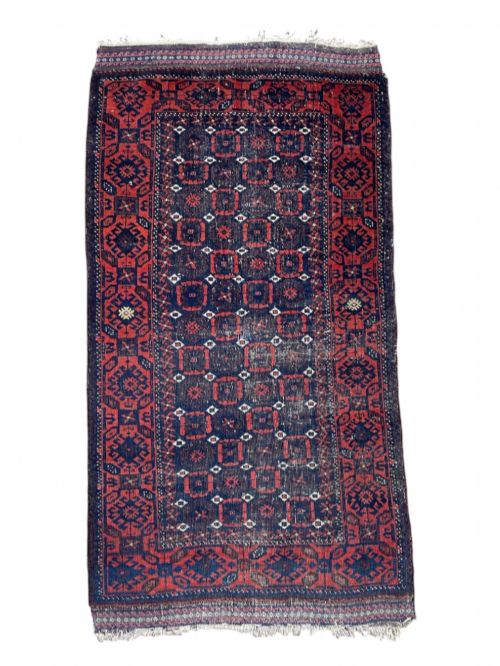
The aesthetic centres on traditional motifs including the pencil box design, kalam donneh, mina khani, and seh mihrab prayer arches. Examples frequently hail from Afghan and Persian tribal groups, reflecting the heritage of nomadic weavers.
Most pieces on offer take the form of floor rugs or wall textiles, constructed in village and tribal settings across the borderlands of north-eastern Persia and north-western Afghanistan.
Materials and construction
Weavers relied on natural materials, employing hand-spun wool, camel wool, camel hair, and goat hair alongside cotton foundations. These yarns absorbed natural dyes to yield deep, lasting tones across the field and borders.
The structure relies on sturdy wool pile knotted onto warp and weft threads, while flatweave kilims utilise bands of weftwork without pile. Nomads also produced functional domestic items such as sofreh eating cloths and salt bags using these exact textile techniques.
Nomadic weavers packed bird motifs into small utility bags alongside standard carpets.
Judging the weave
Quality rests upon the fineness of the knotting and the crispness of the geometric motifs. Tightly packed wool yields a resilient handle that withstands daily wear on the floor.
The depth and variation of natural dyes dictate visual success, with richer colour palettes distinguishing superior pieces. Balance within the repeat star, box medallion, or prayer arch patterns demonstrates the weaver's control over the design.
The Baluch Woven Carpet Glossary
- Kilim
- A flatweave textile produced without a pile. These rugs are constructed using interlocked weft threads to create geometric bands and chevron patterns.
- Sofreh
- A tribal eating cloth used for spreading meals on the ground. These flat or low-pile textiles often feature specialised field designs.
- Mihrab
- An arched design element representing the niche in a mosque. Prayer rugs use this motif to direct the placement of the worshipper.
- Guls
- Octagonal medallion motifs repeated across the central field. These patterns connect nomadic groups to broader Central Asian weaving traditions.
- Kalam donneh
- A repeating boteh or pencil box motif arranged across the rug field. This design is characteristic of western Afghan tribal weaving.
Baluch Woven Carpet: Frequently Asked Questions
How old are these rugs?
Most surviving examples date from the late nineteenth century through to the early decades of the twentieth century. Periods seen in the evidence stretch from eighteen seventy to nineteen thirty.
Datings rely on stylistic analysis, structural materials, and traditional dye usage rather than exact documentation. Pieces from the eighteen seventies and eighties often display distinct tribal palettes.
Where were they woven?
The weavers lived across the borderlands of north-eastern Persia and north-western Afghanistan. Nomadic and village groups produced these textiles for personal use and local trade.
Tribes such as the Timuri and Mahdad Khani contributed significantly to this regional output. Their geographical position influenced both the materials and the design vocabulary.
What are the common designs?
Common patterns include the pencil box or kalam donneh motif, mina khani, and the seh mihrab prayer arch. Geometric repetitions such as star in octagon designs also appear frequently.
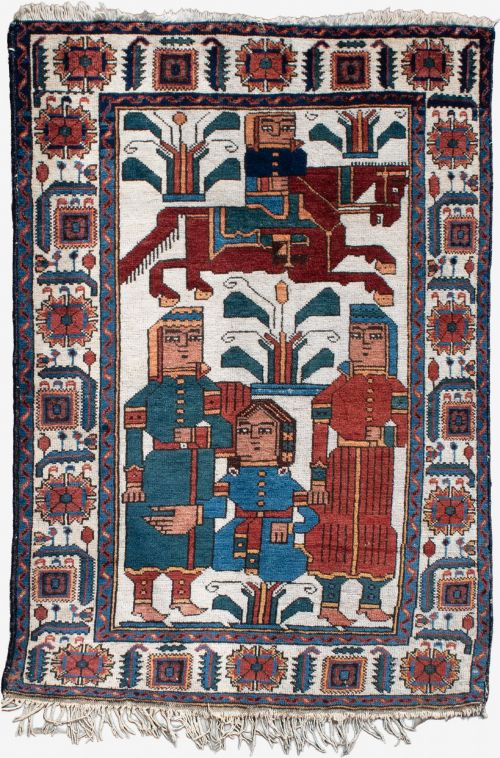
Weavers arranged these symbols to reflect tribal identity and local folklore. Pictorial rugs and birdbag containers represent rarer design departures.
How should I care for a tribal rug?
Protect the wool pile by placing the textile in low-traffic areas or mounting it safely on a wall. Regular gentle vacuuming without a beater bar removes trapped dust.
Avoid direct sunlight to preserve the integrity of natural dyes. Professional textile cleaning is recommended for antique wool pieces when washing becomes necessary.