

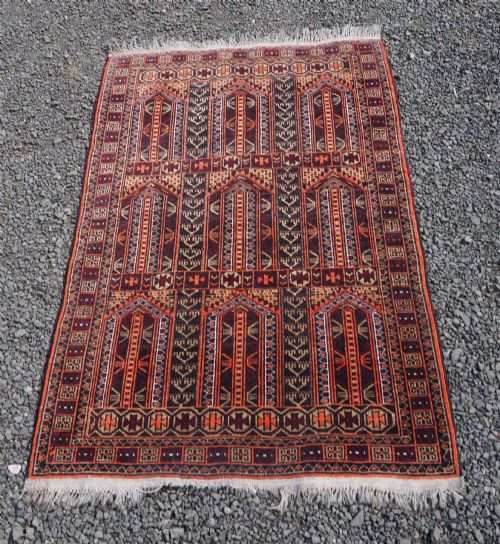
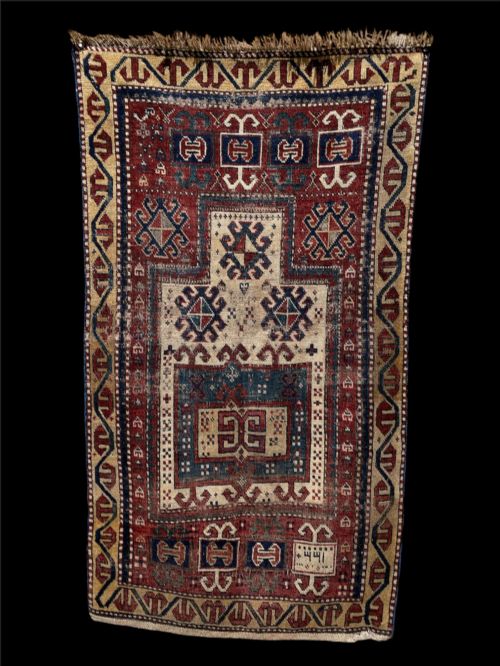
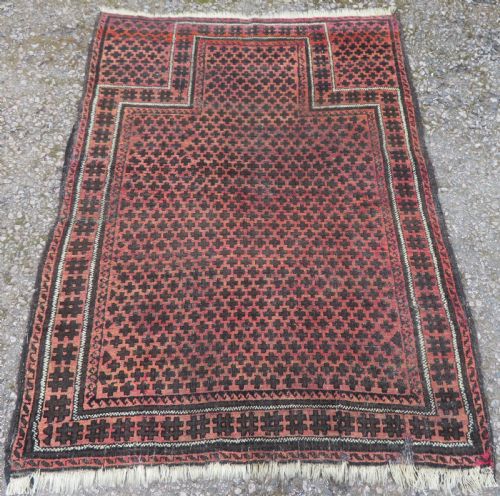


Red Tribal Prayer Rug
A red tribal prayer rug brings centuries of nomadic weaving traditions into a modern interior through rich crimson hues and distinct architectural arches.
Red Tribal Prayer Rug
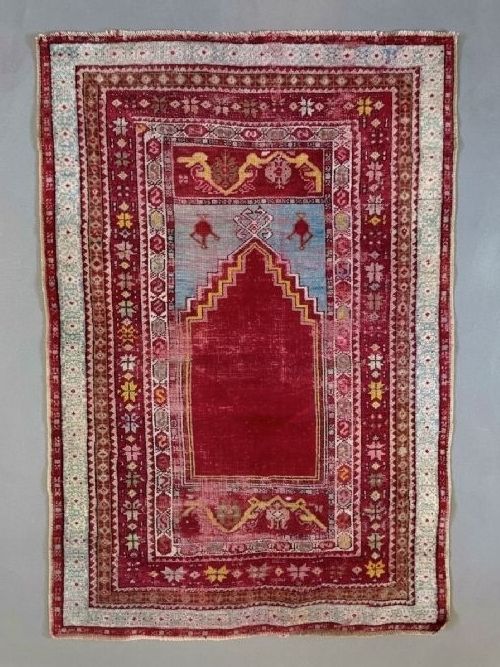
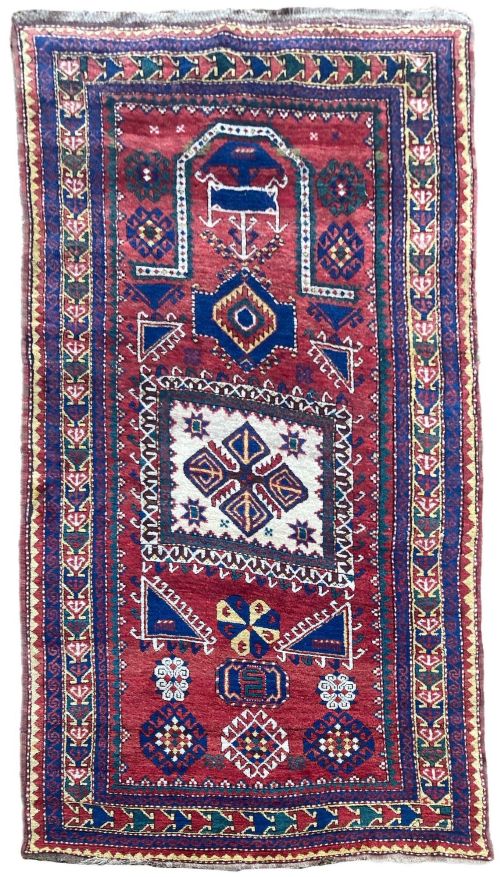
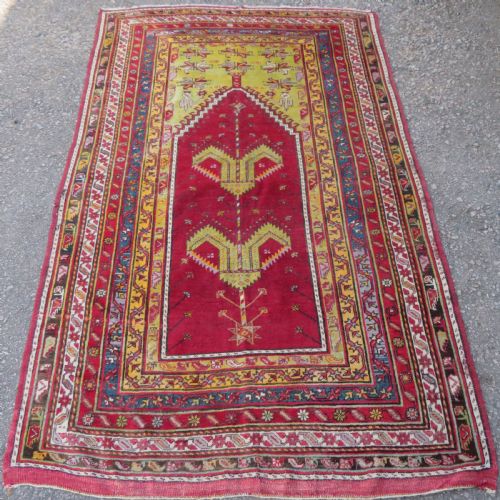
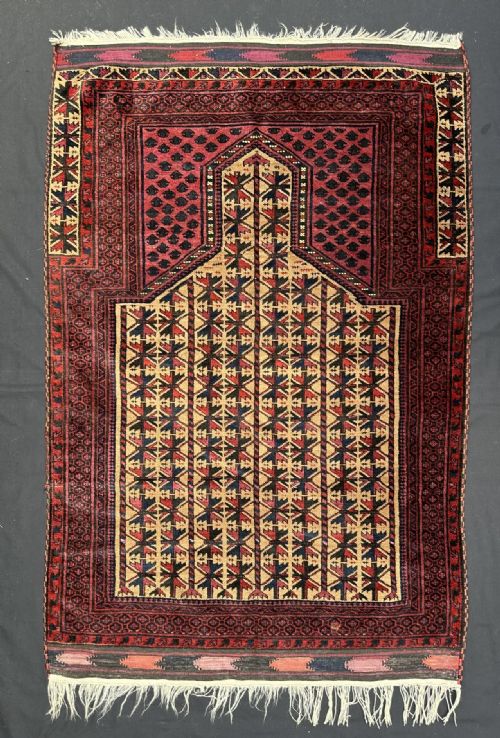
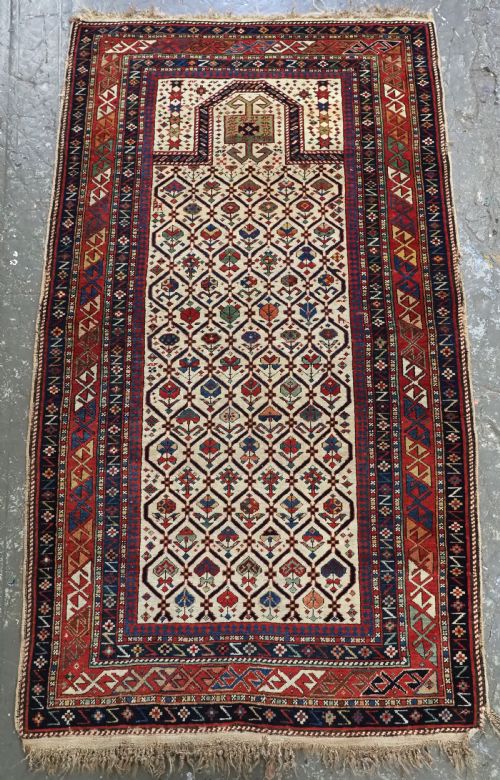
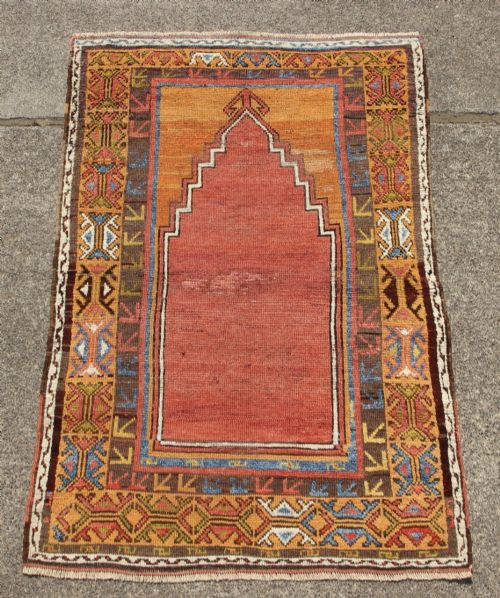
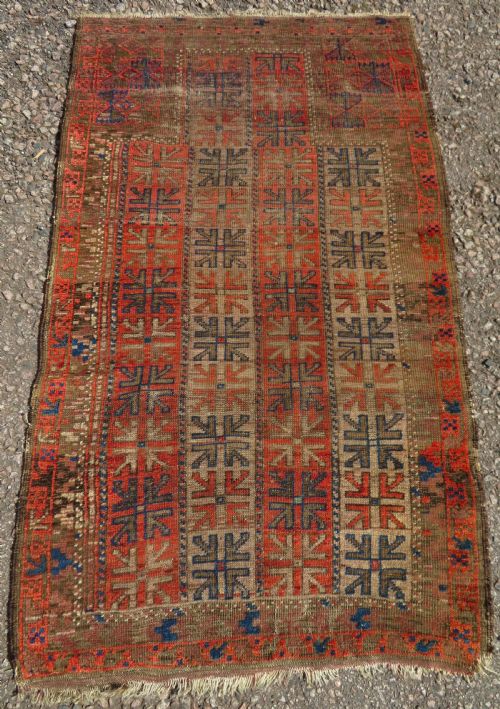
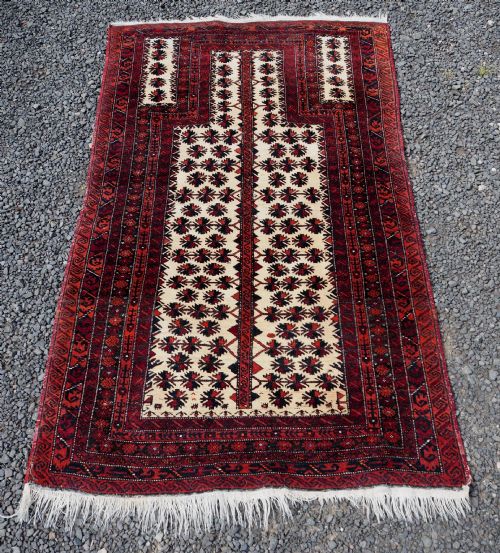
A red tribal prayer rug is a portable woven space designed for daily devotion, featuring a niche that indicates the direction of prayer. These textiles originate from village and nomadic communities across Anatolia, the Caucasus, Persia, and Afghanistan.
Makers utilised traditional formats ranging from single mihrab designs to double mihrab layouts and mosque patterns. Each district imparted specific structural traits that distinguish Caucasian weaving from Anatolian or Baluch examples.
Materials and construction methods
Weavers constructed these textiles predominantly using hand-spun wool for the pile, foundation warp, andweft threads. Natural dyes provided the deep red ground colours alongside contrasting tones of indigo, ivory, and brown.
Certain examples incorporate cotton foundations or supplementary goat hair edges for added durability along the selvedges. Silk appears occasionally in specific regional textile formats associated with embroidered Suzani traditions.
Nomadic workshops employed upright vertical looms, tying symmetric or asymmetric knots by hand across dense wool foundations. Long kilim end finishes often survived at the terminal ends of these village prayer rugs.
Some tribal weavers incorporated ram horn motifs inside the mihrab arch to invoke protection and prosperity for the nomadic household.
Determinants of quality
Quality rests upon the handled integrity of the wool, the depth and saturation of natural dye palettes, and the precision of knotting density. Superior examples exhibit high tension in the weave and minimal distortion across the geometric field.
Design clarity separates standard village production from master-woven regional pieces that display crisp architectural arches and balanced border proportions. The retention of original kilim ends and untouched selvedges elevates a textile's historical integrity.
Patina accumulated through age influences the visual harmony of the surface, where evenly oxidised madder reds reveal subtle abrash variations. Pieces retaining crisp drawing in the lattice and mihrab details demonstrate superior workshop execution.
The Red Tribal Prayer Rug Glossary
- Mihrab
- The arched architectural niche depicted on a prayer rug, symbolising the direction of prayer towards Mecca. Its shape often helps identify the specific region or tribe that wove the textile.
- Abrash
- Variations of shade within a single colour field, caused by differences in dye batches or hand-spun wool lots. This natural characteristic indicates traditional dyeing methods rather than a manufacturing flaw.
- Warp
- The vertical foundation threads stretched tightly on the loom before knotting begins. Wool or cotton warp threads form the structural skeleton of the rug.
- Weft
- The horizontal threads passed back and forth across the warp strings to lock the rows of knots in place. They contribute to the structural firmness of the flat weave and pile sections.
- Selvedge
- The finished side edges of a rug, reinforced with extra wrapping to prevent the pile and foundation from unravelling. Original selvedges are a key indicator of preservation.
Red Tribal Prayer Rug: Frequently Asked Questions
What is a mihrab design?
The mihrab is the distinctive arch pattern woven into the field of the rug to indicate the orientation for daily prayers. It serves as the primary focal point of the composition.
Different tribal groups developed unique arch profiles, ranging from steep single peaks to triple or double mihrabs that help experts attribute origin.
How do I care for an antique rug?
Vacuum these wool textiles gently with suction only, avoiding rotating brush bars that can damage delicate hand-spun pile fibres. Keep them out of direct sunlight to protect natural madder red dyes from fading.
Rotate the rug periodically to ensure even wear across high-traffic areas and consult a specialist textile conservator for professional cleaning.
Where were these rugs made?
These pieces were woven across village and nomadic settlements in Anatolia, the Caucasus, Persia, and the broader Afghan borderlands. Distinct tribal groups produced specific geometric vocabularies unique to their regions.
Communities such as the Baluch, Kazak, and Kizil Ayak incorporated local motifs and traditional weaving structures passed down through generations.
How can I tell the age?
Age is determined by assessing the structure, the presence of natural dyes, wool preparation, and regional design characteristics. Nineteenth-century examples typically feature more saturated madder red tones and finer hand-spun pile.
Examining the condition of the foundation threads, wear patterns, and surviving kilim ends provides further clues regarding the era of manufacture.