

Standing Reading Lamp
A standing reading lamp brings adjustable height and directional light directly beside a chair, combining brass, wood, and iron to illuminate a page.
Standing Reading Lamp
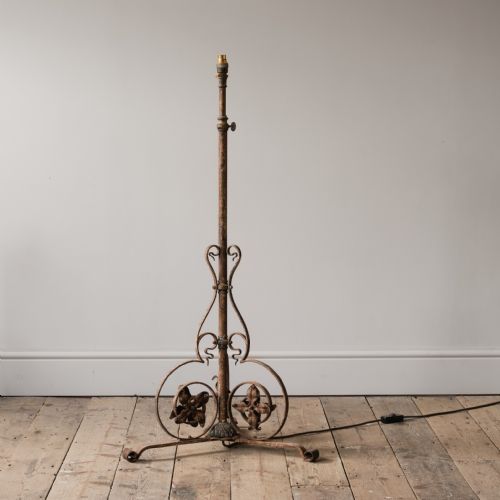
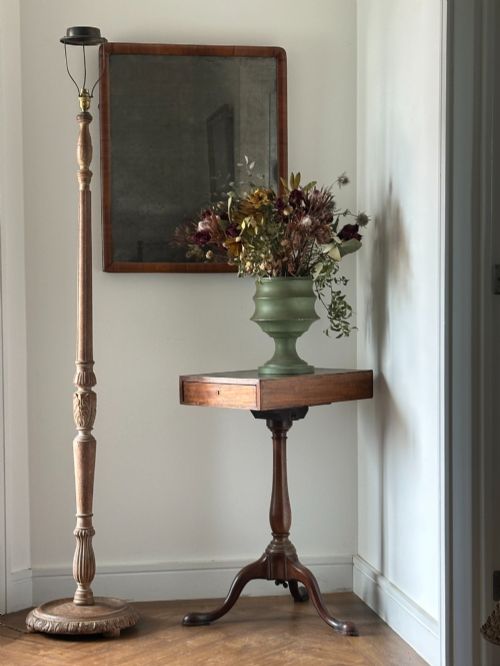
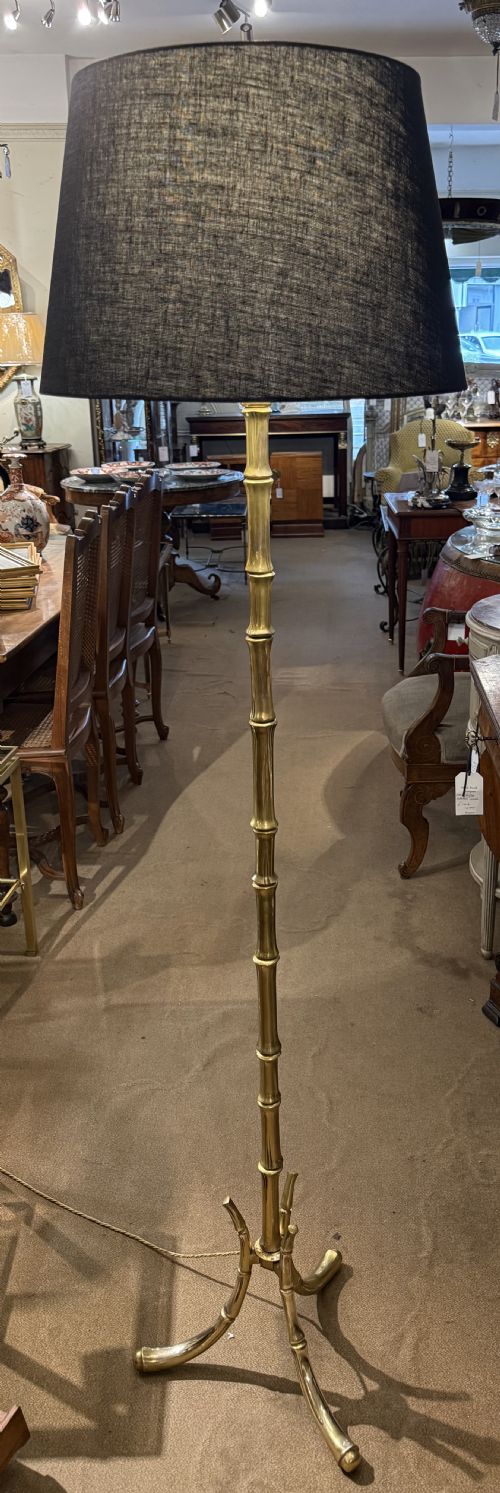
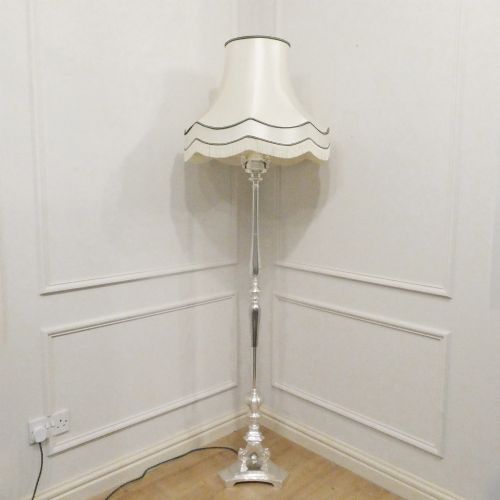
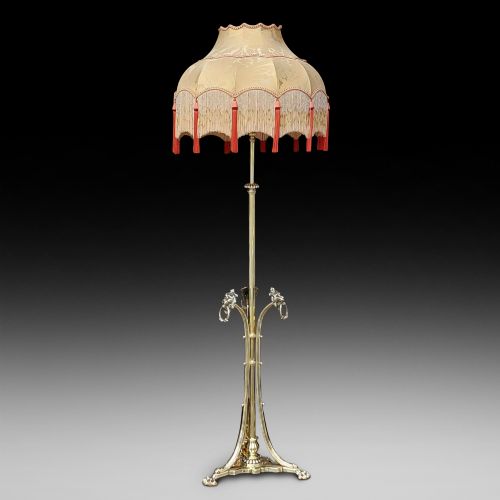
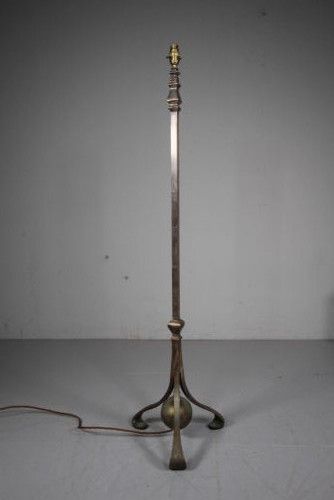
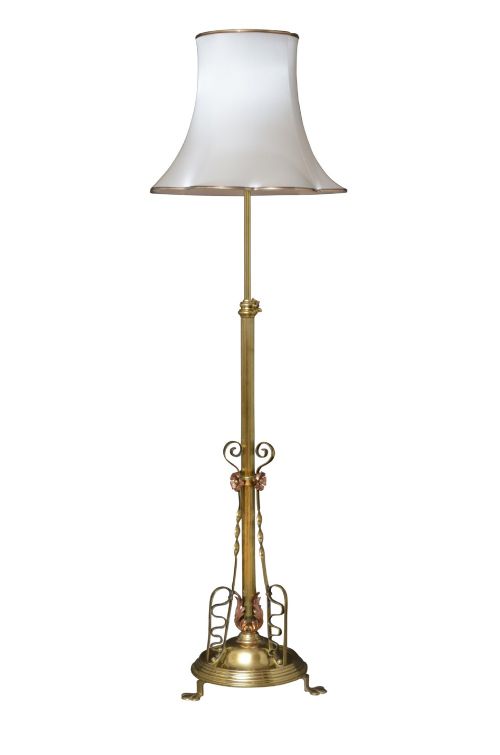
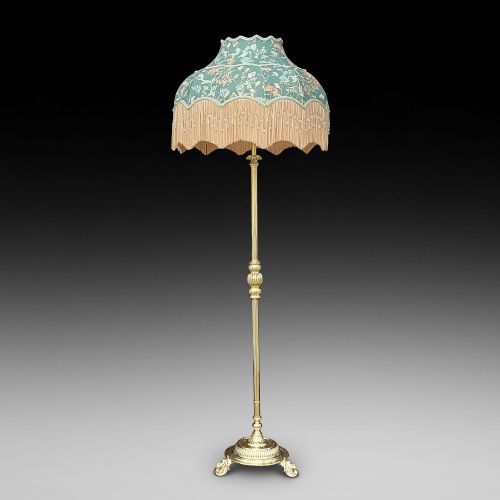
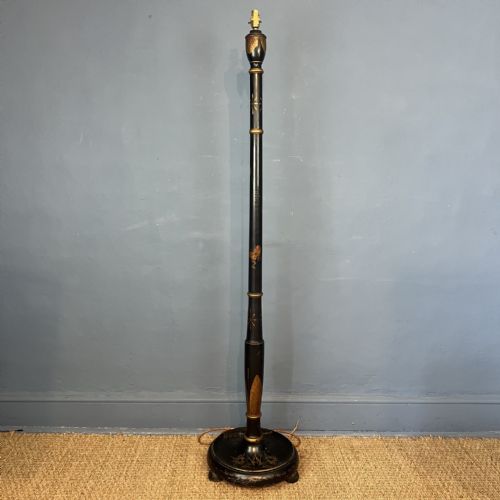
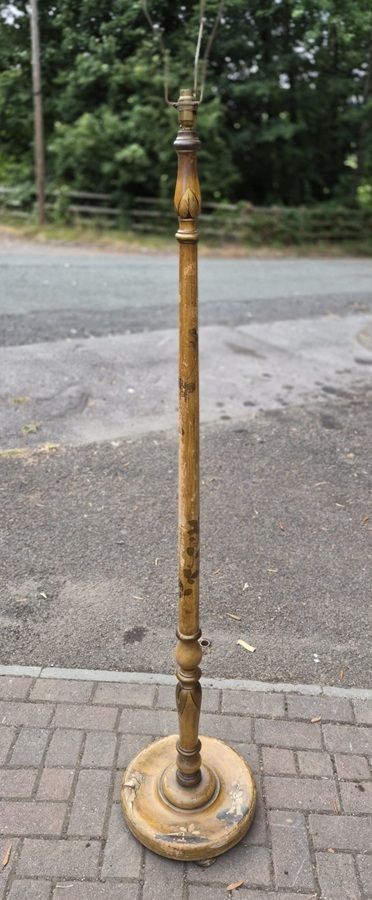
A standing reading lamp provides direct task lighting through tall floor-standing designs that position a light source above or beside a seat. You will frequently encounter brass and copper standards from the Victorian and Edwardian periods, alongside wrought iron and carved wood examples.
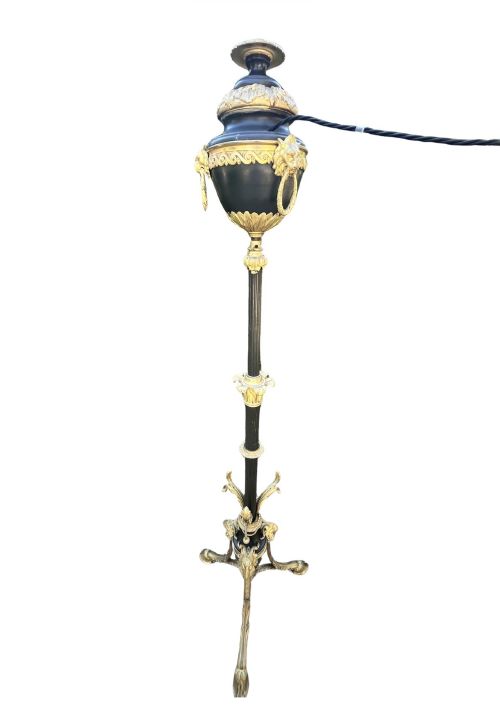
The selection ranges from heavy nineteenth-century oil lamps converted to electricity to early twentieth-century adjustable brass stems and column forms. Pieces span diverse stylistic influences including Art Nouveau, Neoclassical, Art Deco, and Arts and Crafts.
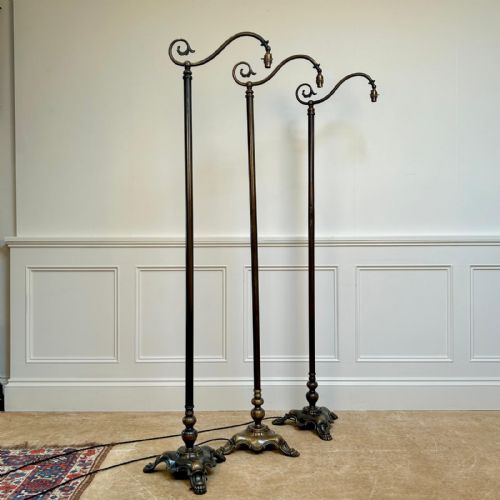
Many survivors incorporate mechanical adjustments, such as telescopic stems, swivel arms, or weighted bases designed to keep the light steady over a desk or armchair. These tall upright fittings serve as both functional reading tools and decorative furniture.
Materials and Construction
Makers utilised cast and spun brass, solid copper, wrought iron, and polished mahogany or walnut to build stable vertical shafts. Metal standards often employ heavy iron or brass bases to counterbalance extended arms and heavy shades.
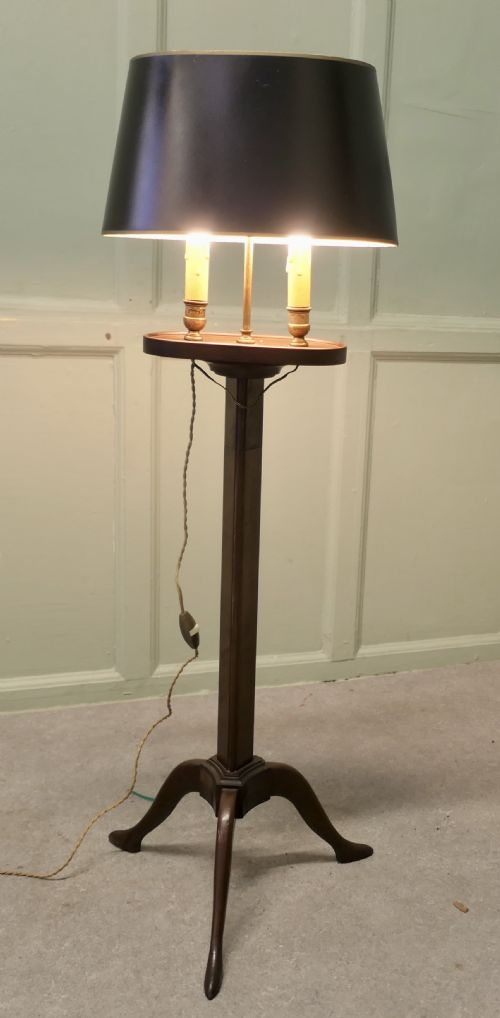
Joinery on wooden versions includes turned columns and carved tripod legs, whilst metal variants rely on threaded connections, rivets, and cast decorative collars. Many surviving electrical conversions retain their original switchgear, ceramic lamp holders, and weighted internal components.
Listings feature standing reading lamps in brass, copper, wrought iron, mahogany, and walnut across Victorian, Edwardian, and Art Deco periods.
Assessing Standard and Build
Quality rests upon the weight of the metalwork, the precision of the adjustable mechanism, and the crispness of any cast or carved detail. A superior standard lamp employs heavy-gauge brass or dense hardwoods that prevent wobble when the arm is fully extended.
Finer examples display careful hand-finishing, such as neatly chased brass enrichment, well-fitted telescopic joints, and stable weighted bases rather than hollow stamped components.
Maison Bagues
The Standing Reading Lamp Glossary
- Standard Lamp
- A tall floor-standing lamp designed to support a shade and illuminate a room from a standing position. These pieces function as independent vertical furniture items rather than table fixtures.
- Bouillotte
- A style of adjustable reading lamp originating in France, traditionally featuring twin candles or bulbs beneath a single shade. The height is managed by a sliding key on a central vertical rod.
- Corinthian Column
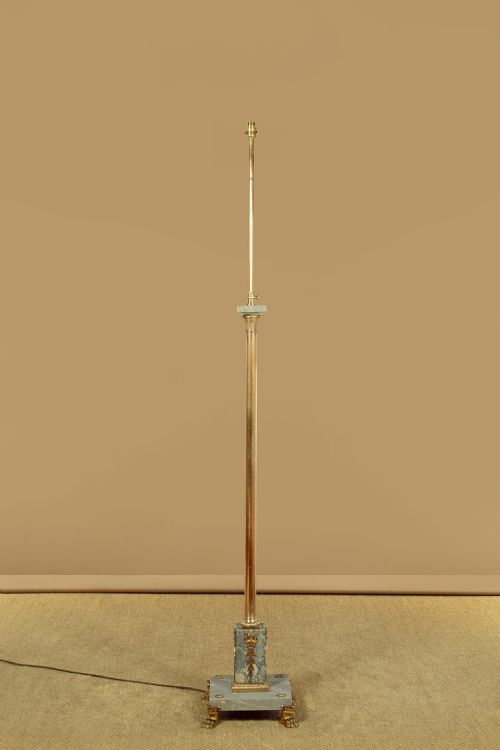
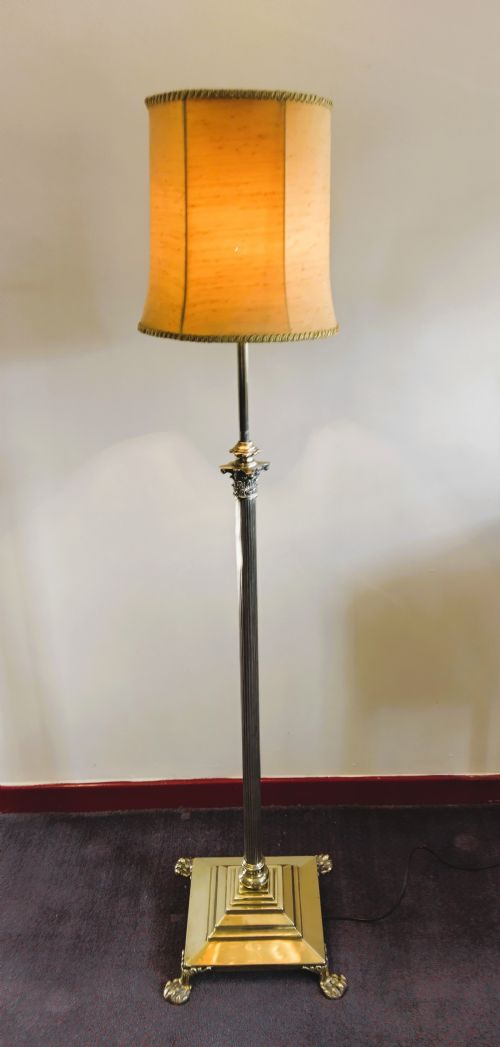
- A classical column form utilised for brass lamp shafts, featuring decorative acanthus leaves at the capital. This architectural motif appears frequently on nineteenth-century standard lamps.
- Swivel Arm
- A pivoting horizontal arm attached to the upper stem of a reading lamp. This mechanism allows the user to direct the beam precisely over a book or desk.
Standing Reading Lamp: Frequently Asked Questions
How do I adjust the height on these lamps?
Many period examples use a sliding telescopic stem secured by a thumbscrew or a counterbalanced arm with a pivot joint. You loosen the collar gently, move the shaft to the desired level, and retighten it by hand.
Avoid forcing stuck brass mechanisms, as older threads can strip if turned too aggressively without prior lubrication or cleaning.
Where should I place a standard reading lamp?
These lamps work best positioned beside an armchair, desk, or sofa where the adjustable arm can project light directly downwards onto reading material. Their slender vertical columns require minimal floor space.
Keep them clear of high-traffic walkways so the trailing flex and extended arms do not present a tripping hazard.
How do I date a brass reading lamp?
Dating relies on stylistic clues like Art Nouveau whiplash curves, Victorian Corinthian capitals, or Edwardian stepped bases. The manufacturing techniques, such as sand-casting marks or turned wooden cores, also provide clear chronological markers.
Heavier cast brass components and oil lamp conversions typically point to the nineteenth century, while lighter tubular chrome and simple walnut shafts indicate the 1920s and 1930s.