

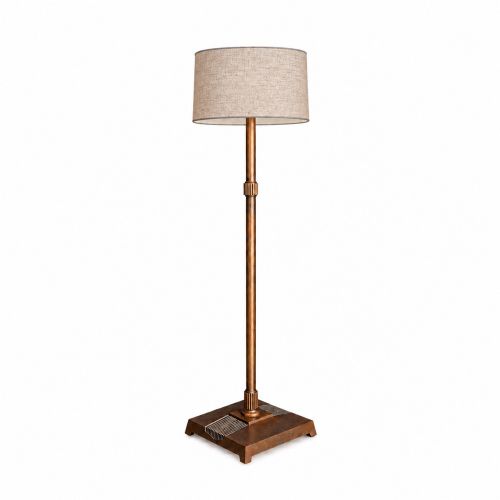
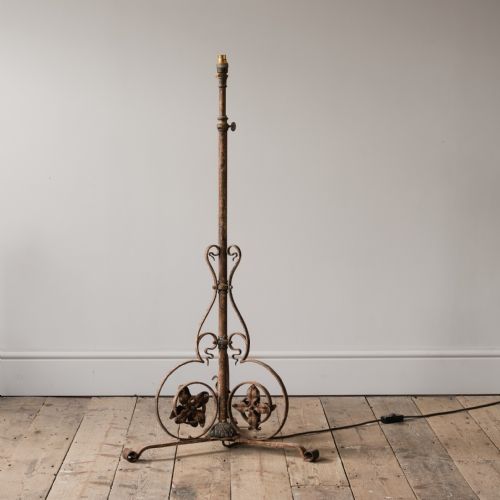
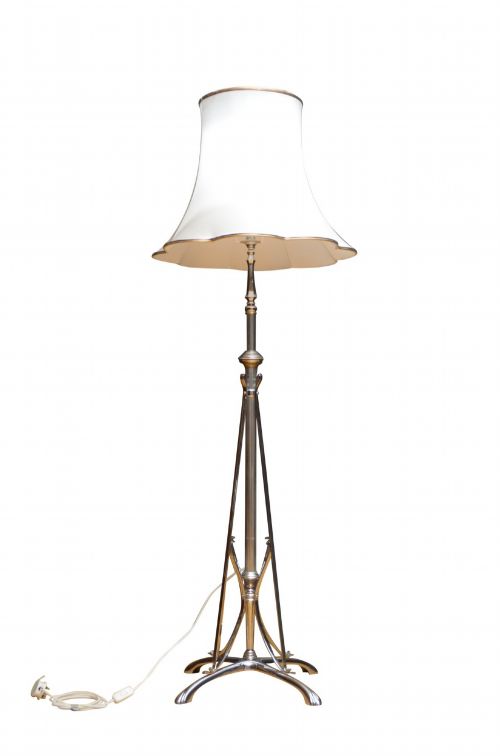


Metal Reading Floor Light
A metal reading floor light brings adjustable task illumination and period character to a room, offering both practical height and sturdy floor-standing metal construction.
Metal Reading Floor Light
A metal reading floor light is an adjustable floor-standing lamp designed to direct illumination precisely where needed for tasks. When you search for a metal reading floor light, you encounter standard lamps and floor lamps spanning the nineteenth century through the early twentieth century.
The pieces on this page draw from Victorian, Edwardian, Art Nouveau, Art Deco, Gothic Revival, Arts and Crafts, and Swedish Neoclassical styles. You are most likely to meet solid brass or wrought iron examples featuring adjustable arms, scroll arms, or telescopic columns.
Makers utilised various base metals and combinations, sometimes pairing brass with copper or onyx. Many pieces adapt early oil lamp mechanisms or incorporate fabric shades to complete the traditional form.
Materials and construction methods
Blacksmiths and metalworkers shaped these floor standards primarily from wrought iron, brass, copper, and bronze, frequently applying nickel plating or bronzed finishes for protection and visual depth. Wrought iron pieces often display hand-forged scrollwork and functional joints for adjustability.
Telescopic columns and adjustable arms required precise engineering using brass collars, threaded keys, and weighted bases to maintain balance at extended heights. Fabric shades were standard additions to soften the directional output of the metal frames.
Metal Reading Floor Light Retail Price Guide 2026
Typical asking prices for metal reading floor light among the pieces listed under this phrase on Sellingantiques today, from the lower quarter to the upper quarter. They describe what is for sale here now, not the wider market.
Listings feature brass, wrought iron, copper, bronze, and nickel plated brass across Victorian, Edwardian, and Art Deco periods.
Distinguishing quality in period metal floor lamps
Superior examples distinguish themselves through robust gauge metals, substantial weighted bases, and smooth mechanical adjustments that hold position securely without slipping. The integrity of original joints, thumbscrews, and telescopic mechanisms dictates the functional superiority of the standard.
Artistic execution in decorative details, such as hand-hammered iron surfaces, clean brass casting, or harmonious mixed-metal combinations of copper and brass, separates standard production from finer workshop pieces.
The Metal Reading Floor Light Glossary
- Telescopic column
- A vertical shaft composed of sliding sections that allow the overall height of the lamp to be adjusted.
- Standard lamp
- A British term for a tall floor-standing lamp designed to hold a light fitting and shade.
- Scroll arm
- A curved, ornamental metal arm extending from the main column, often used to suspend the light source over a reading chair.
- Gothic Revival
- A nineteenth-century design style drawing inspiration from medieval architecture, featuring pointed arches and heavy ironwork.
Metal Reading Floor Light: Frequently Asked Questions
How do I adjust a telescopic floor lamp?
Telescopic floor lamps typically feature a thumbscrew or collar near the upper section of the vertical shaft. Loosening this mechanism allows the inner tube to slide upward or downward to your preferred height before tightening it again.
Take care to support the lamp head with one hand while adjusting the height to prevent sudden drops or strain on internal wiring.
Where should I place a reading floor lamp?
These lamps suit placement beside a reading armchair, sofa, or in the corner of a study where focused downward illumination is beneficial. The adjustable arms and height options allow you to angle the light directly over seating without glare.
Ensure the heavy base rests firmly on level flooring to maintain stability when the adjustable arm is fully extended outward.
How do I identify an Edwardian brass floor lamp?
Edwardian brass floor lamps generally exhibit lighter proportions and softer decorative detailing than their Victorian predecessors. Look for restrained Art Nouveau influences, polished brass surfaces, and simpler turned columns dating from around nineteen hundred to ten.
Maker choices and wiring conversions often provide further clues to the manufacturing decade, alongside registration numbers or stamps if present on the weighted base.
Can these antique lamps take modern light bulbs?
Most period floor standards have been adapted over time to accept standard modern bulb holders and contemporary electrical plugs. It remains sensible to have a qualified electrician check older brass or iron internal wiring before regular use.
Choosing low-heat LED bulbs that fit within historical fabric shades helps protect delicate vintage materials from excessive thermal exposure.