
Standing Dressing Table Mirror
A standing dressing table mirror offers a practical vanity glass that sits neatly on chests and tables while defining a room's period character.
Standing Dressing Table Mirror
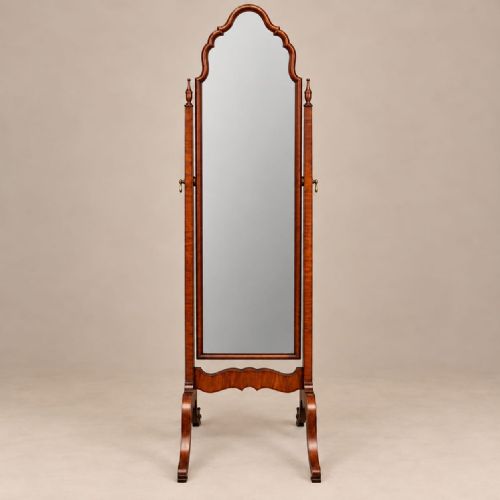
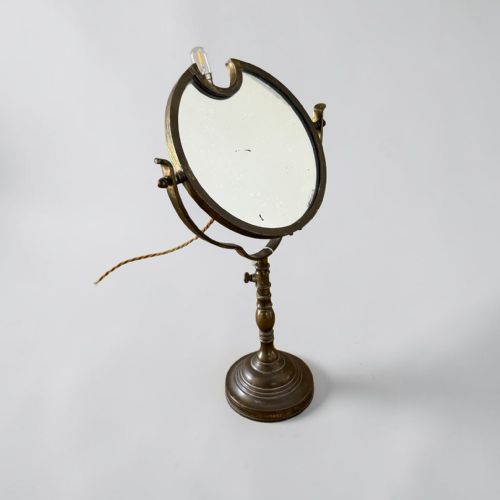
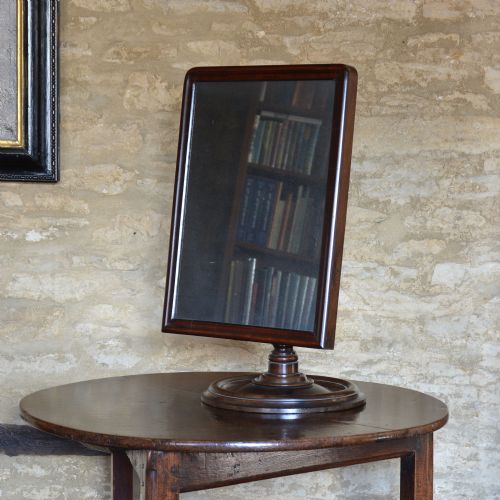
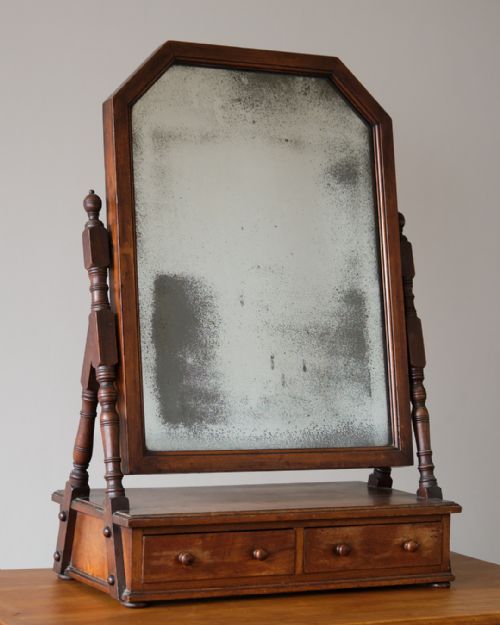
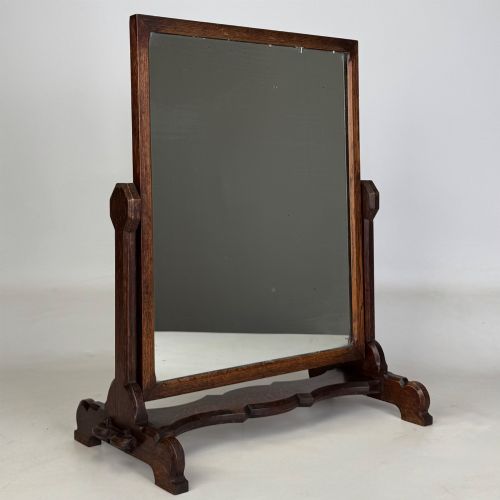
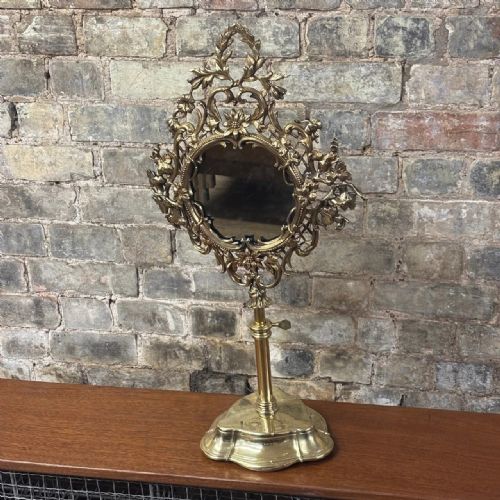
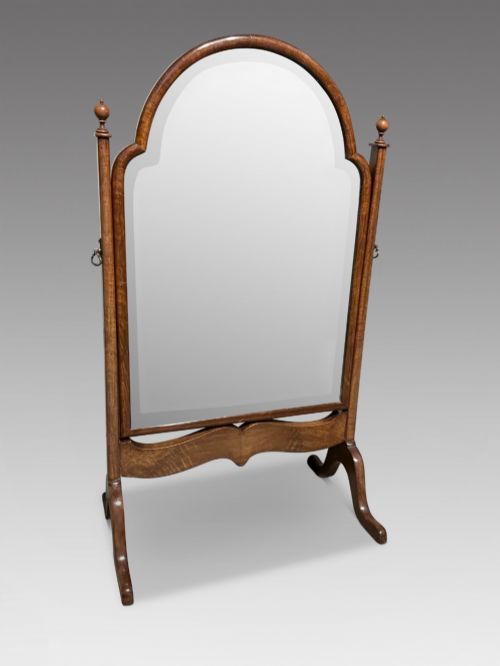
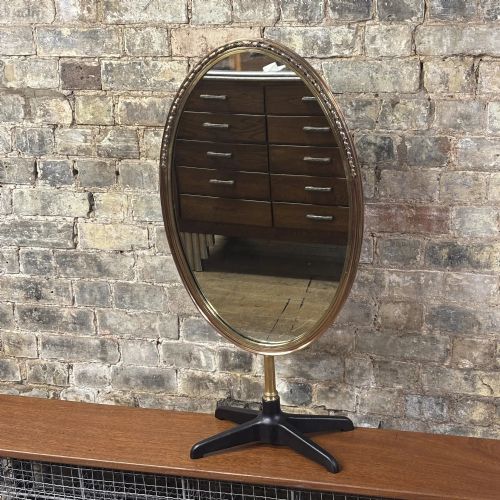
A standing dressing table mirror is a compact glass designed for grooming and surface placement, appearing across Georgian, Victorian, and Edwardian periods in various woods and metals. These items function as portable desktop pieces or adjustable swing frames mounted on small box bases.
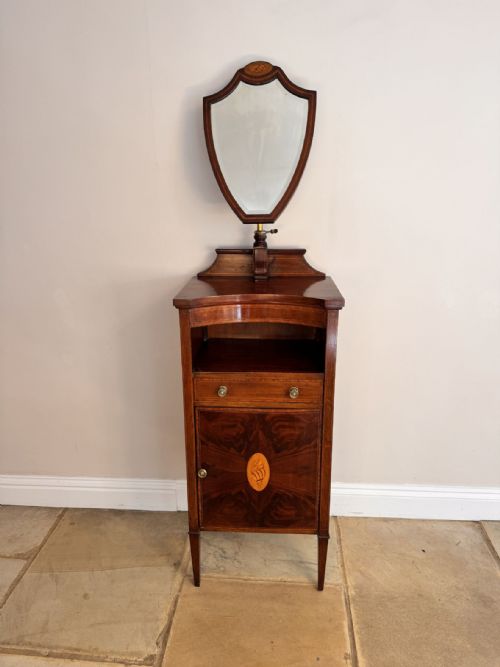
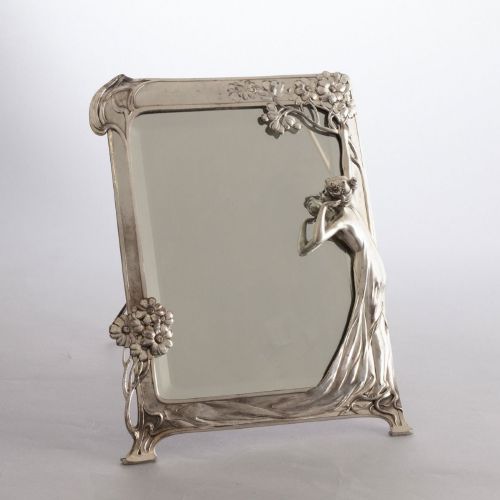
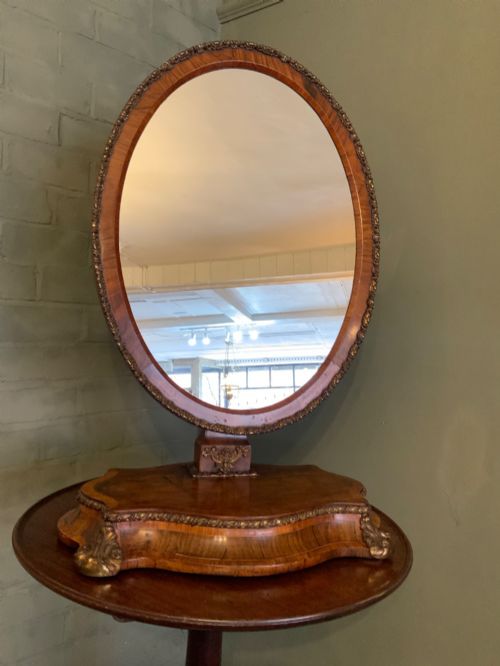
The most common examples on this page are mahogany and walnut toilet mirrors from the eighteenth and nineteenth centuries, featuring pivoting glass plates above tiny drawer compartments. Collectors also encounter brass, silver, and gilt bronze frames shaped in revivalist styles ranging from Louis XV to Art Nouveau.
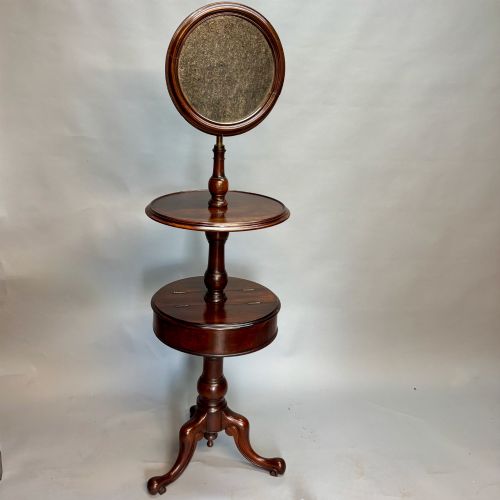
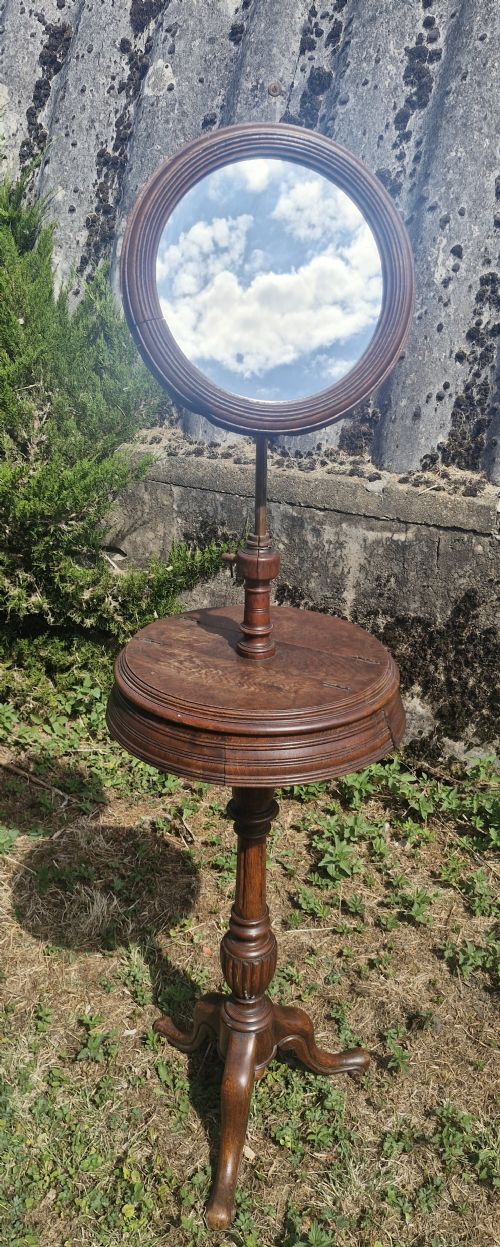
Makers and retailers such as Heal and Sons and Harrods occasionally supplied these mirrors alongside larger bedroom suites, while specialised pieces included shaving stands and telescopic tripod designs. The core formats vary from simple easel backs to heavy brass repoussé frames built to tilt.
Materials and construction methods
Cabinetmakers constructed the wooden frames from figured mahogany, walnut, oak, and satinwood, frequently employing boxwood stringing and fine dovetail joints for the miniature drawers beneath the glass. Brass, gilt bronze, pewter, and sterling silver provided durable metallic alternatives for freestanding strut frames and cast rococo mounts.
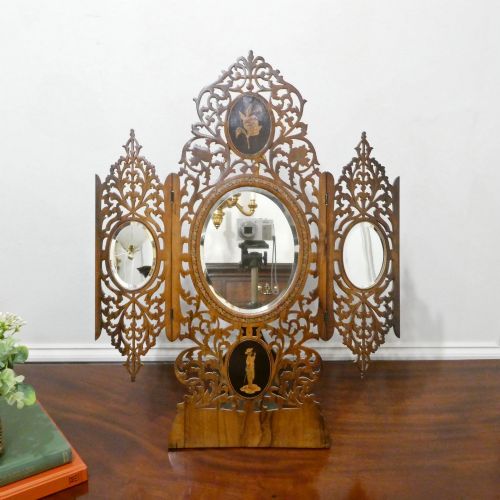
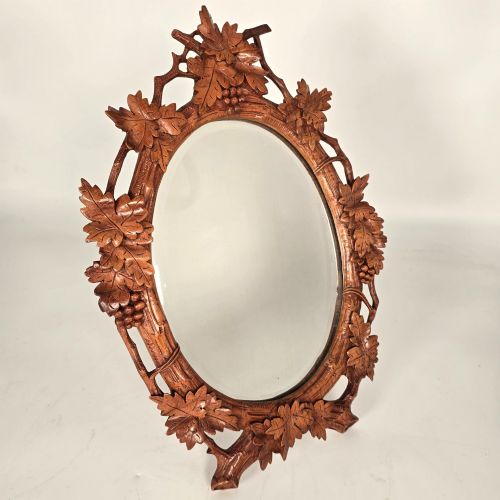
The mirror plates themselves utilise bevelled or flat glass secured within pivoting swing arms, vertical side uprights, or hinged easel supports. Carved lime wood and giltwood examples demonstrate intricate hand-tooled detailing, contrasting with the smooth champlevé enamel work found on late nineteenth-century French brass frames.
Gentlemen of the past required specialised telescopic brass stands to ensure their chins caught the morning light without slouching.
Markers of superior craftsmanship
Quality rests in the crispness of the timber carving, the clean weight of cast brass or bronze, and the integrity of the pivoting mechanism that holds the glass steady at any angle. Superior examples display carefully matched wood veneers, hand-cut dovetails on the base drawers, and original mercury or silvered mirror glass with minimal foxing.
Simpler or later mass-produced variants rely on machine-stamped metal and thin veneers over secondary conifers, lacking the substantial brass fittings and dense hardwoods found in Georgian and Victorian workshops.
WMF·Heal and Sons·Harrods
The Standing Dressing Table Mirror Glossary
- Toilet mirror
- A small mirror designed to sit on a dressing table or chest, frequently equipped with small drawers in the base. These pieces became essential bedroom furnishings during the seventeenth and eighteenth centuries.
- Swing mirror
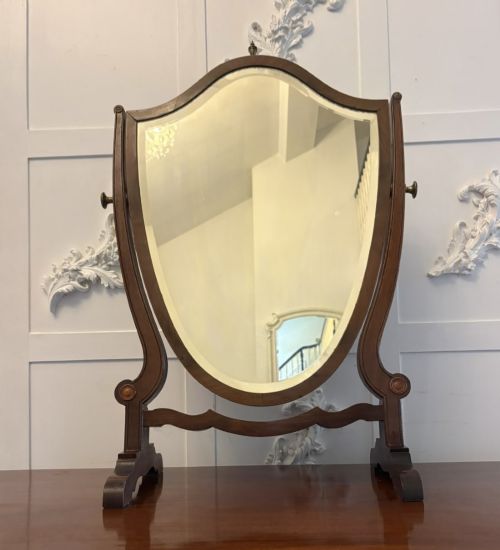
- A glass plate mounted on pivots between two upright posts, allowing the user to tilt the reflection up or down. This construction is typical of mahogany and walnut table mirrors from the Georgian and Victorian eras.
- Shaving stand
- A specialised adjustable mirror or washstand combination designed for a gentleman's morning routine. They often feature telescopic brass stems or tripod bases.
- Strut mirror
- A freestanding mirror supported by a hinged prop or leg at the rear. These are common in silver and brass designs from the Edwardian period onwards.
- Champlevé
- An enamelling technique where recessed cells are gouged into a metal surface and filled with vitreous enamel before firing. It appears frequently on late nineteenth-century French brass frames.
- Repoussé
- A metalworking method where the design is hammered into relief from the reverse side. This technique created the raised floral and scroll patterns on Edwardian brass dressing mirrors.
Standing Dressing Table Mirror: Frequently Asked Questions
How do I date an antique standing mirror?
Examine the construction of the frame, the type of wood used, and the bevel of the glass plate. Early pieces from the eighteenth century feature hand-cut dovetails and pegged joints.
Later Victorian and Edwardian examples often introduce machine-sawn timber, cast brass mounts, and thicker bevelled mirror glass that reveals distinct manufacturing shifts over time.
Were these mirrors always part of a larger set?
Many dressing mirrors were manufactured to complement specific washstands, chests of drawers, or vanity tables. However, cabinetmakers also retailed them as standalone items.
Buyers frequently paired separate toilet mirrors with antique chests of drawers based on wood grain and proportion rather than strict matched origin.
How do I maintain the pivoting mechanism?
The swing action relies on threaded brass screw caps or wooden side pins that pass through the upright posts into the frame. Check that the internal washers remain stable without over-tightening the hardware.
Apply a dry cloth to clean the metal components and avoid commercial polishes that might seep into old wood finishes or damaged foil on the mirror plate.
What is the difference between a toilet mirror and a shaving mirror?
Toilet mirrors focus on a wider glass plate mounted above a small drawer base for cosmetics and personal items. Shaving mirrors prioritize height adjustment and targeted reflection.
Shaving stands frequently incorporate telescopic brass rods, compact round mirrors, or integrated tripod bases designed for use while standing.