

Vintage Walnut Dressing Mirror
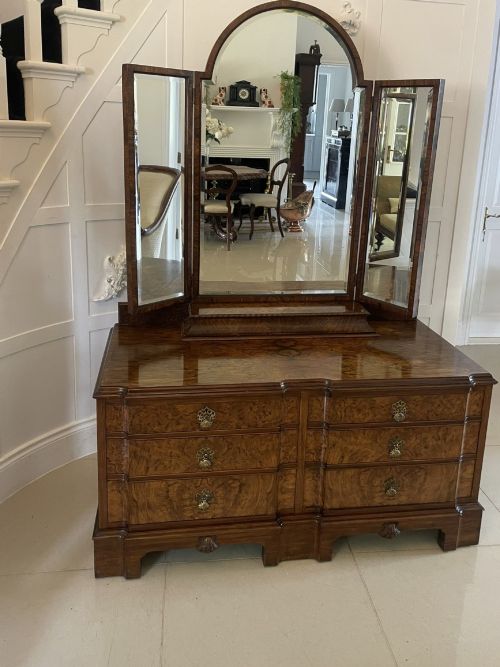
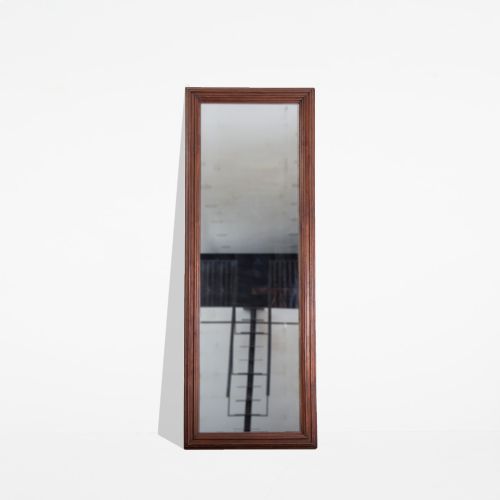
A vintage walnut dressing mirror brings rich grain and practical reflection to a bedroom, taking many forms from table swings to large chevals.
Vintage Walnut Dressing Mirror
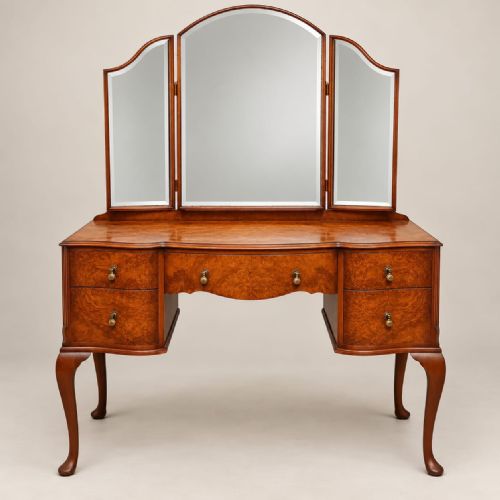
When you search for a vintage walnut dressing mirror, you find everything from compact 18th-century toilet swings to large freestanding cheval glasses and full dressing tables fitted with mirrors. The examples available span centuries of design, with pieces originating from Victorian, Edwardian, and Art Deco periods.
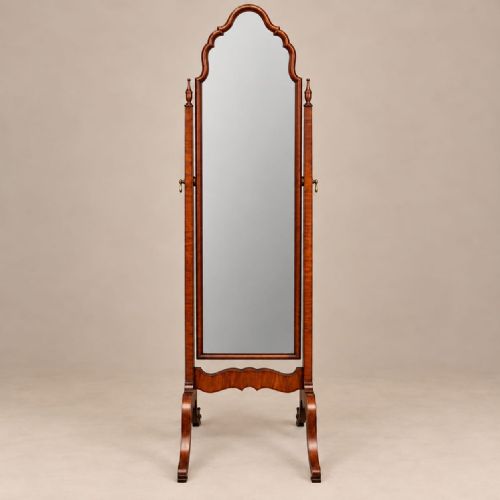
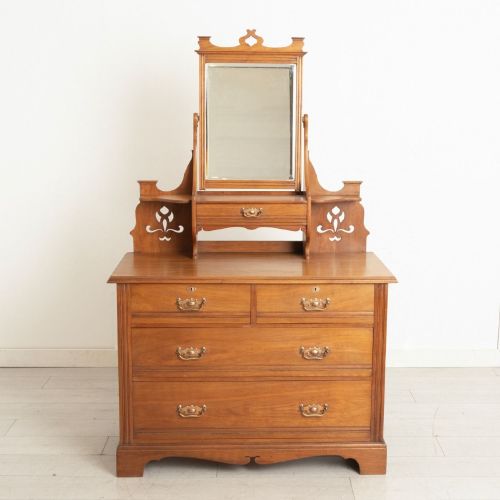
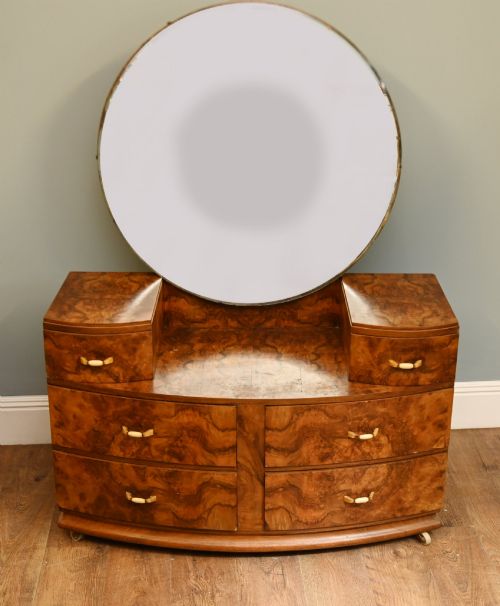
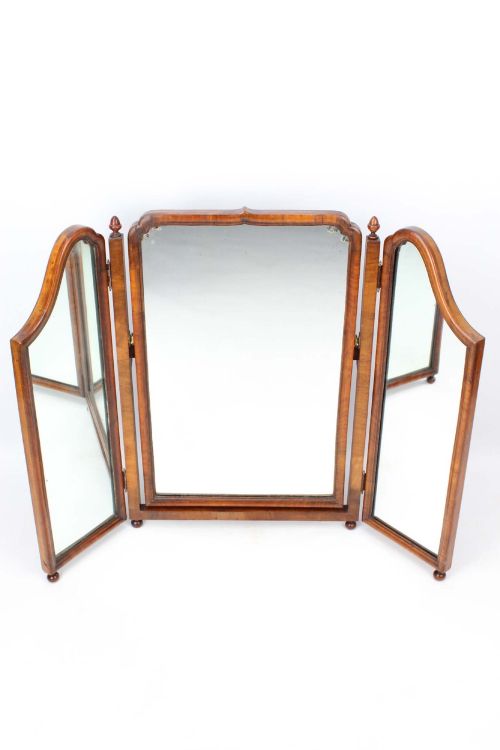
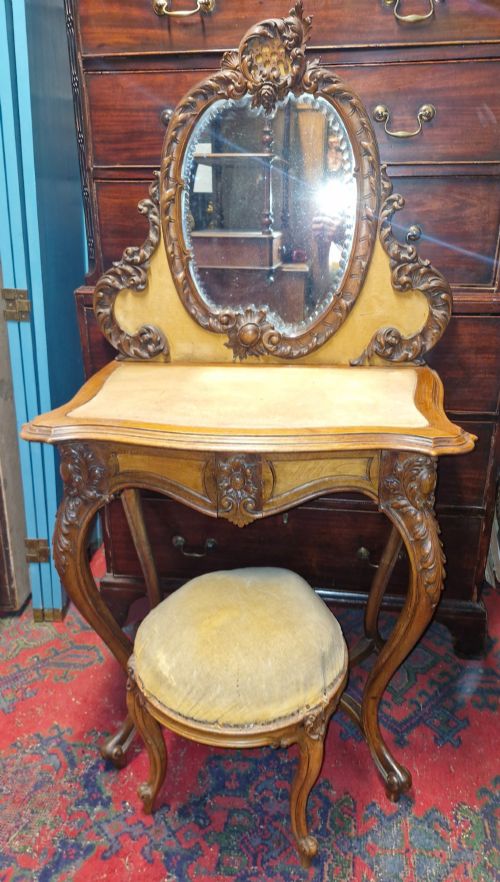
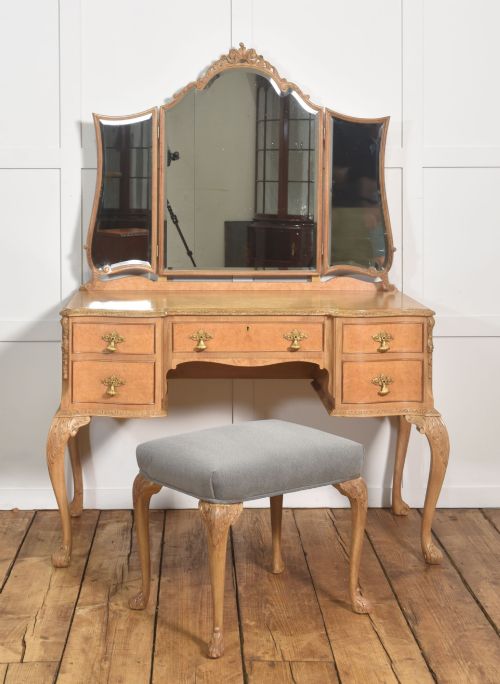
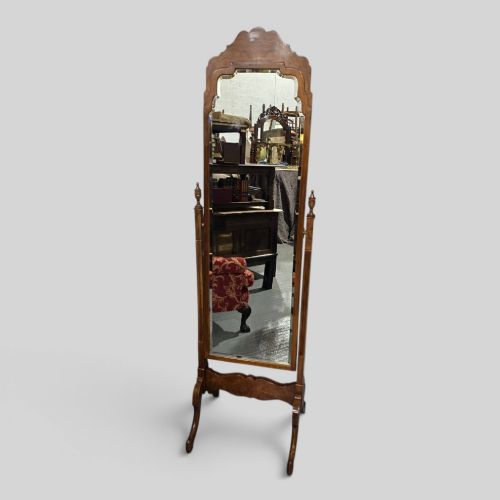
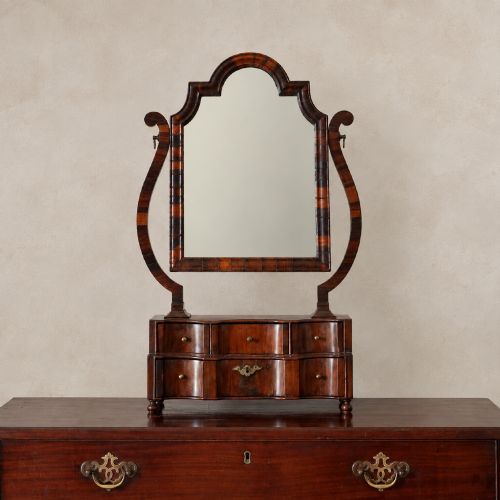
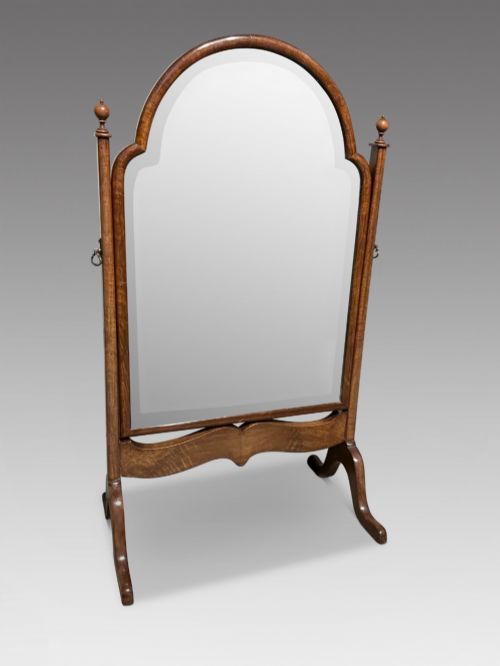
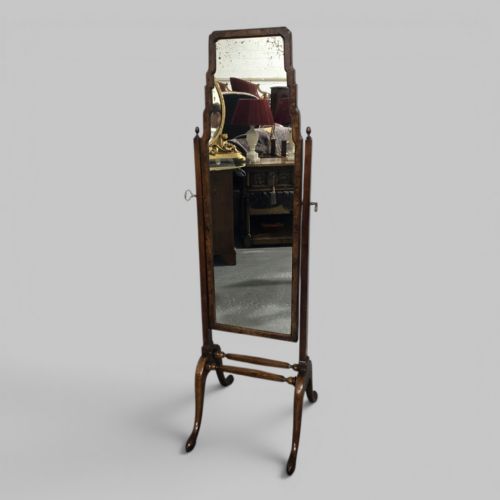
The most common versions met on this page include table-top toilet mirrors resting on small drawer bases, alongside floor-standing cheval mirrors that tilt to adjust the angle. Many are integrated directly into dressing chests or pedestals, often accompanied by matching stools or integrated lighting.
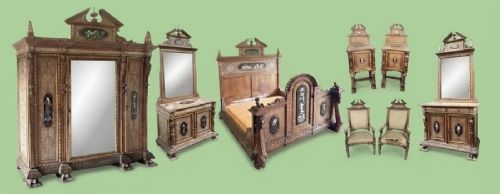
Origins vary widely across these listings, featuring English craftsmanship alongside Dutch marquetry examples and Continental Art Deco designs. Pieces range from straightforward utility items in light walnut to elaborate exhibition pieces veneered in burr walnut.
How they were made
The primary timber used across these mirrors is walnut, selected both as solid wood and as highly figured burr walnut veneers that create rich, swirling patterns across the surfaces. Secondary woods provide structural stability inside drawer boxes and framing.
Glass plates provide the reflection, historically silvered and held within rebated frames, whilst brass hinges, brackets, and swing pins allow the mirrors to tilt. Carving, barley twist supports, and delicate marquetry inlay appear on specific period pieces to add ornamentation.
Joinery techniques adapt to the form, utilising traditional frame-and-panel construction for mirror surrounds and dovetailed joints for the small drawers found in toilet mirror bases. Portable campaign pieces utilise specialised folding hardware and compact fitted compartments.
Listings feature vintage walnut dressing mirrors spanning the 18th, 19th, and 20th centuries, including Victorian, Edwardian, and Art Deco periods.
What varies in quality
The choice of veneer defines much of the visual hierarchy, separating standard plain walnut surfaces from intensely figured burr walnut panels matched symmetrically across the mirror frame or drawer fronts. The depth and clarity of the timber finishing reveal the maker's initial investment of time.
Construction robustness dictates longevity, visible in the stability of the upright supports on cheval mirrors and the smooth operation of swing mechanisms. Well-made examples maintain their tension over decades without sagging or slipping out of alignment.
Hardware quality marks the distinction between standard production and exhibition grade work, seen in heavy cast brass fittings, hand-carved details, and accurately fitted drawers that move smoothly within their housings.
Waring and Gillows·Maurice Adams·Harry and Lou Epstein
The Vintage Walnut Dressing Mirror Glossary
- Cheval mirror
- A full-length plate glass mirror supported in a freestanding frame that allows the glass to swing freely. These tall pieces typically stand directly on the floor.
- Toilet mirror
- A smaller glass mirror mounted on a miniature frame or drawer base designed to sit on top of a table or chest. They were essential dressing accessories before fitted wall mirrors became common.
- Burr walnut
- A decorative wood veneer harvested from the irregular growth knots of the walnut tree. It produces highly figured, swirling grain patterns highly prized for luxury cabinet work.
- Marquetry
- The art of applying small pieces of veneer to a structure to form decorative patterns or pictures. Dutch makers utilised this technique extensively on walnut furniture.
- Pedestal dressing table
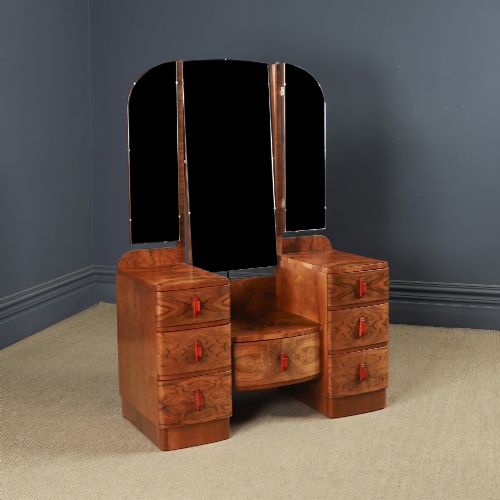
- A large dressing unit featuring banks of drawers on either side supporting a central mirror. These substantial bedroom pieces often date from the Victorian and Art Deco eras.
Vintage Walnut Dressing Mirror: Frequently Asked Questions
What is the difference between a toilet mirror and a cheval mirror?
A toilet mirror is designed to sit on a tabletop or chest of drawers, usually incorporating a small box base with tiny drawers for trinkets. It offers an upper-body reflection for grooming.
A cheval mirror is a tall, freestanding floor piece that shows the entire figure. It uses a pivoted frame supported by two vertical uprights and feet, allowing the entire glass to tilt.
How do I date a walnut dressing mirror?
Dating relies on combining the overall style, construction methods, and hardware. 18th-century pieces often feature simple proportions with feather banding and keyhole escutcheons, while Victorian examples show heavier mouldings and darker finishes.
Art Deco mirrors from the 1930s introduce geometric shapes, streamlined pedestals, and highly figured burr walnut veneers without traditional period revival carving.
Can these mirrors be dismantled for moving?
Freestanding cheval mirrors can typically be separated from their side standards by unscrewing the pivot knobs, allowing the glass frame to come away from the base.
Table-top toilet mirrors usually remain as one single unit, though the swing frame can occasionally be lifted out of the supporting arms by removing the side screws.
How do I clean and care for burr walnut veneer?
Burr walnut requires gentle dusting with a dry, soft cloth to prevent particulate buildup. Avoid modern silicone sprays and harsh chemical cleaners that can degrade the aged polish.
Apply a traditional beeswax polish sparingly once or twice a year to nourish the timber and maintain a soft, protective sheen across the figured grain.