




Standing Brass Jardiniere
A standing brass jardiniere brings sculptural plant display to a room, uniting functional horticulture with decorative metalwork.
Standing Brass Jardiniere
A standing brass jardiniere is a dedicated receptacle designed to elevate greenery or flowers within a domestic interior. These objects frequently cross paths with wine coolers, cellarettes, and plant stands, reflecting the versatile nature of interior vessels through the nineteenth and early twentieth centuries.
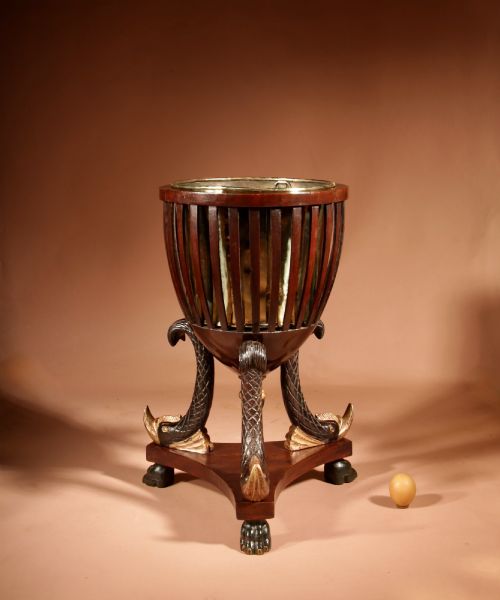
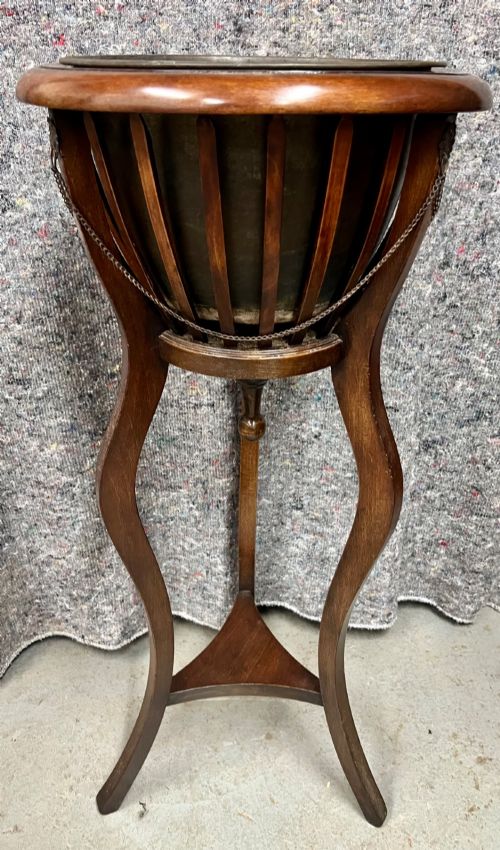
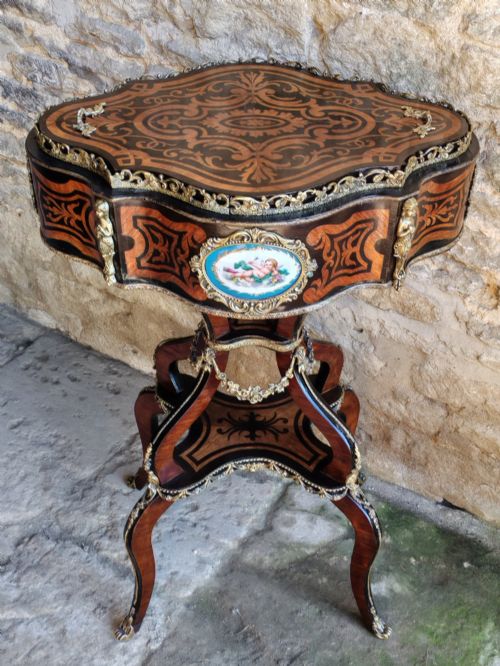
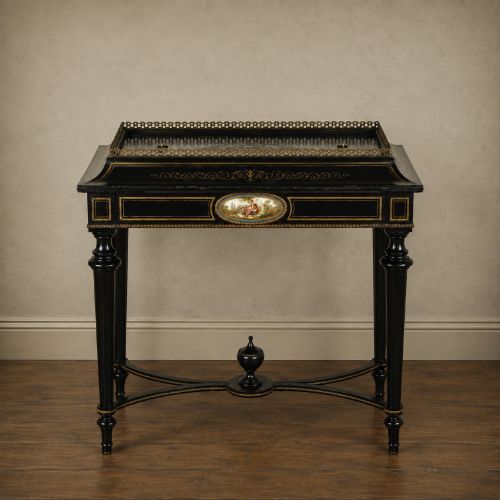
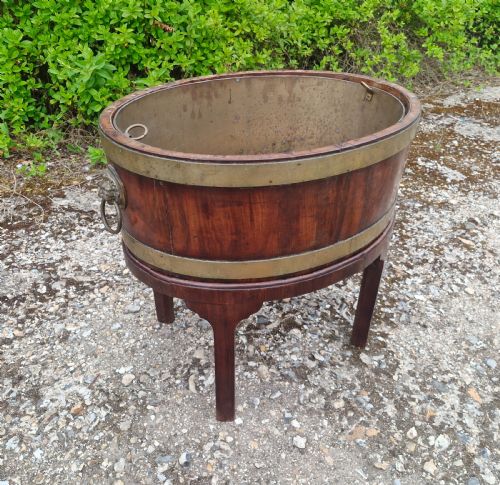
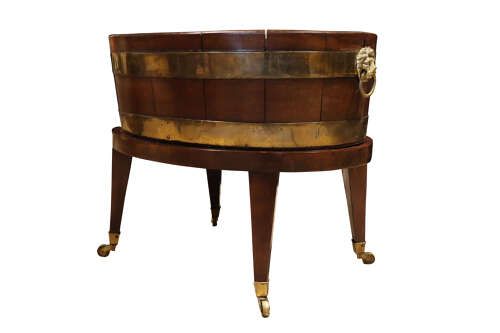
The specimens met on this page span the Georgian, Victorian, and Edwardian eras, alongside continental manifestations like French Napoleon III pieces and Dutch coopered buckets. Buyers most commonly encounter brass vessels mounted on dedicated wooden or metal stands, or standalone coopered barrels banded in brass.
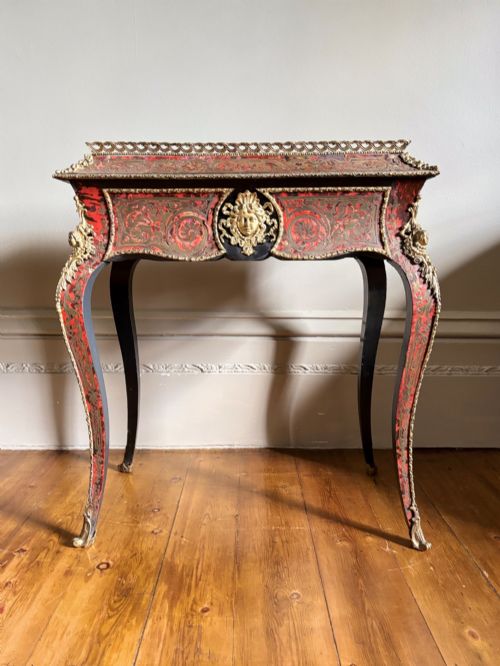
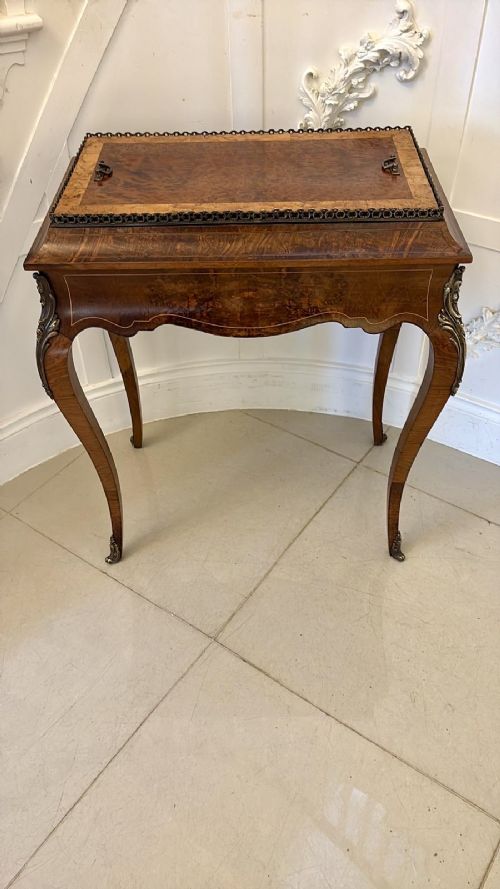
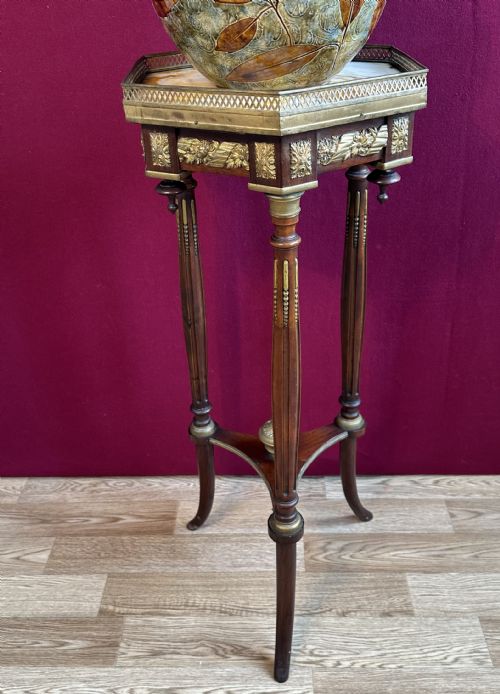
Forms range from simple cylindrical plant holders to elaborate tables incorporating marquetry, porcelain plaques, and gilt metal mounts. Such diversity indicates how fluidly makers treated the boundary between botanical display and formal furniture.
Distinctions in craftsmanship
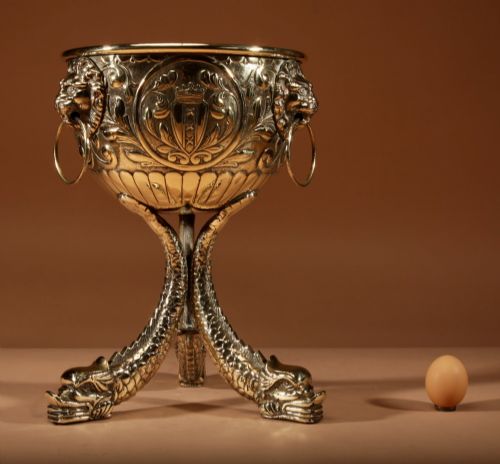
Quality rests in the integration of the brass vessel with its structural support, where bespoke joinery and substantial metal gauge elevate an example above standard production. Pieces that incorporate complex decorative elements like hand-embossed brass, inlaid marquetry, or painted porcelain plaques demonstrate superior artisan investment.
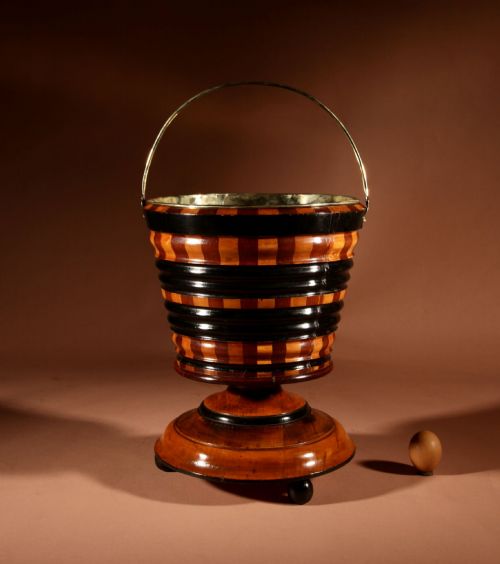
The integrity of the timber body and the precision of the brass binding dictate the success of coopered items. Finer examples retain their original stands and liners, preserving the proportional balance intended by the maker.
Several examples double as cocktail party accessories, proving that Victorian ferns and Edwardian champagne bottles shared very similar tastes in architecture.
Lister and Co
The Standing Brass Jardiniere Glossary
- Jardiniere
- An ornamental pot or stand for holding plants or flowers. Originating from the French word for gardener, these vessels became central to Victorian and Edwardian interior decoration.
- Coopered
- Made with stave construction bound by metal hoops, much like a traditional barrel. This technique ensures durability and watertight integrity in wooden planters and wine coolers.
- Cellarette
- A lockable container used for holding wine bottles, often sharing identical forms and brass-bound wooden construction with plant jardiniere stands.
- Dinanderie
- The historical term for objects made of brass or copper, particularly associated with beaten and embossed decorative metalwork produced in Europe.
- Marquetry
- The art of applying pieces of veneer to a structure to form decorative patterns. This technique frequently graces the wooden bodies and tabletops of nineteenth-century planters.
Standing Brass Jardiniere: Frequently Asked Questions
Were these used for wine?
Many examples served a dual purpose as wine coolers or cellarettes alongside their botanical functions.
Coopers built watertight wooden vessels banded in brass that could accommodate ice and bottles just as easily as earth and plants.
How do I date a brass planter?
Dating relies on identifying the underlying timber species, construction methods, and stylistic cues of the supporting stand.
Georgian pieces favor solid mahogany and simple coopered lines, whereas Victorian and Edwardian iterations often introduce ebonised woods, marquetry, and pressed brass detailing.
Can these hold plants directly?
Most antique jardinieres require a modern inner liner to protect the historic wood or metal from moisture damage.
Inserting a contemporary pot prevents water stagnation and preserves the interior condition of the vessel.