
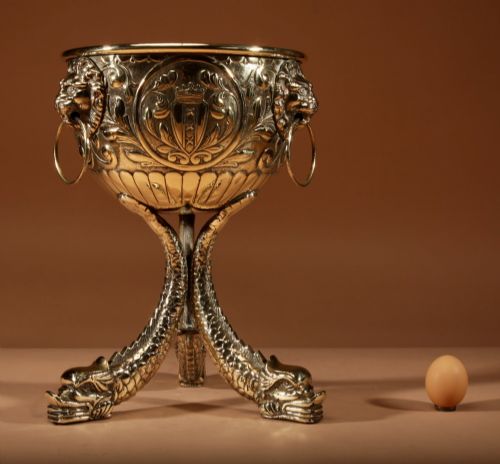


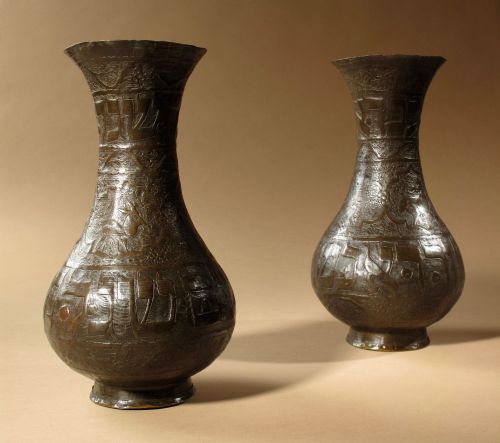


Repousse Brass Urn
These repousse brass urn pieces are decorative metal vessels featuring raised surface ornamentation, sought after for their intricate hand-worked relief details and period character.
Repousse Brass Urn
When you search for repousse brass urn, you encounter a selection of vessels and jardinieres shaped from metal with raised hammered designs. These objects originate from various periods including the Victorian era, the late nineteenth century, and the nineteen-twenties.
The items listed on this page encompass French trophy vases, decorative planters, jardinieres, and spirit kettles fashioned from brass and copper. Many pieces display distinct stylistic influences such as Renaissance Revival, French Chateau, French Rococo Revival, Judaica, and Chinese Export.
You are most likely to meet Victorian brass planters and embossed jardinieres alongside French copper and brass urns featuring chased floral decoration. These forms served decorative and practical household functions, often doubling as log bins or plant stands.
How they were made
The construction of these items relies on sheet brass and copper, sometimes combined with wood components or cast elements. Artisans shaped these metals through beating, embossing, and chasing to create raised surface patterns.
Techniques such as dinanderie work appear alongside cast brass details and hand-embossed floral motifs. Makers hammered the metal from the reverse side to push the design outward before refining the surface details by hand.
The inventory on this site spans the Victorian period, the nineteenth century, and the nineteen-twenties, incorporating brass, copper, and wood.
What varies in quality
Quality in these metal vessels rests upon the depth and crispness of the raised relief work, where deeply hammered and clearly defined motifs separate superior examples from plain ones. The skill of the artisan shows in the fluidity of chased floral decoration and the clean integration of handles and stands.
The gauge of the brass and copper influences the structural integrity of the piece, with heavier metals holding their form and detail better over time. Furthermore, the stylistic coherence of revival designs and the finesse of cast attachments distinguish standard utilitarian items from finer decorative works.
The Repousse Brass Urn Glossary
- Repousse
- A metalworking technique where the metal is hammered from the reverse side to form a raised design in relief on the front. This method creates tactile surface decoration on brass and copper vessels.
- Dinanderie
- A term for medieval and later brass or bronze wares produced in towns such as Dinant in Belgium. It describes decorative objects fashioned from beaten and cast brass.
- Chased
- A process of refining metal surfaces by sinking the metal with a hammer and punch rather than removing it. This technique adds fine lines and details to repousse work.
- Jardiniere
- An ornamental pot or stand designed to hold plants or flowers. These vessels often sit on short feet or pedestals and appear in brass, copper, and mixed metals.
- Trophy vase
- A large two-handled decorative vessel modelled on classical presentation cups. These pieces function primarily as ornamental display objects rather than functional containers.
Repousse Brass Urn: Frequently Asked Questions
What is a repousse brass urn?
A repousse brass urn is a decorative metal vessel adorned with raised designs hammered from the reverse side of the sheet. These items encompass jardinieres, vases, and planters produced during the nineteenth and early twentieth centuries.
They reflect various design movements including Renaissance Revival and French Rococo, serving as ornamental centrepieces or practical plant holders in period interiors.
How do I date a brass urn?
Dating these vessels involves examining the manufacturing techniques, material combinations, and stylistic markers visible on the piece. Items from the Victorian period often display heavy brass or copper construction with specific floral or revival motifs.
Reference points include nineteenth-century French trophy designs, nineteen-twenties dinanderie work, and stylistic details like cast handles or embossed Hebrew text found on Judaica pieces.
Were these urns used for plants?
Many of the brass and copper vessels listed on this page served as jardinieres and planters for indoor greenery. Their waterproof metal construction made them suitable for holding potted plants and floral arrangements.
Larger versions also functioned as log bins or peat buckets, combining domestic utility with decorative metalwork.
What is the difference between brass and copper?
Brass is an alloy made primarily of copper and zinc, resulting in a bright yellow-gold appearance, while copper is a pure metal with a distinct reddish-brown tone. Many antique pieces utilise both metals together for visual contrast.
Makers combined copper bodies with brass handles, rims, or cast mounts to enhance the decorative impact of urns and kettles.
How do I care for antique brass?
Caring for antique brass involves dusting with a soft cloth and avoiding harsh chemical cleaners that strip the aged patina. Preserving the surface finish protects the historical character of repousse and chased details.
Exposing the metal to excessive moisture should be avoided, particularly on items featuring wooden components or lined interiors.