
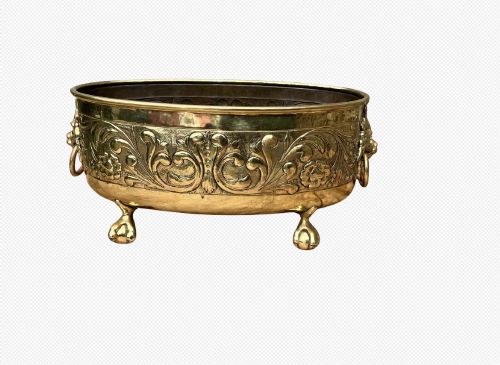


Victorian Claw Foot Planter
A victorian claw foot planter brings weight and texture to a room, holding greenery or logs with undeniable presence.
Victorian Claw Foot Planter
The victorian claw foot planter category encompasses metal vessels designed to hold plants, logs, or coal in nineteenth-century interiors. These objects range from heavy lead garden tubs to domestic brass and copper containers.
Jardinieres and log bins dominate the selection, shaped as cylindrical planters, cauldrons, and scuttles. Most examples date from the Victorian period through to the early twentieth century.
Makers utilised resilient metals to build vessels that functioned equally well beside a hearth or within a plant stand arrangement. Buyers encounter varied regional styles, from plain industrial coppers to decorative Gothic revival pieces.
How they were made
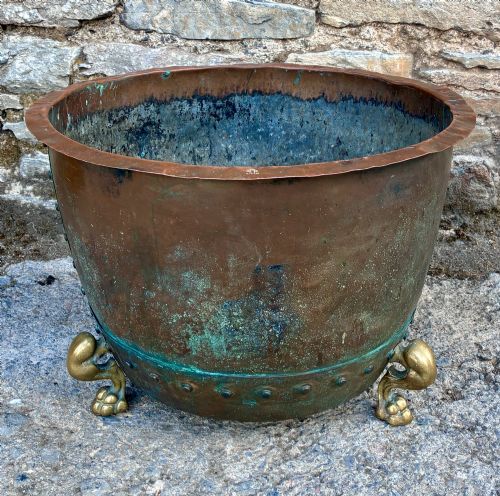
Craftsmen shaped brass and copper sheets through handbeating, riveting, and repoussé work to create rigid walls and textured surfaces. Rivets secure structural seams while adding an industrial finish to boilers and log bins.
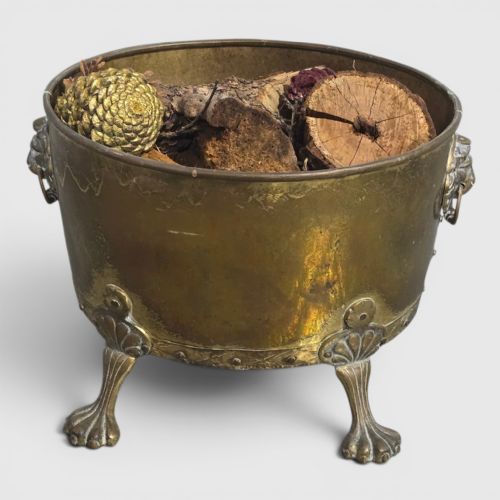
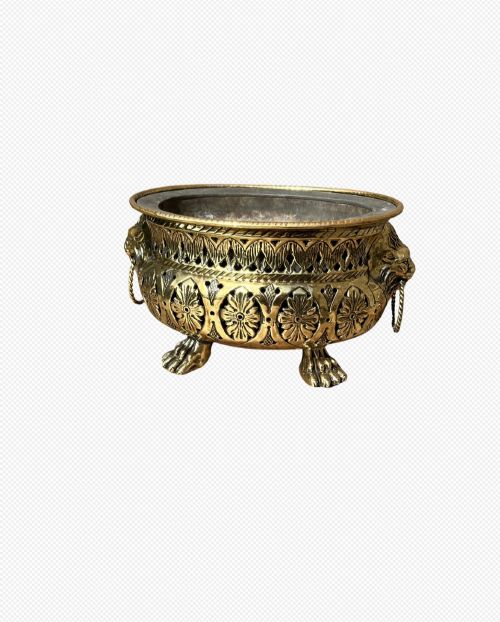
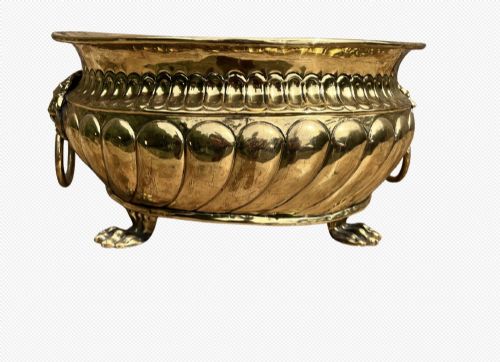
Surface decoration frequently involves piercing, embossing, and applied motifs such as animal heads and lions mask handles. Heavy lead elements appear on specific garden planters, providing stability on claw feet.
Materials recorded across current pieces include brass, copper, and lead, shaped into forms such as jardinieres and log bins.
What varies in quality
The distinction between ordinary utility items and superior examples lies in the depth of handworked surface detail. Deep repoussé relief and crisp embossing elevate a standard brass planter into a decorative focal point.
Substantial metal gauge and robust construction determine the structural integrity of larger log bins and cauldrons. Refined finishing around handles, rims, and applied feet separates utilitarian storage from accomplished metalwork.
The Victorian Claw Foot Planter Glossary
- Jardiniere
- An ornamental pot or stand for holding plants or flowers. These vessels often sit on elevated bases or feet.
- Repoussé
- A metalworking technique where a design is hammered into relief from the reverse side. This method creates textured ornamentation across brass bodies.
- Log Bin
- A heavy container utilised for storing firewood near a fireplace. They frequently feature durable metal construction and carrying handles.
- Cauldron
- A large round pot or kettle used historically for boiling or holding bulk materials. Antiques of this form are repurposed as robust planters.
Victorian Claw Foot Planter: Frequently Asked Questions
What is a victorian claw foot planter?
A victorian claw foot planter is a metal vessel, typically brass or copper, raised on decorative feet for domestic or garden use.
These pieces served functional roles as log bins, coal scuttles, and plant holders throughout the nineteenth century.
How were these metal planters used?
Households utilised these vessels beside fireplaces for storing fuel or indoors to display large potted plants.
Their sturdy metal construction handled heavy loads of logs, coal, or damp soil without sustaining damage.
Are these planters made of brass or copper?
Makers constructed these items using brass, copper, lead, and mixed metals depending on the intended domestic or garden function.
Many examples combine a brass body with copper banding or iron handles for contrast and structural strength.
How do I identify a period piece?
Period indicators include handbeaten marks, traditional riveting techniques, and stylistic cues like Gothic revival or lions mask handles.
Materials and construction methods align with nineteenth-century manufacturing practices rather than modern machine production.