



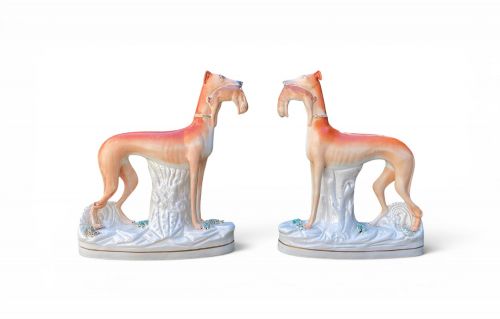
Staffordshire Ceramic Figure
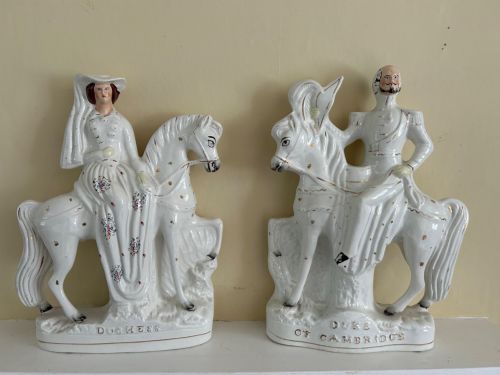
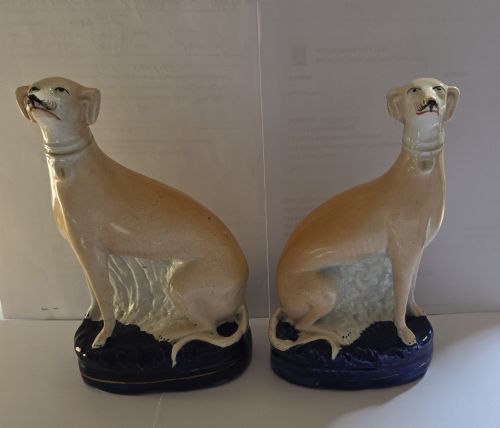
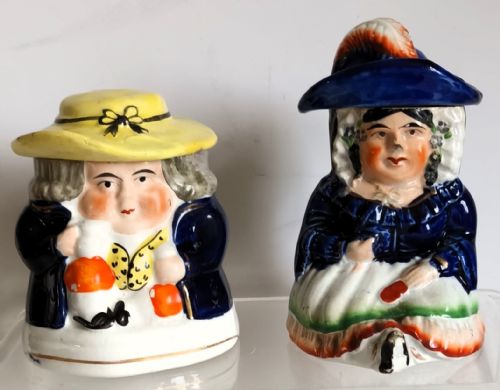
These staffordshire ceramic figure pieces bring nineteenth-century domestic portraiture and animal studies straight into the room.
Staffordshire Ceramic Figure
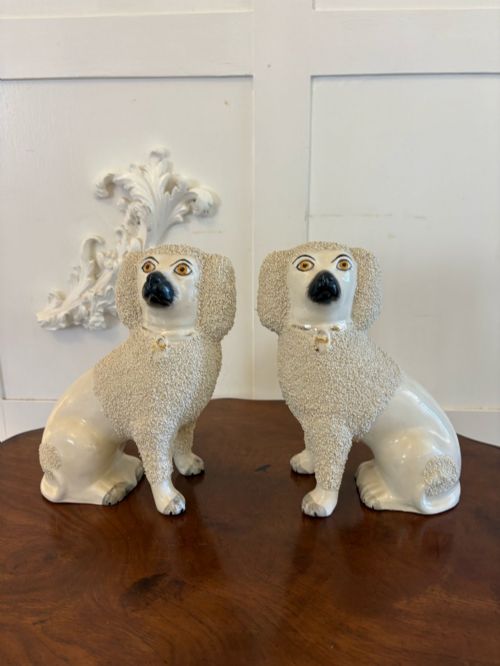
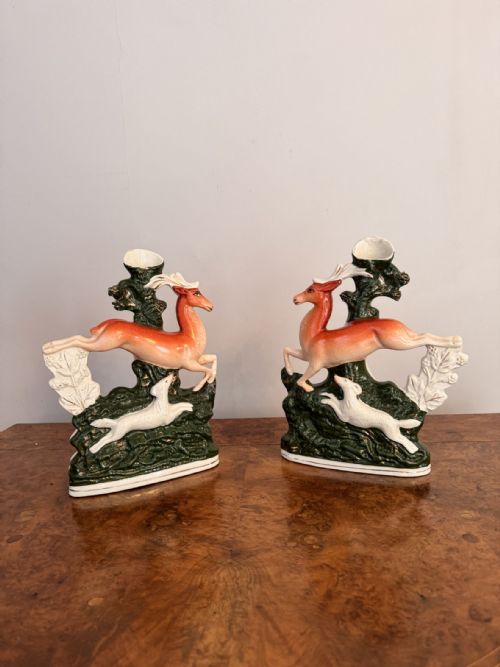
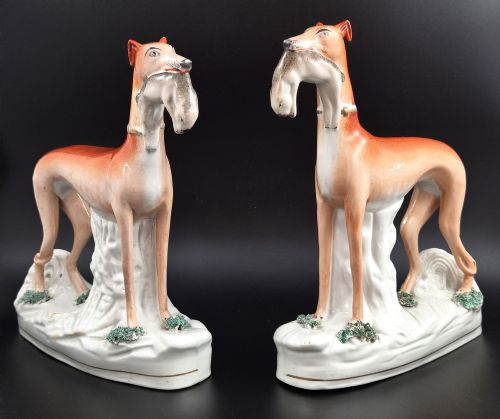
A staffordshire ceramic figure collection covers earthenware ornaments shaped into animals, literary subjects, and portrait subjects. You are most likely to meet nineteenth-century Victorian flatbacks, spaniels, and pairs of dogs alongside spill vases.
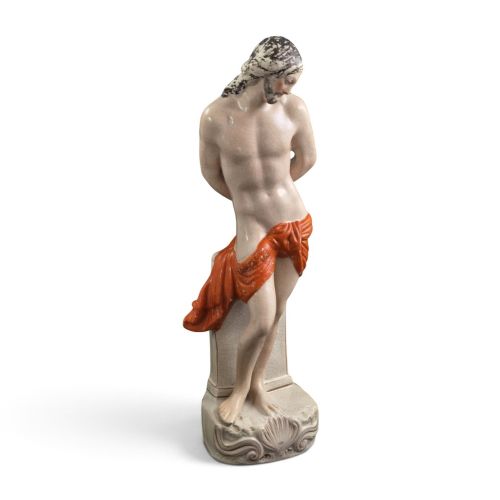
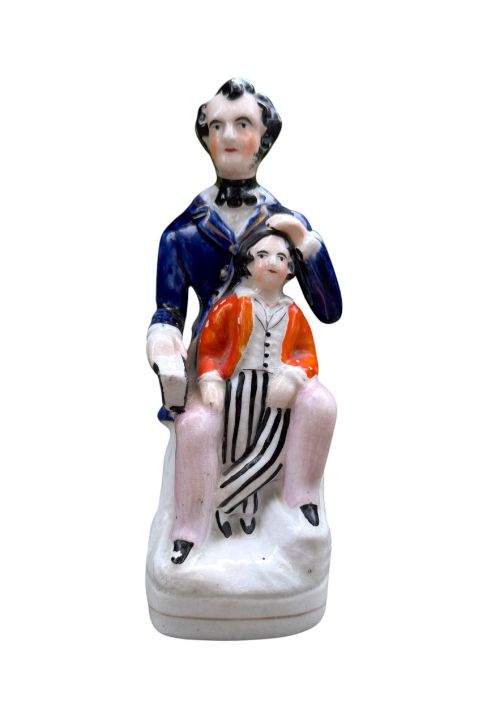
The objects span Georgian, Regency, and Victorian periods, capturing everything from religious subjects like Christ at the column to theatrical figures and political leaders.
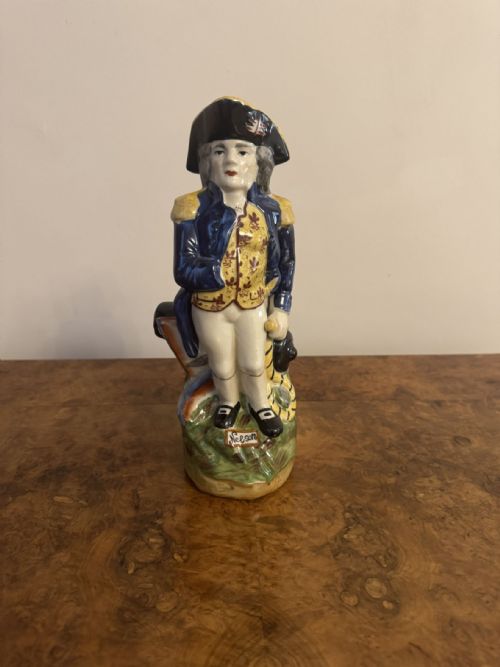
Makers produced these earthenware groups for mantelpieces, often depicting domestic pets, lions, poodles, and figures such as Lord Nelson or Queen Victoria.
Materials and Construction
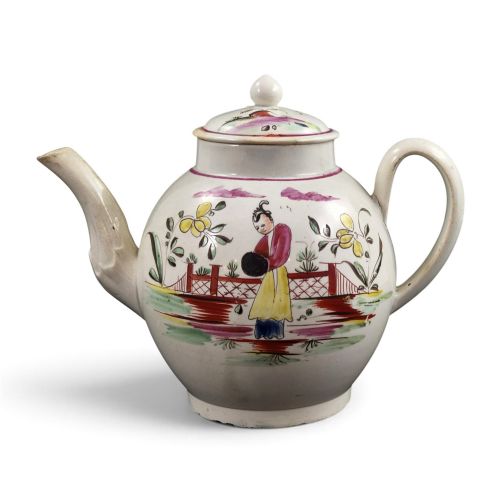
Potters shaped these earthenware and pearlware pieces using local clays before applying lead glaze and enamel colours. Many examples combine moulded bodies with hand-painted details and touches of gold leaf.
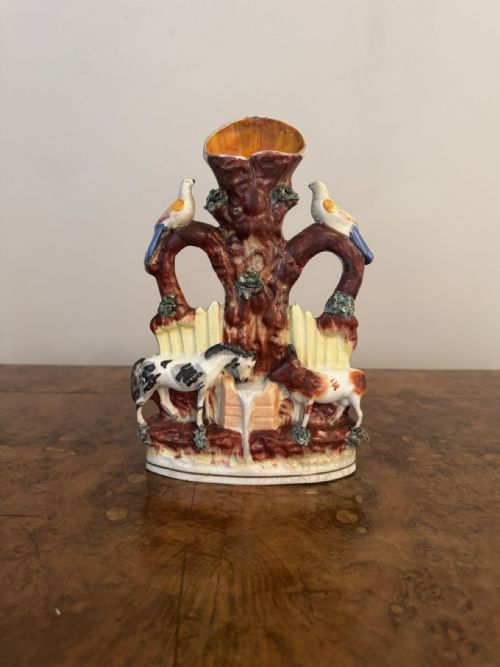
Makers finished flatback figures with plain unglazed backs suited for mantel placement, while spill vases incorporated integrated cylindrical holders for holding tapers.
Listings feature earthenware, pearlware, glaze, and gold leaf across nineteenth century Victorian and Georgian periods.
Assessing Quality
Quality rests on the crispness of the moulding and the control of the enamel painting across the earthenware surface. Superior pieces exhibit distinct facial expressions, clean glazing, and carefully applied gilt highlights rather than muddy decoration.
Pairs show greater desirability when the modelling matches symmetrically and the original glaze remains bright and unblemished by heavy wear.
John Bevington·Sutherland and Sons
The Staffordshire Ceramic Figure Glossary
- Flatback
- A staffordshire ceramic figure moulded with a decorated front and a flat, unpainted rear designed to stand against a wall.
- Spill vase
- A hollow ceramic figure combined with an attached upright cylinder intended for holding wooden taper spills near a hearth.
- Pearlware
- A refined earthenware developed in the late eighteenth century featuring a subtle bluish glaze over a white body.
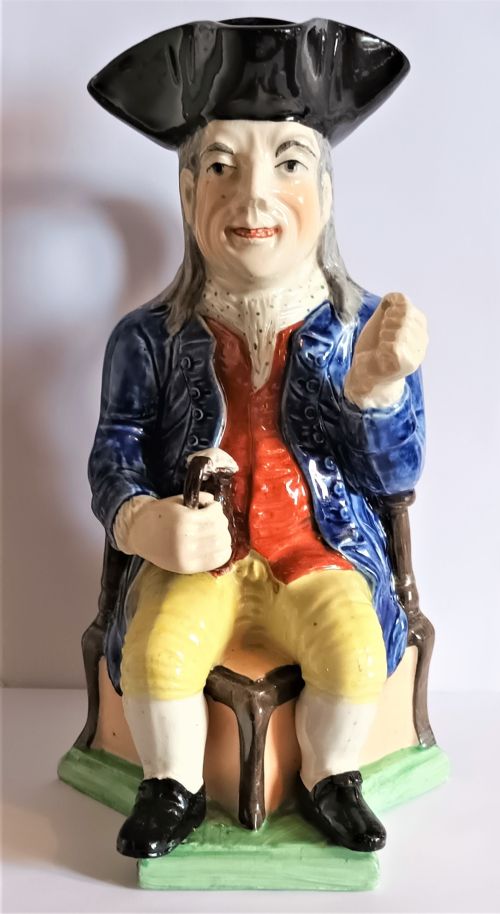
- Toby jug
- A pottery jug modelled in the form of a stout, jovial person, frequently wearing eighteenth-century attire.
- Enamel
- Coloured vitreous paints fired onto the ceramic body to decorate the figures after the initial glaze firing.
Staffordshire Ceramic Figure: Frequently Asked Questions
What are staffordshire ceramic figures?
These pieces are nineteenth-century earthenware ornaments produced by Staffordshire potteries, depicting animals, historical personalities, and literary scenes.
Potters moulded these decorative figures for display on domestic mantelpieces during the Victorian and Georgian eras.
How were spill vases used?
A spill vase combined a decorative animal or figure group with an open cylindrical holder designed to contain wooden taper spills.
Households placed these vessels near fireplaces to easily transfer flames for lighting candles and pipes.
How do I date a flatback figure?
Dating relies on stylistic clues, costume details, and ceramic composition spanning the nineteenth century, from pearlware examples down to late Victorian pieces.
Subject matter often points to specific historical events, such as the Crimean War or political figures of the period.
How should I clean my figures?
Careful dusting with a soft, dry brush preserves the delicate enamel colours and lead glaze on antique earthenware.
Avoid using water or chemical cleaners that might penetrate old craquelure or damage the painted surface.