


Cobalt Blue Staffordshire Ornament
These cobalt blue staffordshire ornament pieces bring robust Victorian character to a mantelpiece, offering rich earthenware modelling and deep cobalt touches.
Cobalt Blue Staffordshire Ornament
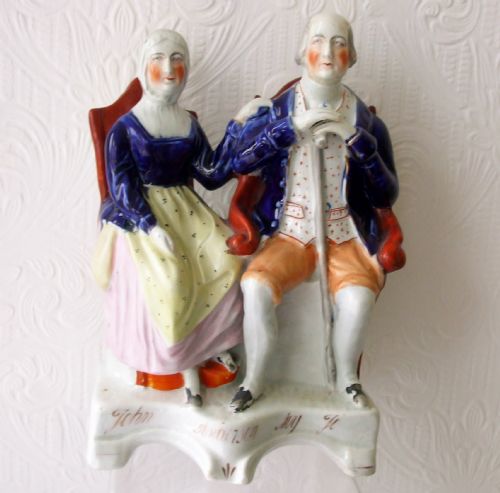
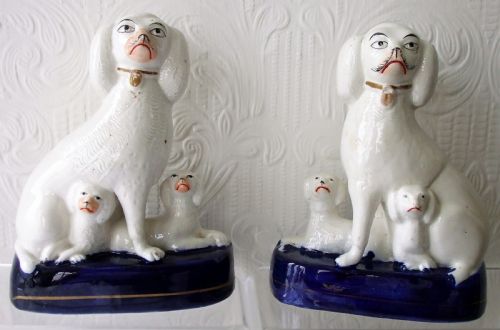
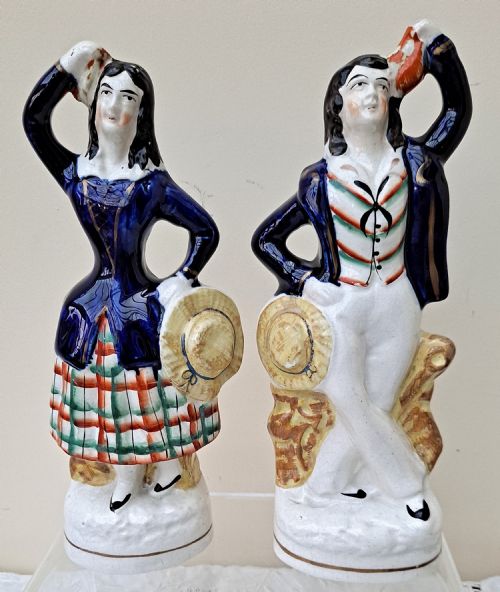
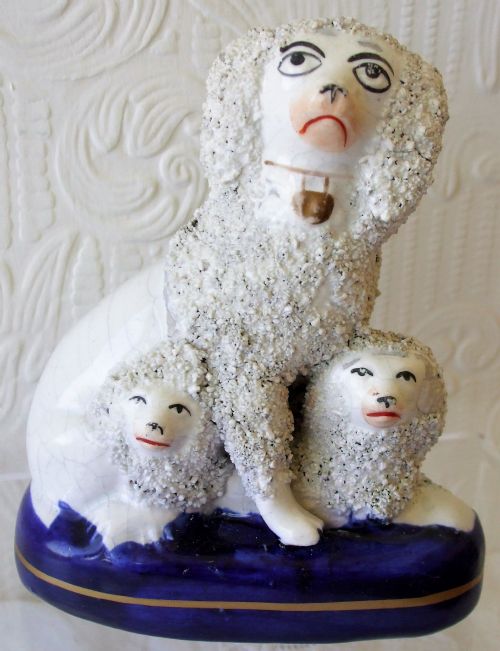
When someone searches for a cobalt blue staffordshire ornament, they encounter Victorian earthenware figures, portrait groups, spaniels, and poodles produced across the nineteenth century. These objects range from theatrical pairs and royal portraits to spill vases, inkwells, and watch-holders.
The version most commonly met on this page is the Victorian pottery figure or pair, often featuring distinct cobalt blue details on cushions, bases, or clothing. Such earthenware ornaments served as domestic display items in nineteenth-century parlours, capturing public figures, animals, and literary characters.
Moulded ceramic bodies define these pieces, spanning general nineteenth-century production as well as specific decades such as eighteen-fifty and eighteen-sixty. Collectors find both single portrait figures and matched pairs depicting poodles, dalmatians, greyhounds, and historical personalities.
Materials and production methods
Potters shaped these earthenware ornaments using ceramic moulds, applying lead glaze to seal the body before adding enamel paint and cobalt blue highlights. Many pieces incorporate gilt or gold leaf touches to accent clothing, crowns, and bases.
Listings demonstrate periods spanning the nineteenth century, including specific decades such as 1850, 1860, 1870, and 1890 alongside general Victorian and Late Victorian eras.
Judging quality and character
The application and richness of the cobalt blue glaze and enamel paint separate standard domestic pieces from finer portrait work. Better examples display carefully controlled brushwork and vivid colour saturation without excessive blurring.
The Cobalt Blue Staffordshire Ornament Glossary
- Flatback
- A Staffordshire figure modelled with a finished front and a flat, unpainted reverse intended to sit flush against a wall or mantelpiece.
- Spill vase
- A hollow ceramic cylinder incorporated into a figure or group designed to hold wooden tapers for lighting pipes and candles.
- Lead glaze
- A glossy vitreous coating applied to earthenware bodies before firing to provide a smooth, waterproof surface.
- Enamel paint
- Opaque vitreous or oil-based colours applied over the fired glaze to decorate ceramic figures.
- Watch-holder
- A decorative pottery stand featuring a small hook or recess specifically designed to suspend a pocket watch.
Cobalt Blue Staffordshire Ornament: Frequently Asked Questions
What are Staffordshire figures?
Staffordshire figures are ceramic ornaments produced by various potteries in the Staffordshire region during the nineteenth century. They depict animals, royalty, historical figures, and theatrical scenes for domestic display.
These earthenware pieces typically feature hand-painted enamel colours and glazed surfaces, often highlighted with cobalt blue or gold leaf.
How were spill vases used?
Spill vases held thin wooden spills used to transfer fire from a hearth or coal grate to candles and pipes. The attached figure provided decorative appeal while the cylinder served a practical household function.
Victorian parlours relied on these vessels before the widespread availability of matches.
Where were these ornaments placed?
Owners displayed these ceramic figures on mantelpieces, sideboards, and occasional tables within Victorian living spaces. Flatback pieces sat securely against walls or the backs of fireplace mantels.
Pairs of dogs, such as poodles or dalmatians, traditionally flanked clocks or other decorative objects on either end of a shelf.
How do you date nineteenth century figures?
Dating relies on stylistic clues, historical subjects, and manufacturing characteristics associated with the Victorian period. Depictions of specific monarchs, historical events, or political figures provide narrower date ranges.
Ceramic bodies, glaze types, and modelling styles further help place pieces within specific decades of the nineteenth century.