



Soumak Woven Bag
A soumak woven bag brings intricate tribal geometry and durable flatweave construction into a room through historic nomadic textiles.
Soumak Woven Bag
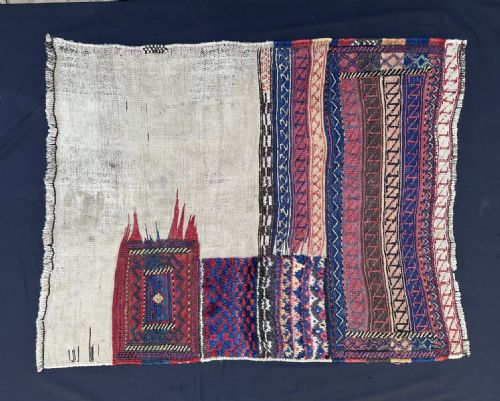
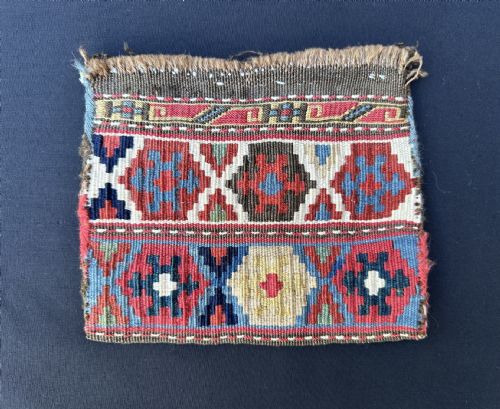
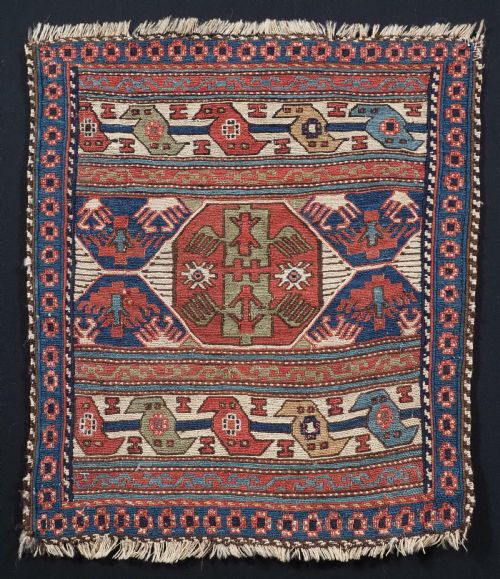
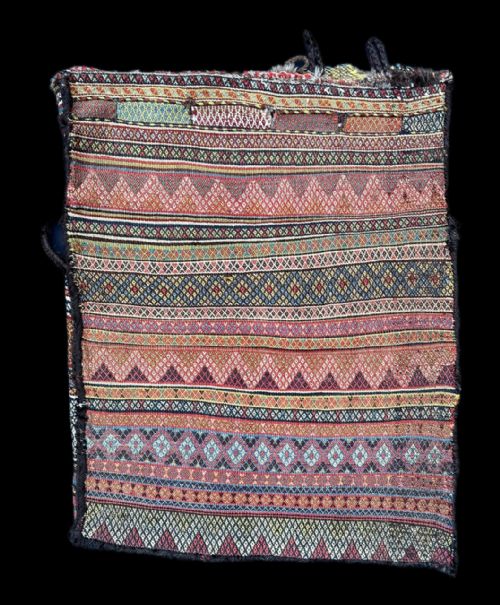
A soumak woven bag represents utilitarian nomadic artistry created across the Caucasus, Persia, and Anatolia during the nineteenth century. These pieces encompass specific functional forms such as khorjin saddlebags, mafrash storage panels, vanity bags, salt bags, and complete face cushions.
The objects stem from identifiable tribal groups including the Shahsevan, Qashqa'i, Afshar, Lori-Bakhtiari, and Kurdish nomads. Examples range from compact 1870 vanity bags to larger storage containers produced up to 1920.
Quality factors in tribal weavings
Fineness of the wrap-threads and tightness of the weave determine structural integrity and visual clarity of motifs such as birds and dragons. Crisper pattern definition stems from denser knotting and precise manipulation of the supplementary weft.
Complexity of iconography and depth of natural dye palettes separate standard utility items from masterwork bag faces and complete storage containers.
Several nineteenth-century nomadic bags retain traces of long camel journeys within their wool piles.
Shahsevan Nomads·Afshar Tribe·Lori-Bakhtiari Nomads
The Soumak Woven Bag Glossary
- Soumak
- A flatweave textile technique where weft threads wrap around vertical warp threads to create a textured, durable surface. This method produces thick fabrics without pile.
- Khorjin
- A traditional double saddlebag used by nomads for transport and storage. These items feature paired compartments connected by a central web.
- Mafrash
- A large rectangular storage chest panel used in nomadic camps for bedding and belongings. Four panels form the sides of a trunk.
- Juval
- A large storage bag used within nomadic tents for household possessions. These pieces display major tribal gul motifs.
- Warp
- The stationary vertical threads stretched across a loom that form the structural foundation of the textile. Weft yarns interlace through these foundational strands.
- Weft
- The horizontal threads passed through the warp to build the cloth. In soumak work, these threads wrap continuously across the face.
Soumak Woven Bag: Frequently Asked Questions
What is a soumak woven bag?
A soumak woven bag is a historic textile created by nomadic groups using a specialised flatweave wrapping technique. These objects served practical transport and storage functions in tribal life.
Today, surviving examples function as decorative wall hangings, small cushions, or flat textile collectables showcasing regional tribal iconography.
How were these bags used?
Nomadic groups utilised these textiles as saddlebags on animals, storage containers for household goods, and personal carriers for salt or vanity items. Their durable construction protected contents during migration.
Over decades, many complete storage bags separated into individual panels or bag faces through wear and separation from their original backing fabrics.
How do I care for a textile?
Keep historic textiles out of direct sunlight to prevent natural dye fading and preserve wool fibre integrity. Gentle vacuuming through a mesh screen removes surface dust without damaging fragile flatweave structures.
Avoid hanging heavy bags by isolated corners to prevent structural distortion of the cotton and wool foundations.
How can I tell regions apart?
Caucasian and Shahsevan pieces often feature sharp geometric medallions, dragons, and bird motifs in saturated primary colours. South-West Persian Qashqa'i and Afshar examples display different abrash gradations and distinct tribal colour combinations.
Structural details and wool characteristics also provide clues to whether a piece originated in Moghan, Azerbaijan, or the Fars province.