




Persian Nomadic Bag
A persian nomadic bag brings tactile tribal history into a room through woven wool and regional patterns.
Persian Nomadic Bag
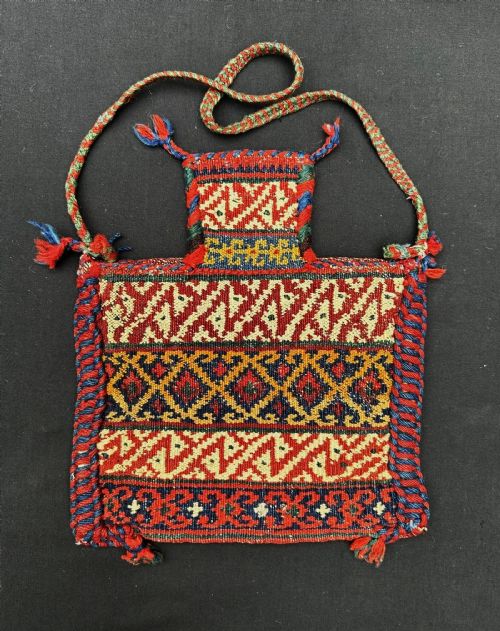
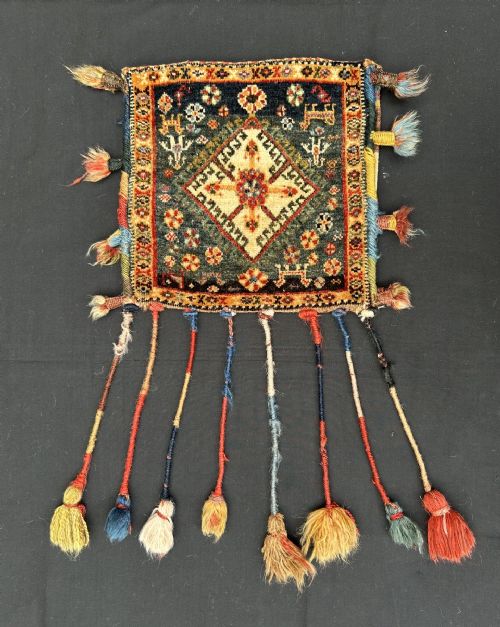
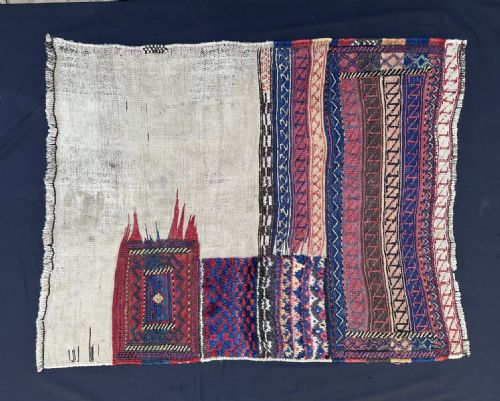
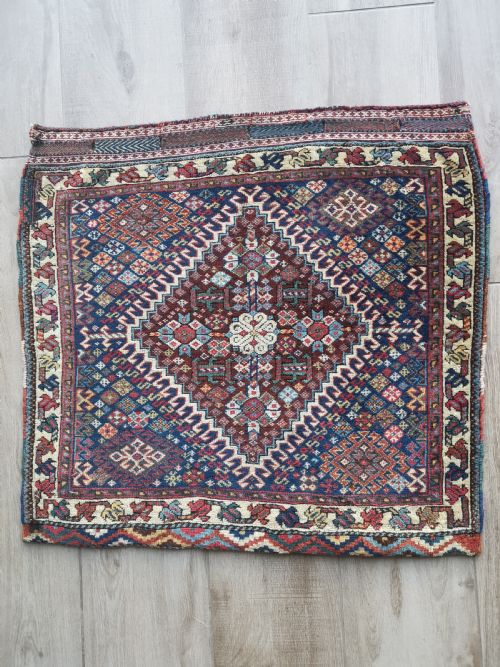
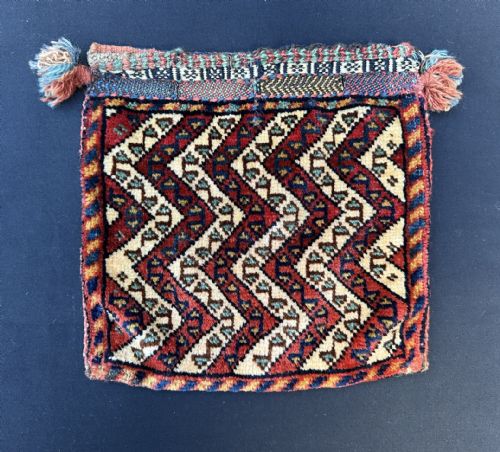
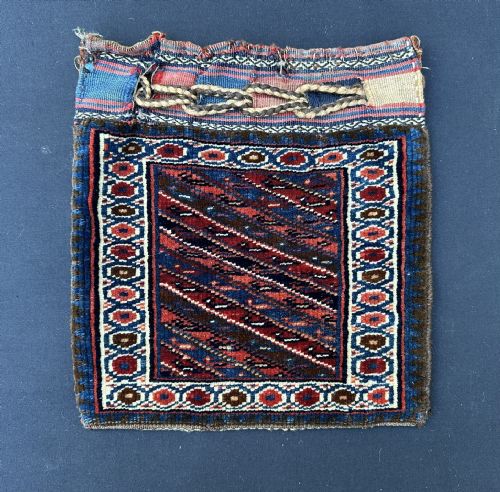
The pieces encountered most frequently on this page date from the mid-nineteenth century through the early twentieth century. They manifest as complete double-sided storage pieces, single bag faces, or smaller personal pouches known as chantehs.
Tribal groupings such as the Qashqai, Afshar, Baluch, Shahsavan, and Kurdish populations produced distinct structural and decorative variants. Each regional group utilised specific weaving techniques and characteristic motifs tied to their cultural heritage.
Materials and construction
Makers relied primarily on hand-spun wool for the pile and foundation, often incorporating cotton for structural strength and goat hair along edges for durability. Natural dyes provided the deep chromatic range observed across the textiles.
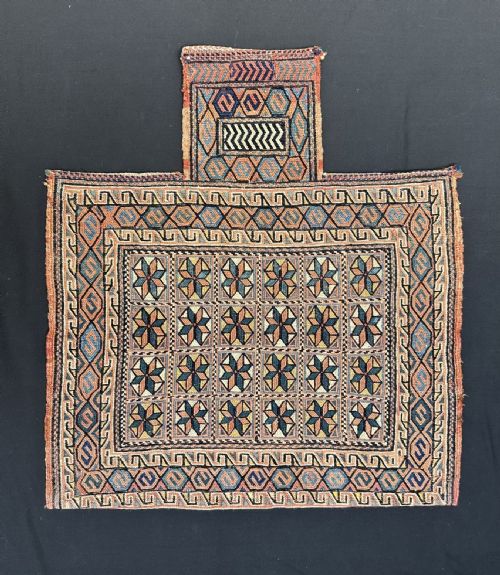
Weaving methods combined pile knotting with flat-weave techniques such as sumac and plain weave. Artisans occasionally integrated decorative elements like cowrie shells into the completed textile structure.
Several antique bags still retain stray desert sand embedded deep within their heavy wool foundations.
Distinctions in craftsmanship
Quality rests in the precision of the knotting and the complexity of the flat-weave backs where present. Tightly packed foundations and sharply rendered geometric or medallion motifs indicate superior execution by the weaver.
The purity and depth of the natural dyes influence the visual success of the piece. Subtle variations in colour resulting from traditional dyeing methods create a richness that simpler chemical mixtures fail to achieve.
The Persian Nomadic Bag Glossary
- Chanteh
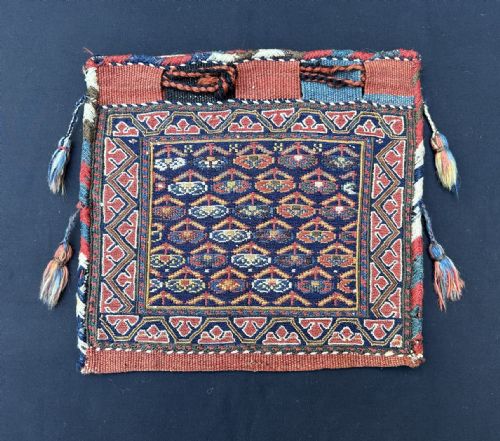
- A small personal bag or pouch used by nomads for carrying small possessions. These small textiles often display intricate miniature versions of larger tribal carpet designs.
- Khorjin
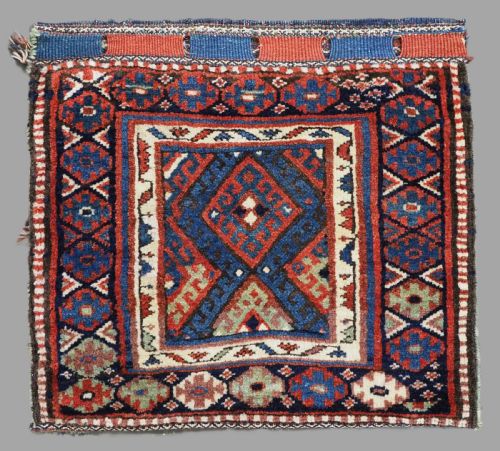
- A traditional double saddle bag designed for transport on animals. Surviving examples frequently survive as single bag faces after the connecting web was cut.
- Soumac
- A flat-weave technique where working threads wrap horizontally over and under warp threads. This method creates a durable, textured surface without a raised pile.
- Boteh
- A stylised almond or paisley motif representing a floral spray or cypress tree. This ancient symbol appears frequently in Afshar and other tribal weaving.
- Salt-bag
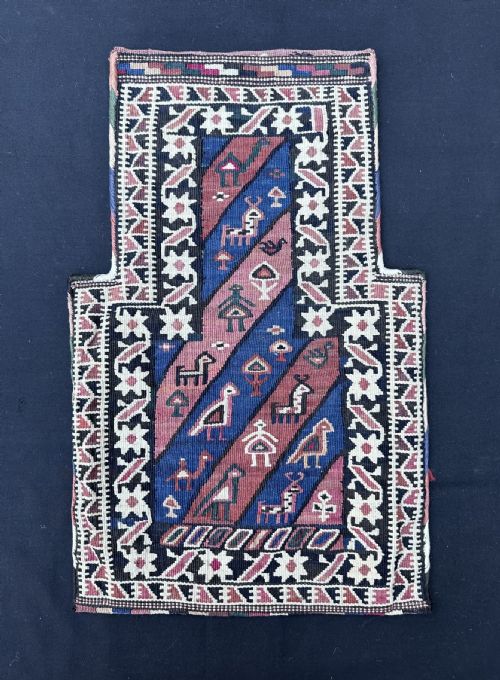
- A utilitarian container traditionally featuring a narrow neck designed to prevent spillage during transport. These items combine dense pile work with flat-weave backs.
Persian Nomadic Bag: Frequently Asked Questions
How were these bags used?
Nomadic groups utilised these containers for storing salt, grain, personal items, and household goods during seasonal migrations. They were designed to hang from tent poles or mount directly onto pack animals.
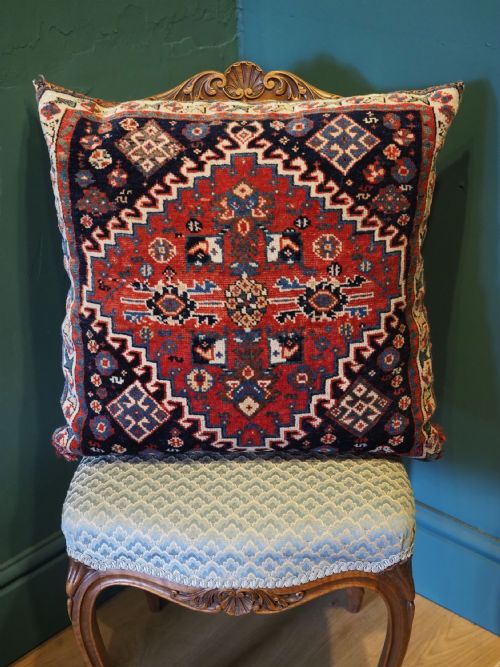
Over time, many double-sided storage pieces were separated into individual bag faces for easier transport or trade. Today, surviving examples function primarily as decorative wall hangings or small floor cushions.
How do I care for a tribal bag?
Gentle vacuuming without a rotating brush helps remove dust from the wool pile. Keeping the textile out of direct sunlight prevents natural dyes from fading.
Professional textile conservators should handle any necessary washing or structural repairs. Proper humidity control ensures the organic materials remain stable over decades.
How do I identify different tribal origins?
Weavers incorporated specific structural traits, palette choices, and iconography unique to their confederation or sub-tribe. For instance, Afshar pieces often feature bold boteh motifs, while Shahsavan items frequently display crisp sumac work.
Examining the selvedges, end finishes, and wool quality provides further clues to geographic provenance. Regional traditions dictated the specific formats used for saddle bags and salt containers.
What is a bag face?
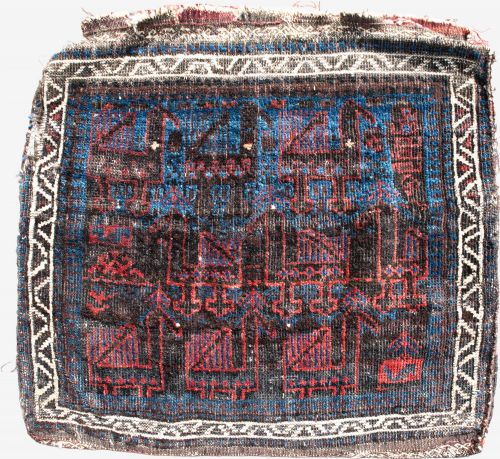
A bag face represents the decorated front panel of a functional storage container. When original saddle bags wore out along the centre join, owners separated the decorated panels for continued use.
These panels survive as self-contained decorative items that showcase the finest weaving of the original piece. Collectors frequently prize them for their concentrated design elements.