
Small Walnut Cabinet
These small walnut cabinets offer clever storage and rich grain, bringing period warmth to compact spaces.
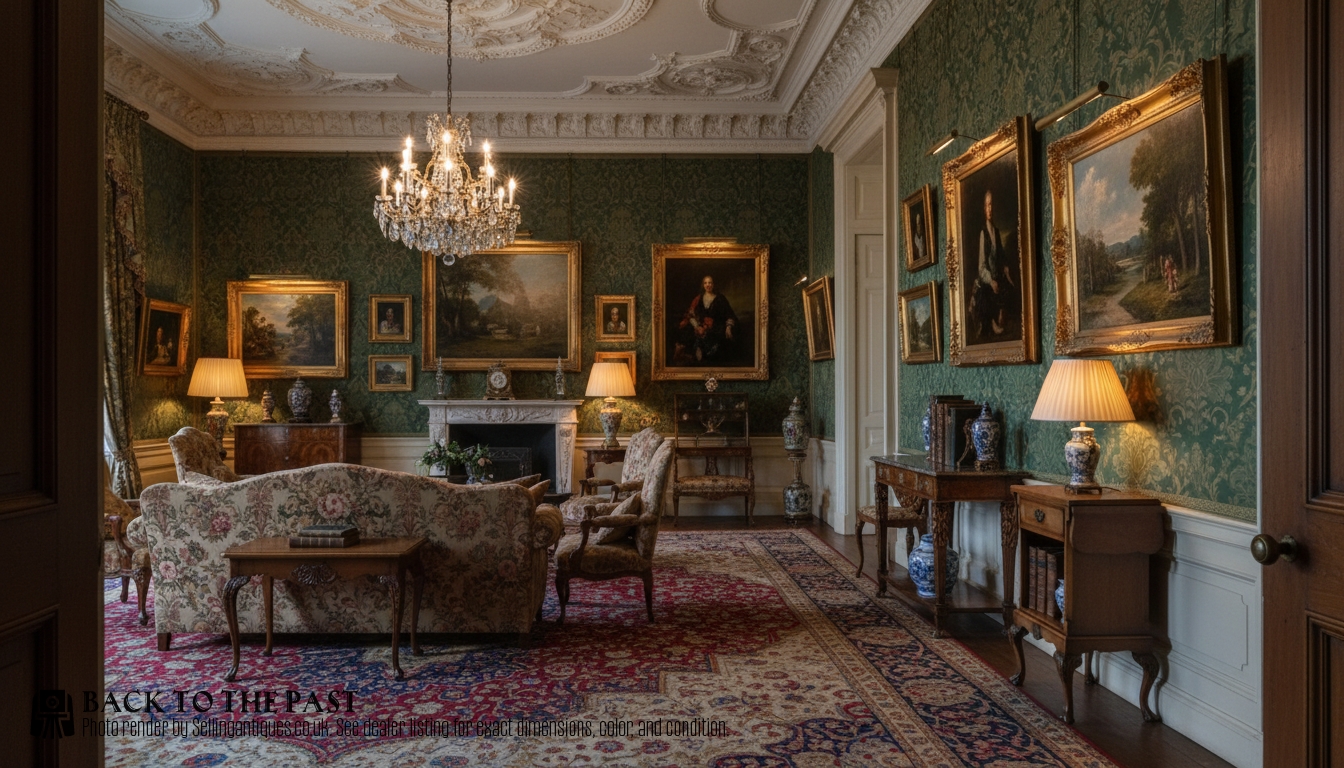
Small Walnut Cabinets
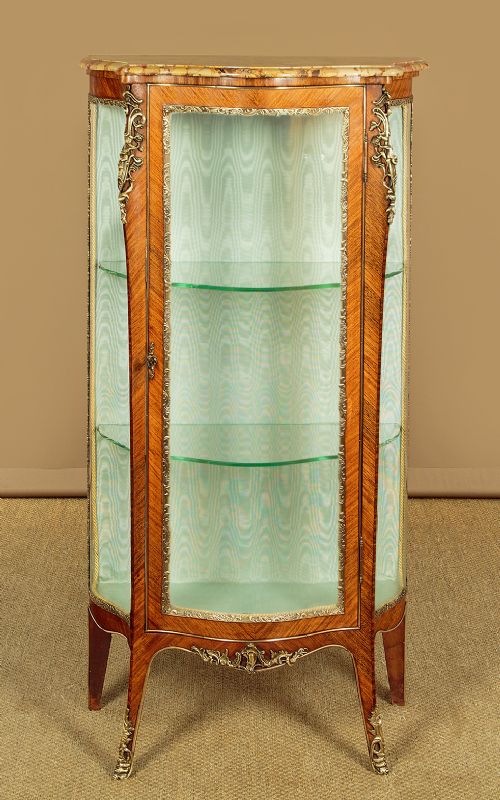
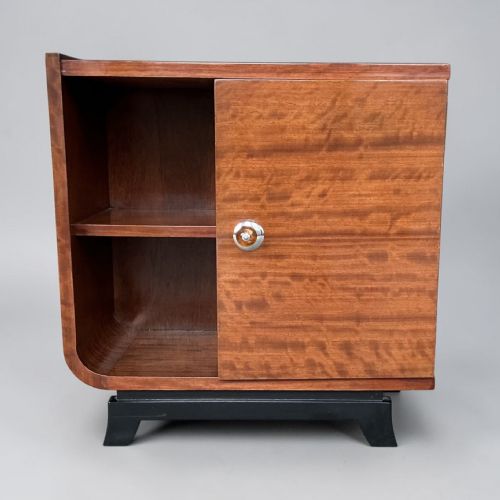
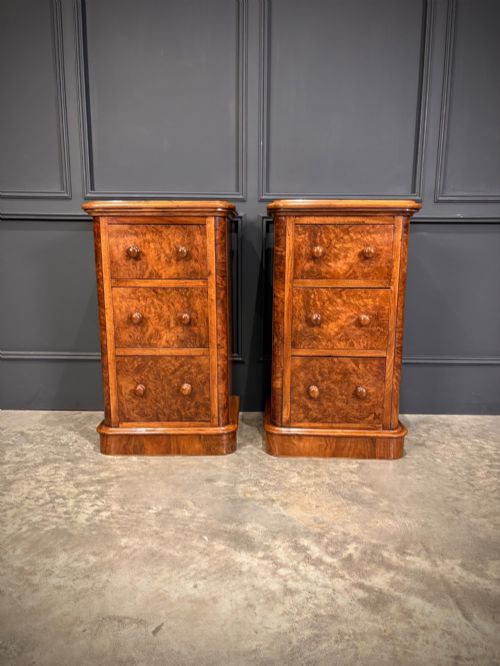
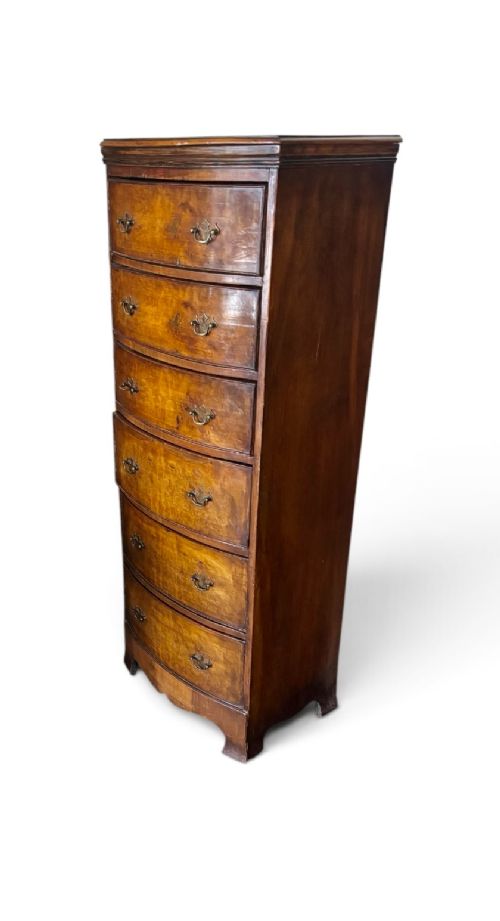
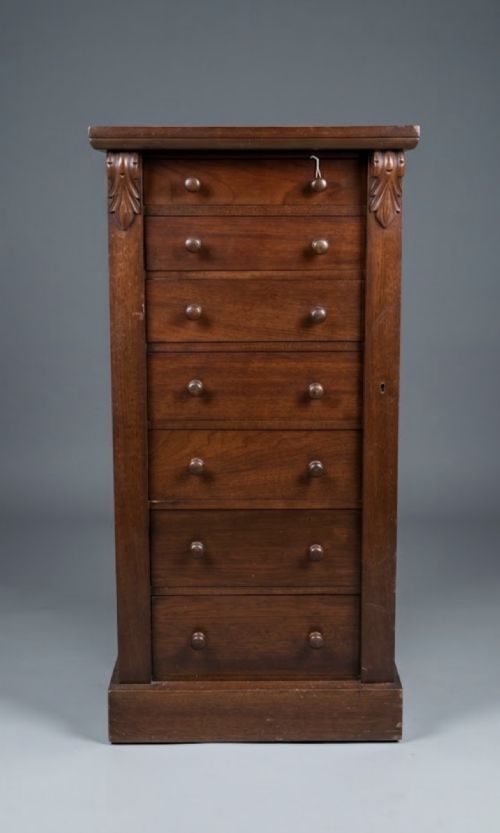
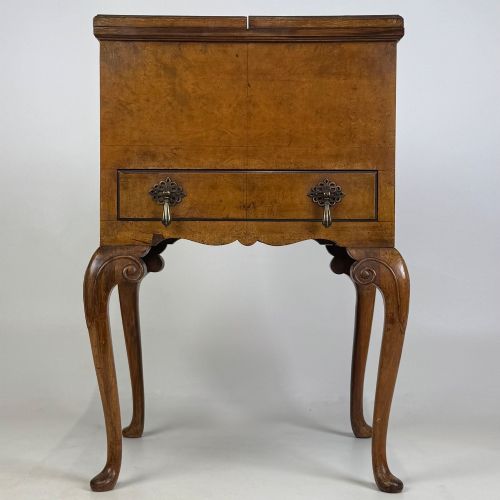
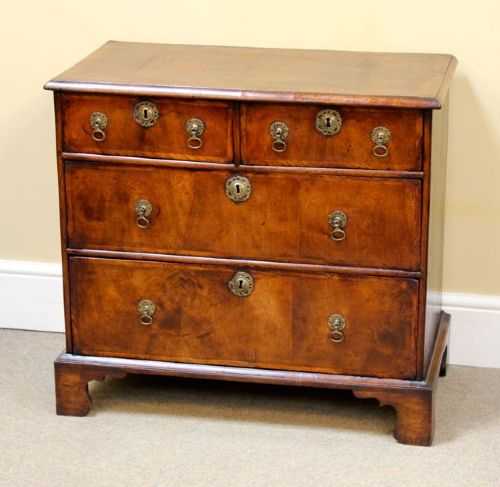
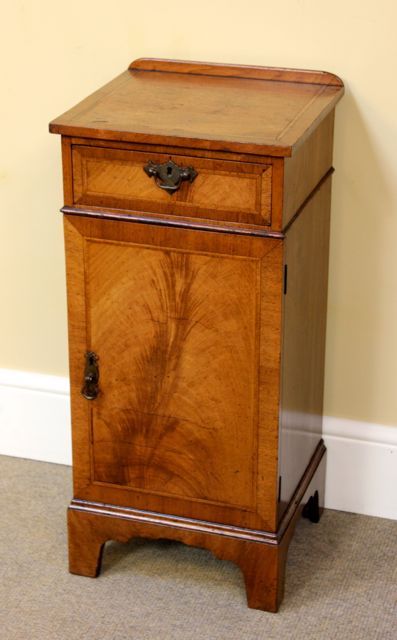
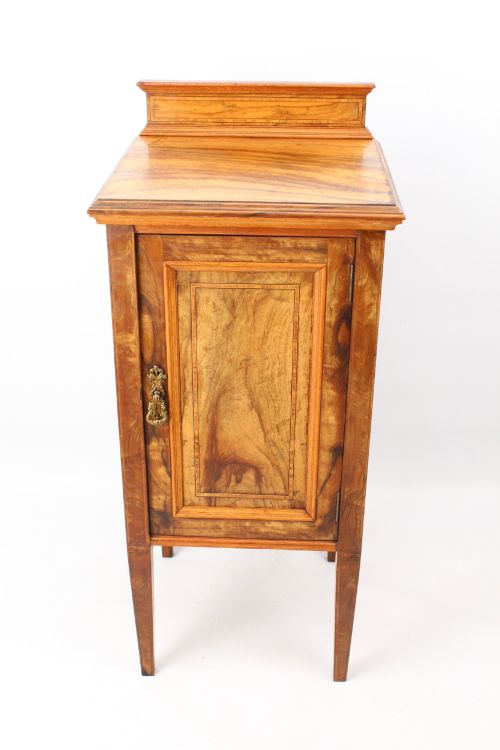
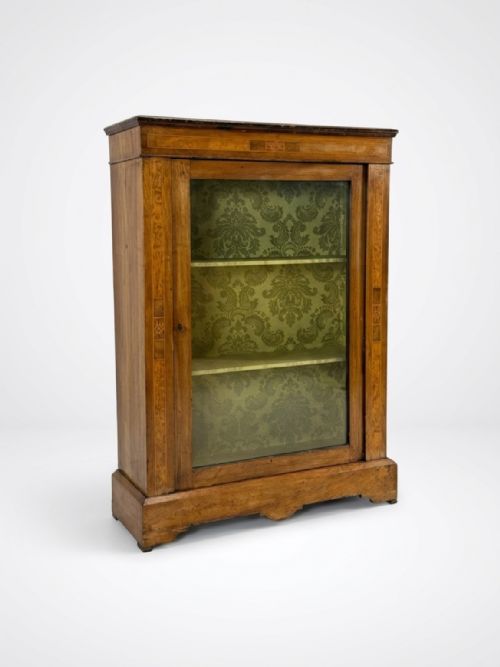
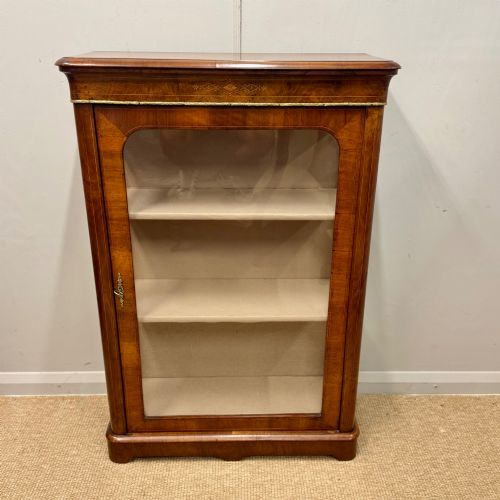
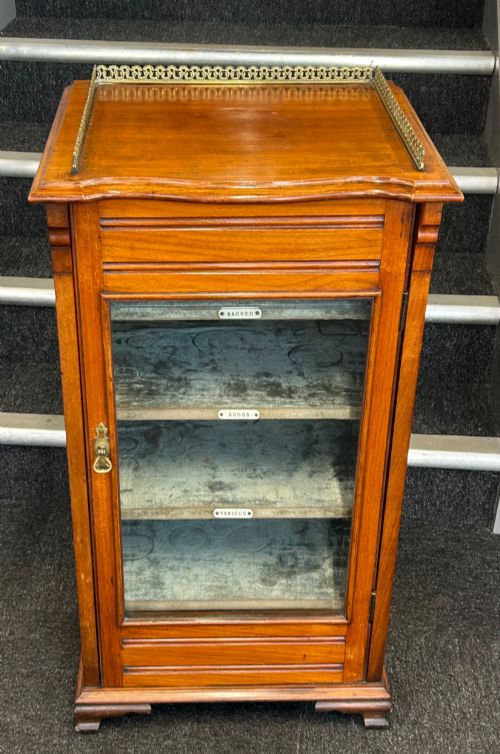
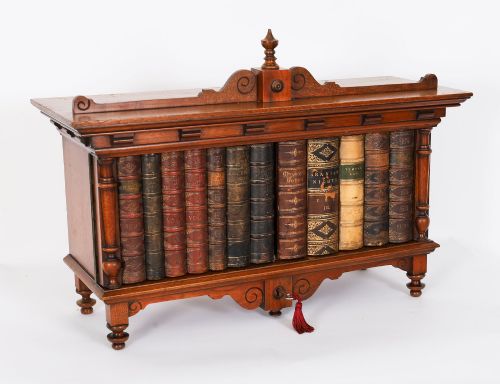
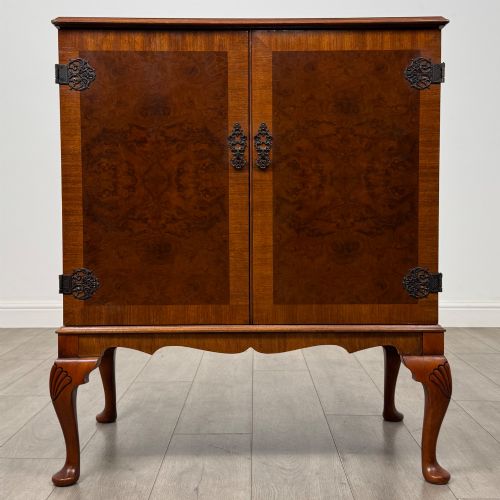
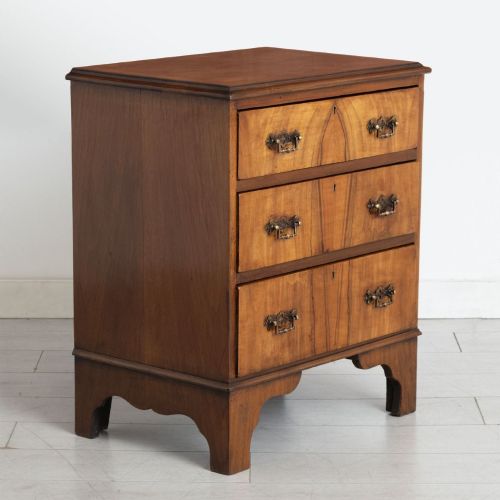
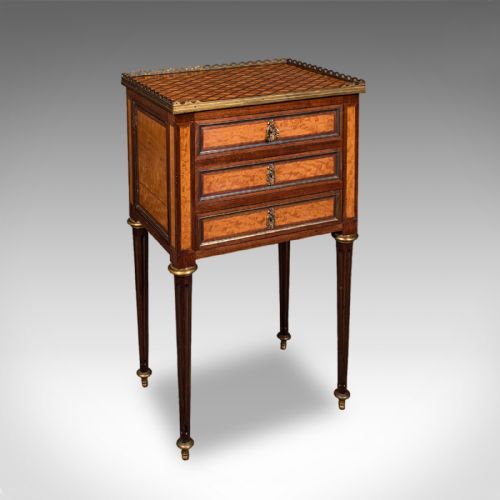
A small walnut cabinet serves multiple domestic roles, appearing across these records as bedside tables, music cabinets, pier cabinets, and miniature apprentice pieces. Buyers seek these compact forms to introduce rich timber tones and practical enclosed storage into smaller rooms.
Victorian and Edwardian examples dominate the selection, alongside earlier revivals and pieces from the nineteen twenties. Bedside cabinets and music cabinets with drop-front drawers recur frequently, reflecting the period demand for specialised household storage.
The range extends from glazed display pieces and hanging cupboards to serpentine side cabinets and table-top models. Each variant adapts the dense grain of walnut to a specific domestic function, whether housing books, sheet music, or personal items.
Evaluating Quality
Quality rests in the selection of the timber, particularly the liveliness of the burr walnut veneer and the precision of any boxwood marquetry inlay. Superior pieces display continuous grain matching across doors and drawers, showing deliberate care from the maker.
The architectural proportions and the crispness of moulded cornices, brass handles, and turned supports define the upper tier of pieces. Finer cabinets integrate internal fittings like fitted drawers or velvet-lined shelves with seamless joinery.
Retail Price Guide 2026
Typical UK retail prices for small walnut cabinet, calculated from the Sellingantiques database of over a million retail prices indexed since 2003. This retail price guide relies exclusively on Sellingantiques data; no external sources or auction records are used, so the figures do not describe the wider market.
Some miniature cabinets were built so small they could sit on a tea table, yet their tiny drawers still function perfectly.
Maple & Co
The Small Walnut Cabinet Glossary
- Burr Walnut
- A veneer taken from the knotted growth of a walnut tree, prized for its swirling, highly figured grain patterns. It appears frequently on the doors and drawer fronts of better Victorian and Edwardian furniture.
- Marquetry
- Decorative patterns formed by fitting contrasting pieces of wood veneer into a background panel. Boxwood is often employed in these designs to create crisp geometric or floral borders.
- Ormolu
- Gilded bronze mounts and decorative trimmings applied to furniture. It provides a bright metallic contrast to the dark tones of polished walnut.
- Pier Cabinet
- A narrow display cabinet designed to stand against the wall space between windows. These pieces often feature glass doors and inlaid marquetry.
- Apprentice Piece
- A miniature scale model constructed by a trainee craftsman to demonstrate mastery of joinery techniques. They replicate full-sized secretaries, chests, and cabinets in reduced proportions.
Frequently Asked Questions
What rooms suit a small walnut cabinet?
These compact pieces fit easily beside a bed, in a hallway, or as an accent in a living room. Their varied internal layouts accommodate books, music sheets, or everyday items while adding timber texture.
The modest proportions mean they occupy minimal floor space without sacrificing storage capacity. Glazed versions display small collections, whilst enclosed cupboards conceal household clutter.
How do I date a small walnut cabinet?
Dating relies on stylistic clues, construction methods, and the specific form of the piece. Victorian examples often feature rich burr veneers and glazed doors, whereas Edwardian pieces lean towards refined inlay and lighter frames.
Revival styles draw on earlier centuries, such as William and Mary or Queen Anne designs, but carry nineteenth or twentieth-century construction traits. Examining the secondary timbers and drawer dovetails clarifies the period of manufacture.
What is a music cabinet?
A music cabinet is a specialised storage piece designed to hold sheet music and scores. They commonly feature drop-front drawers or internal shelving sized for paper folios.
Popular in the Edwardian era, these cabinets keep delicate paper goods organised and protected from dust. Their shallow drawer depth distinguishes them from standard chests of drawers.
Are miniature cabinets apprentice pieces?
Some small cabinets are indeed apprentice pieces, built by trainees to prove their skill to a guild or master. These miniatures replicate full-sized furniture down to the smallest dovetail and brass pull.
Not every small cabinet is an apprentice piece, as many served as table-top or miniature display cabinets for wealthy homes. The exceptional precision in scaling usually identifies true trainee work.