
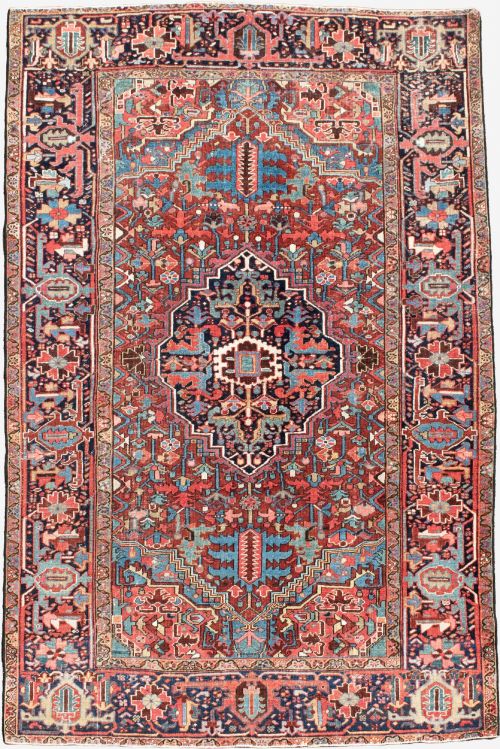
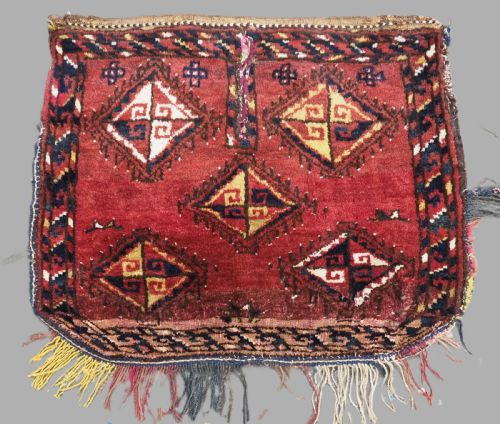
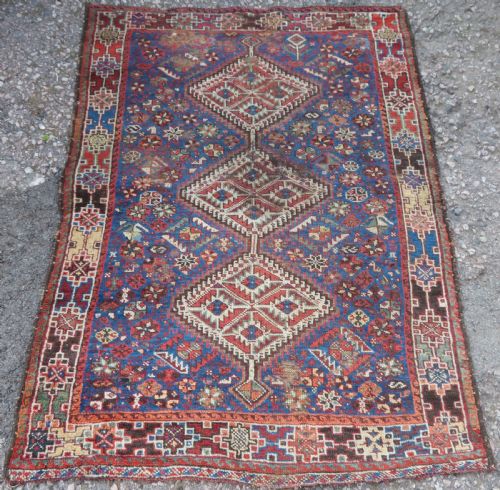

Small Geometric Wool Rug
A small geometric wool rug brings grounded texture and village character to compact spaces through medallions and rectilinear motifs.
Small Geometric Wool Rug
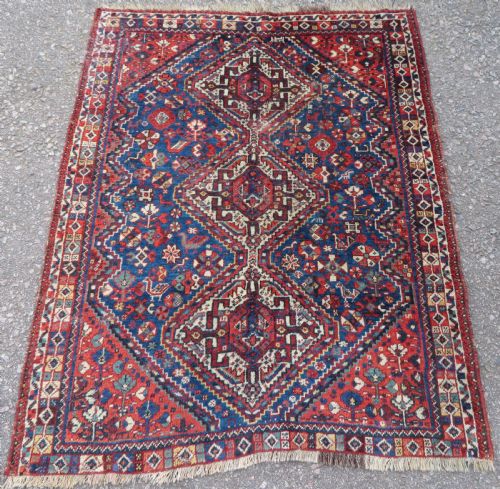
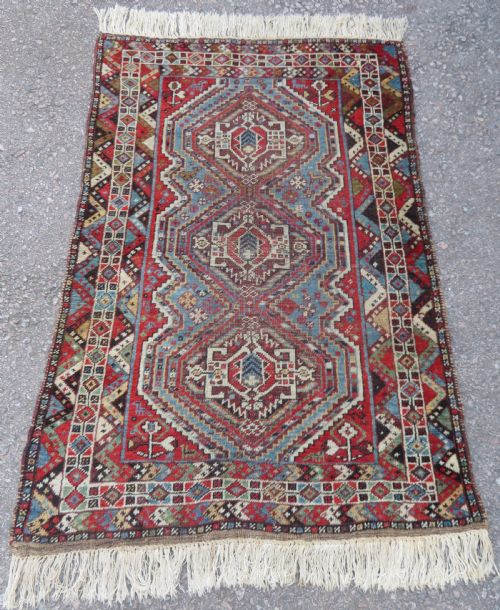
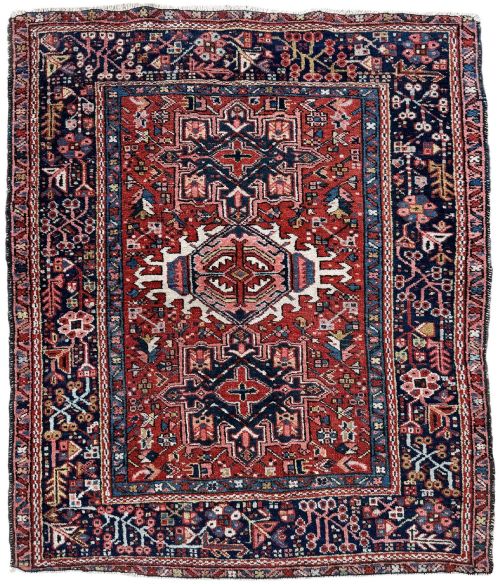
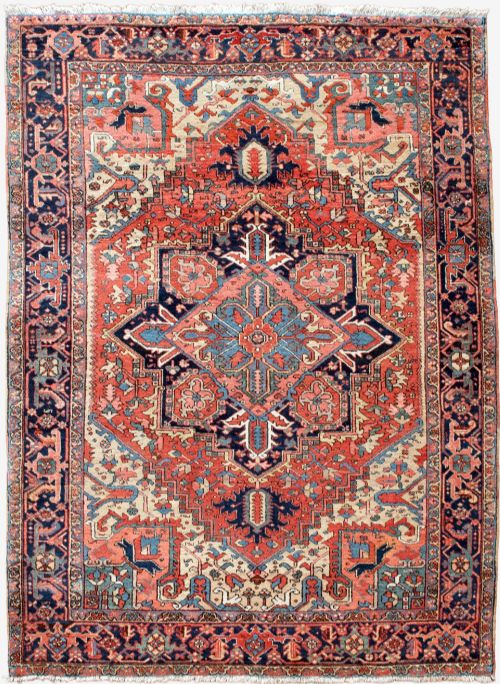
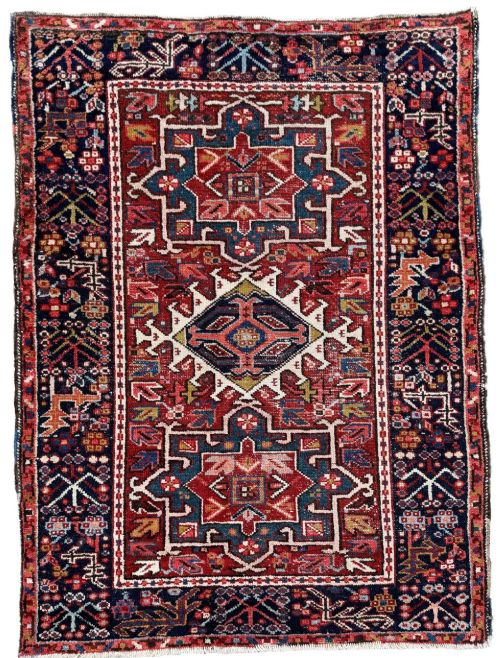
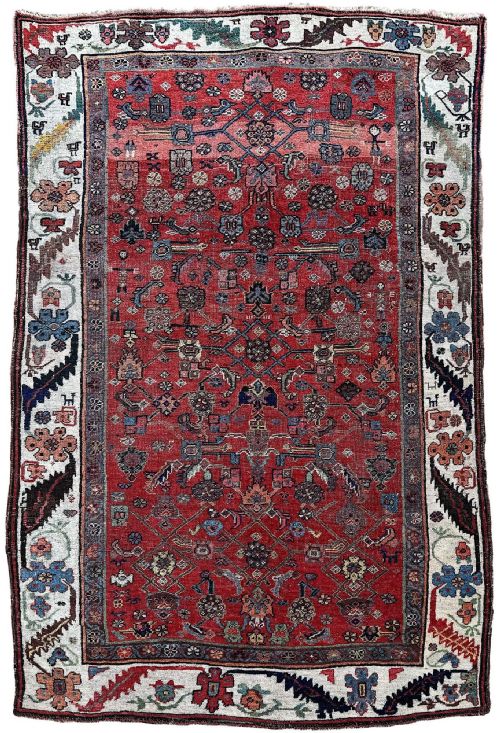
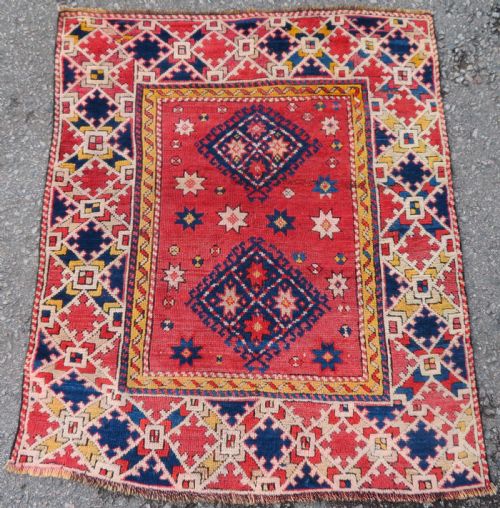
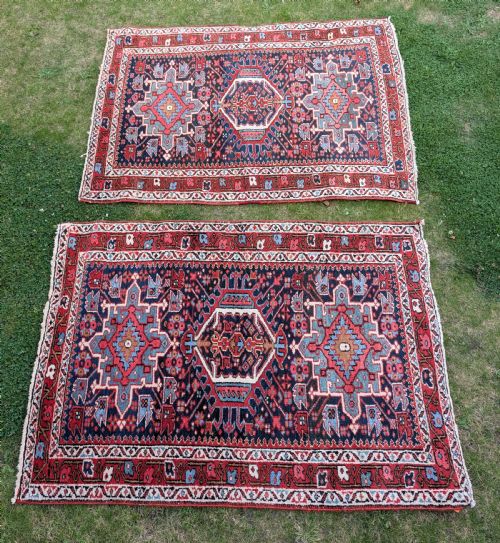
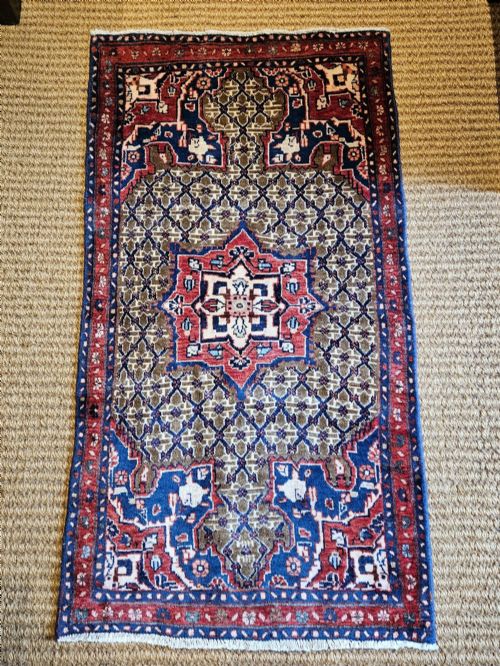
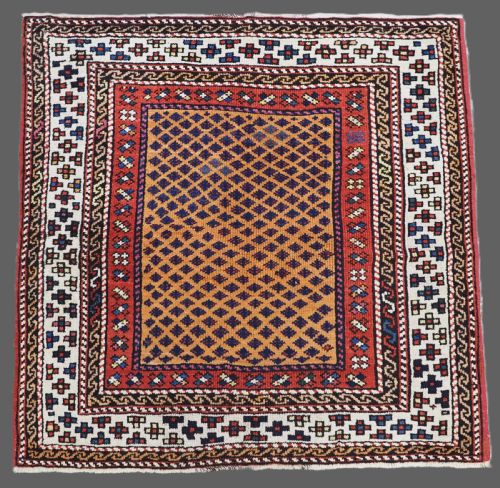
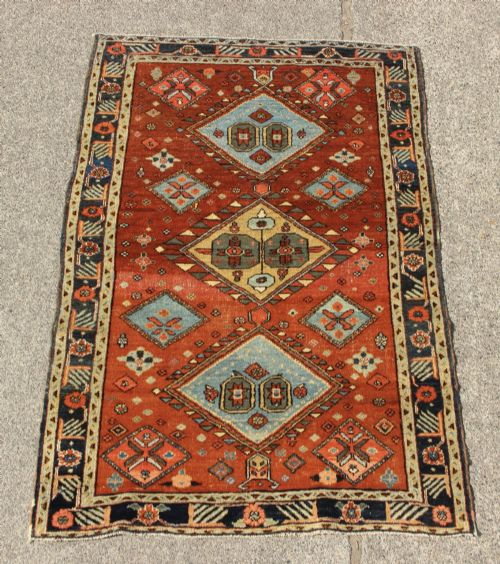
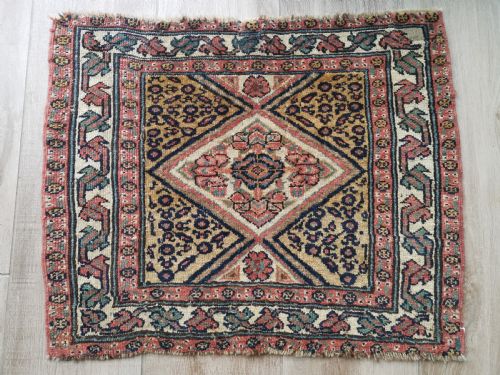
A small geometric wool rug gathers traditions from Persian, Anatolian, and Caucasian tribal weaving centres, spanning the late nineteenth century to the early twentieth century. These pieces appear as mats, hearth-sized formats, prayer rugs, and bagfaces, displaying rectilinear patterns, medallions, and lattice designs.
The selections on this page originate from nomadic and village workshops across regions such as Karaja, Bidjar, Heriz, Khamseh, and Daghestan. They serve as concentrated studies in tribal artistry, designed originally for functional floor covering, tent decoration, or utility within domestic interiors.
Materials and construction
Weavers constructed these textiles using hand-spun wool for the pile, frequently paired with a cotton warp to provide structural stability and distinct knot tension. Natural dyes supplied the foundational palette, yielding deep tones and subtle variations across the surface.
The production relied on traditional hand-knotting techniques executed on vertical or horizontal looms by village and nomadic artisans. This method created dense, durable pile surfaces capable of withstanding generations of daily use.
Listings span periods from the 1870s through the 1930s, constructed predominantly from wool with cotton warps.
What separates the finest examples
Quality rests upon the precision of the tribal design execution, the clarity of the rectilinear motifs, and the richness derived from natural dyes. Finer examples display balanced proportions within medallions and lattice work, alongside tight, resilient knotting that maintains structural integrity.
The handling of the wool also determines the distinction of a piece, where hand-spun fibres retain natural lanolin for a softer hand and superior light reflection. The depth and harmony of the colour palette, rather than sheer scale, separate standard village weaving from exceptional collector pieces.
The Small Geometric Wool Rug Glossary
- Warp
- The vertical threads stretched on the loom that form the foundational skeleton of the rug. Fringe elements typically emerge from these tensioned foundation strands.
- Pile
- The dense surface of knotted wool that stands upright from the foundation. This layer absorbs wear and displays the visual pattern.
- Medallion
- A central ornamental motif set into the field of the rug. It anchors the geometric composition.
- Bagface
- The decorative front panel of a utilitarian nomadic storage bag. These survive as independent compact textiles.
- Prayer rug
- A format featuring a specific mihrab or arch design indicating orientation during devotion. These pieces often serve intimate spaces.
Small Geometric Wool Rug: Frequently Asked Questions
Where should I place a small rug?
These compact pieces suit hearth sides, entryways, and narrow hallways where a concentrated burst of pattern and texture anchors the floor.
They also function effectively as wall hangings or table covers, protecting delicate surfaces while displaying tribal artistry.
How do I clean antique wool rugs?
Gentle surface brushing and careful vacuuming without a rotating beater bar remove loose dust effectively.
Professional specialist cleaning remains necessary for deeper interventions to protect natural dyes and hand-spun wool pile.
How do I identify tribal designs?
Tribal designs rely on repeating geometric motifs, stylized animals, star polygons, and rectilinear lattice structures rather than sweeping floral curves.
Specific regional traditions reveal themselves through distinctive palette combinations and characteristic border arrangements.
What makes these rugs durable?
The combination of resilient hand-spun wool pile and sturdy foundation materials provides inherent strength against daily foot traffic.
Natural lanolin remaining within the wool fibres helps repel moisture and resist dirt accumulation over decades of use.