




Silver Tea Urn
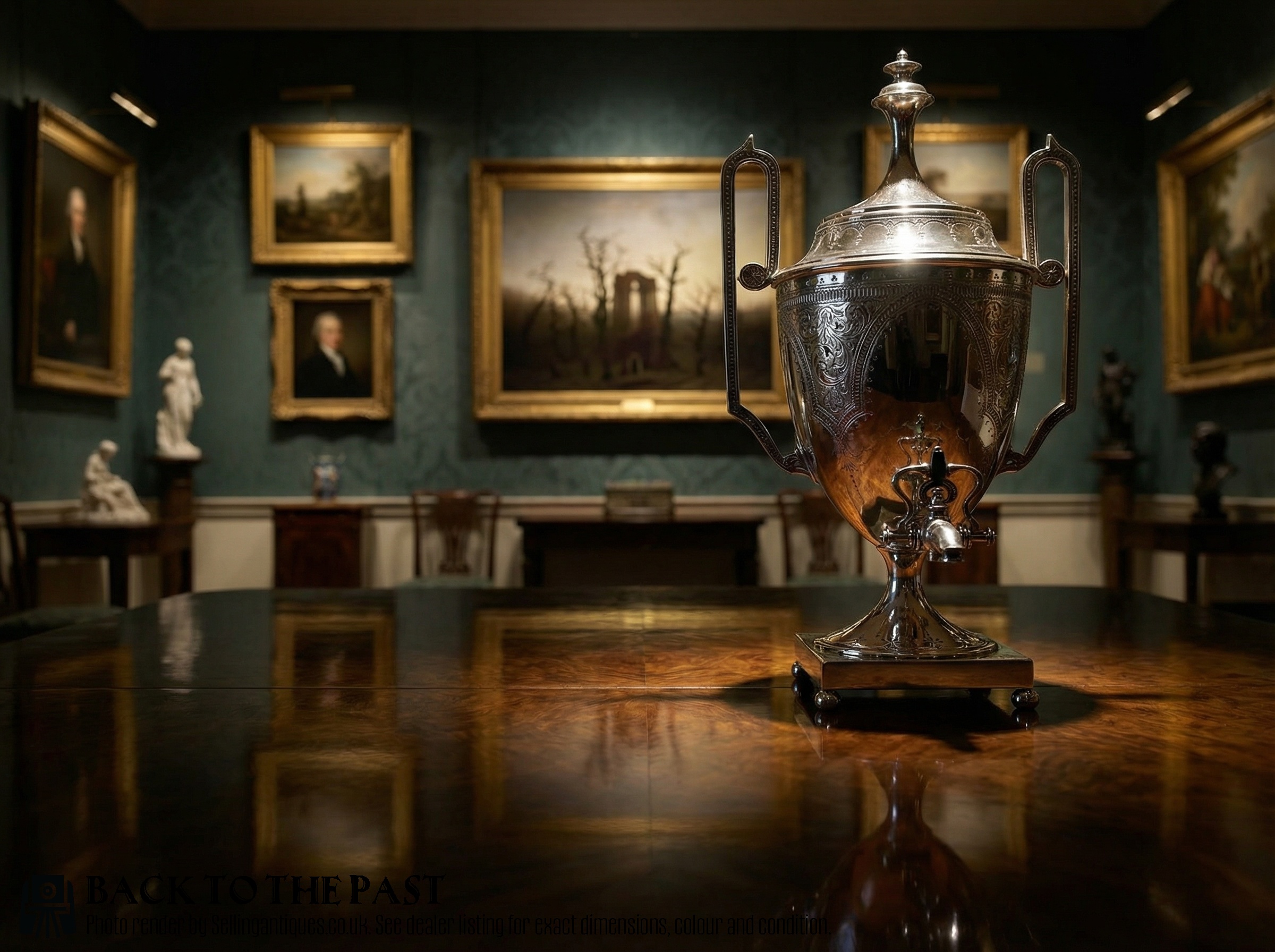
A silver tea urn brings monumental scale and polished gravity to the sideboard, uniting functional hospitality with neoclassical form.
Silver Tea Urn
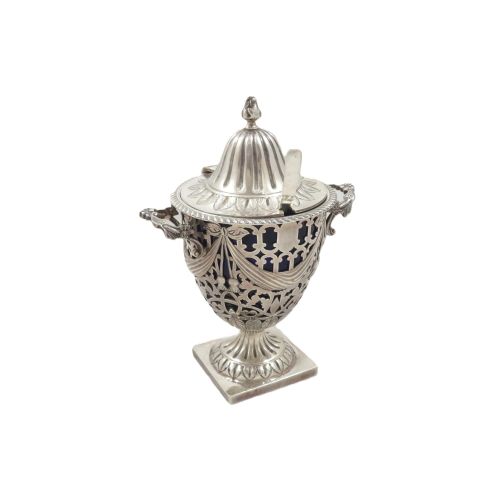
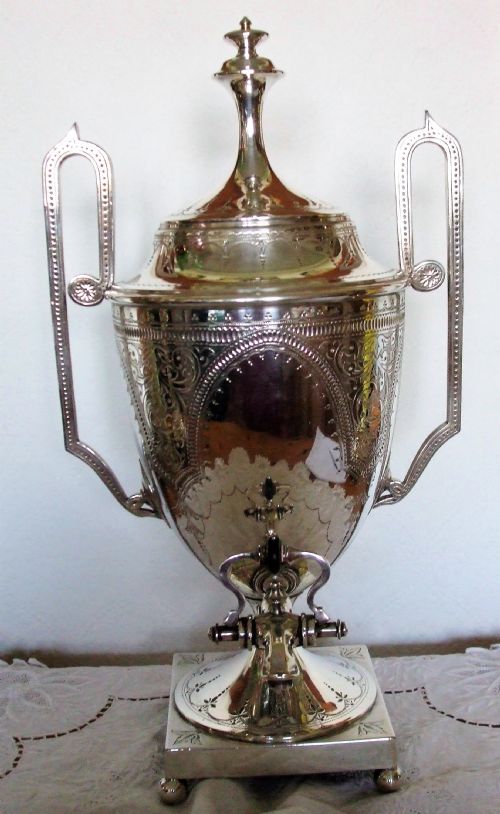
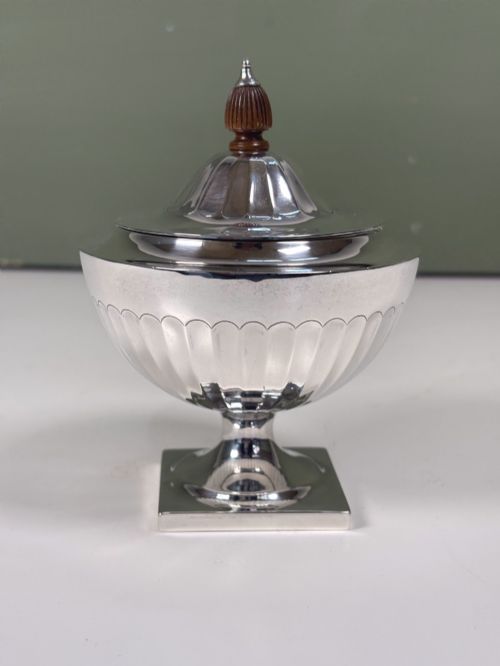
A silver tea urn is a large, footed vessel designed for heating and dispensing water at the tea table, often accompanied by a spigot and burner. These grand items span several centuries, with silver plate and sterling silver forms dominating the selection alongside related spirit kettles and tea caddies.
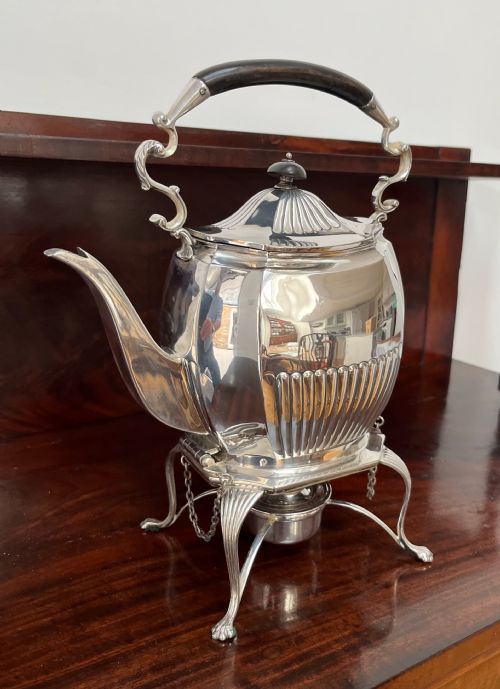
Buyers meet vessels shaped by Georgian, Victorian, and Edwardian hands, incorporating neoclassical details such as urn silhouettes, handles, and taps. While full-scale samovars and tea urns provide a striking focal point, smaller spirit kettles on stands appear frequently among the listings.
How they were made
Makers shaped these pieces from sterling silver or applied heavy silver plate over base metals like copper and brass, often utilising Old Sheffield plating techniques on early examples. Cast mounts, turned wooden or bone insulators on handles, and intricate pierced or engraved decoration complete the construction.
Internal components typically include a central heating tube or a detachable spirit burner positioned beneath the main body to keep water hot. Detachable lids, spigots with turn keys, and fitted wooden bases or stands demonstrate careful assembly by skilled silversmiths.
Listings feature sterling silver and silver plate tea urns alongside related forms like Georgian tea caddies and Edwardian spirit kettles.
What varies in quality
The standard of a silver tea urn depends on the weight of the metal, the crispness of the chased or engraved ornamentation, and the integrity of the silver plating over base metal. Superior examples retain substantial thickness in the walls and maintain smooth, secure operation of the spigot tap.
Maker marks and hallmarks provide clear indicators of origin, with workshops like Walker & Hall, Paul Storr, or Risler and Carré producing pieces with exceptional balance and proportion. Furthermore, the survival of matching burners, stands, and original interior fittings elevates the historical completeness of the object.
Walker & Hall·Mappin & Webb·Goldsmiths and Silversmiths Co·Paul Storr·Risler and Carré·John Round & Sons
The Silver Tea Urn Glossary
- Samovar
- A heated metal container traditionally used to boil water for tea, often featuring a spigot at the base and an internal vertical tube for heating. These large vessels formed the centrepiece of formal tea service in various European drawing rooms.
- Spirit kettle
- A portable water kettle mounted on a metal stand above a small spirit burner, designed to keep water hot at the table. They frequently accompany or replace larger fixed urns in domestic settings.
- Tea caddy
- A small box, jar, or vase designed to store dry tea leaves securely, often fitted with a lock and key. In Georgian and Victorian times, tea was expensive enough to warrant secure storage.
- Silver plate
- A layer of silver fused or electroplated onto a base metal such as copper, nickel silver, or brass. This technique allowed makers to produce large, decorative vessels at a lower cost than solid sterling silver.
- Neoclassical
- A decorative style inspired by classical antiquity that emphasises symmetrical forms, urn shapes, swags, and clean architectural lines. This aesthetic strongly influences the design of late eighteenth and nineteenth-century tea urns.
Silver Tea Urn: Frequently Asked Questions
How were silver tea urns used?
These vessels held hot water at the tea table so the host could dilute strong brewed tea to individual preference without leaving the room. Servants filled the internal reservoir and lit the burner beneath to maintain the temperature throughout long social gatherings.
Guests gathered around the sideboard or tea table while the host operated the tap to fill individual teapots or cups. The presence of such a large vessel indicated considerable hospitality and social standing in a nineteenth-century home.
What is the difference between an urn and a spirit kettle?
A tea urn is a heavy, stationary vessel fixed to a base with a tap near the bottom, designed to hold large volumes of water for numerous guests. A spirit kettle is smaller and rests on a removable stand above a burner, allowing it to be heated directly at the tea table.
Urns usually remain placed on a sideboard due to their weight and scale, whereas spirit kettles sit closer to the tea tray. Both served the primary function of providing hot water, but they filled different spaces within the domestic tea service.
How do I date a silver tea urn?
Sterling silver examples carry hallmarks that indicate the assay office, date letter, and maker, providing an exact year of manufacture. Plated pieces rely stylistic cues such as neoclassical shapes, handle designs, and registry diamond marks to establish an approximate decade.
Construction methods also reveal age, as early nineteenth-century pieces often use old Sheffield plate with visible copper seams, while later Victorian and Edwardian items utilise electroplating. Examining the style of the engraved decoration helps narrow down the period further.
Can I use an antique tea urn today?
Most antique silver tea urns serve primarily as decorative objects or collection centerpieces rather than functional kitchen appliances. The internal piping, soldered joints, and silver plating on older pieces require careful preservation and may not meet modern food safety standards for daily boiling.
If you choose to use one, ensure the internal reservoir and spigot are thoroughly cleaned without abrasive materials that damage the silver. Many owners prefer to display them dry on a sideboard or dining table to appreciate their sculptural form.