





Silver Spirit Kettle Urn
A silver spirit kettle urn brings warmth and historic ceremony to a room, offering a gracious way to serve hot water from a dedicated stand.
Silver Spirit Kettle Urn
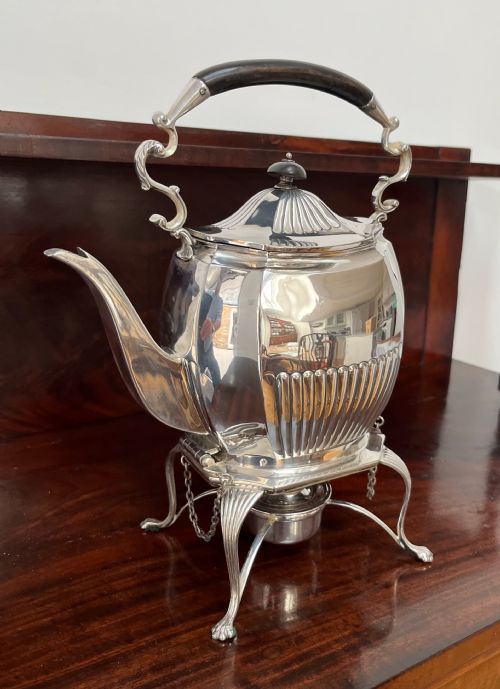
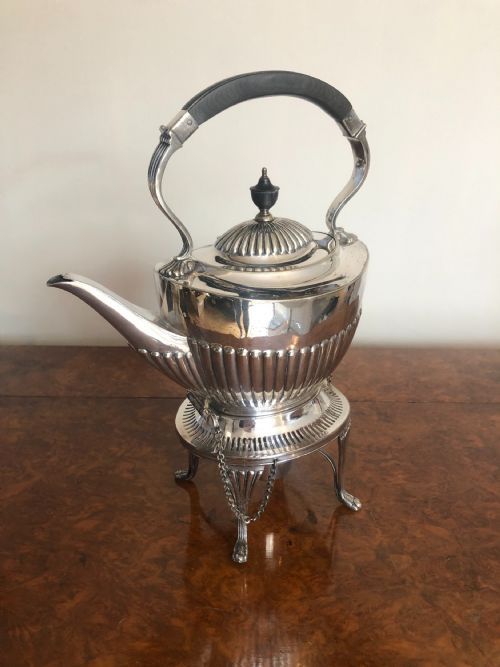
A silver spirit kettle urn is a portable vessel designed to heat water at the table using an integrated spirit burner, appearing across Victorian, Edwardian, and Georgian Revival periods. These pieces combine tea ware and kettles into a single apparatus mounted on a supportive stand, often styled for formal hospitality.
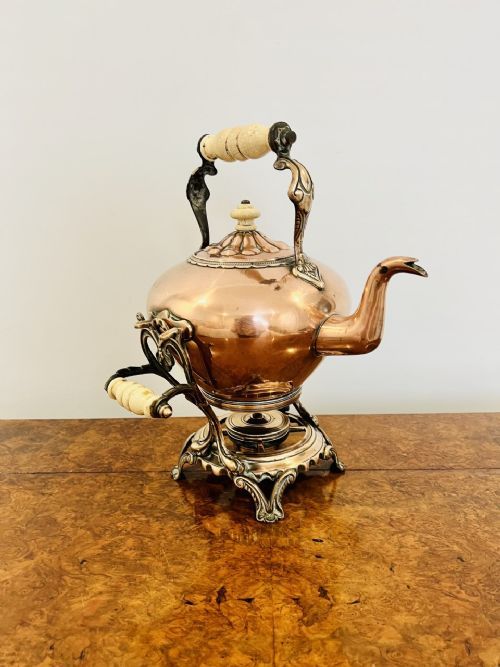
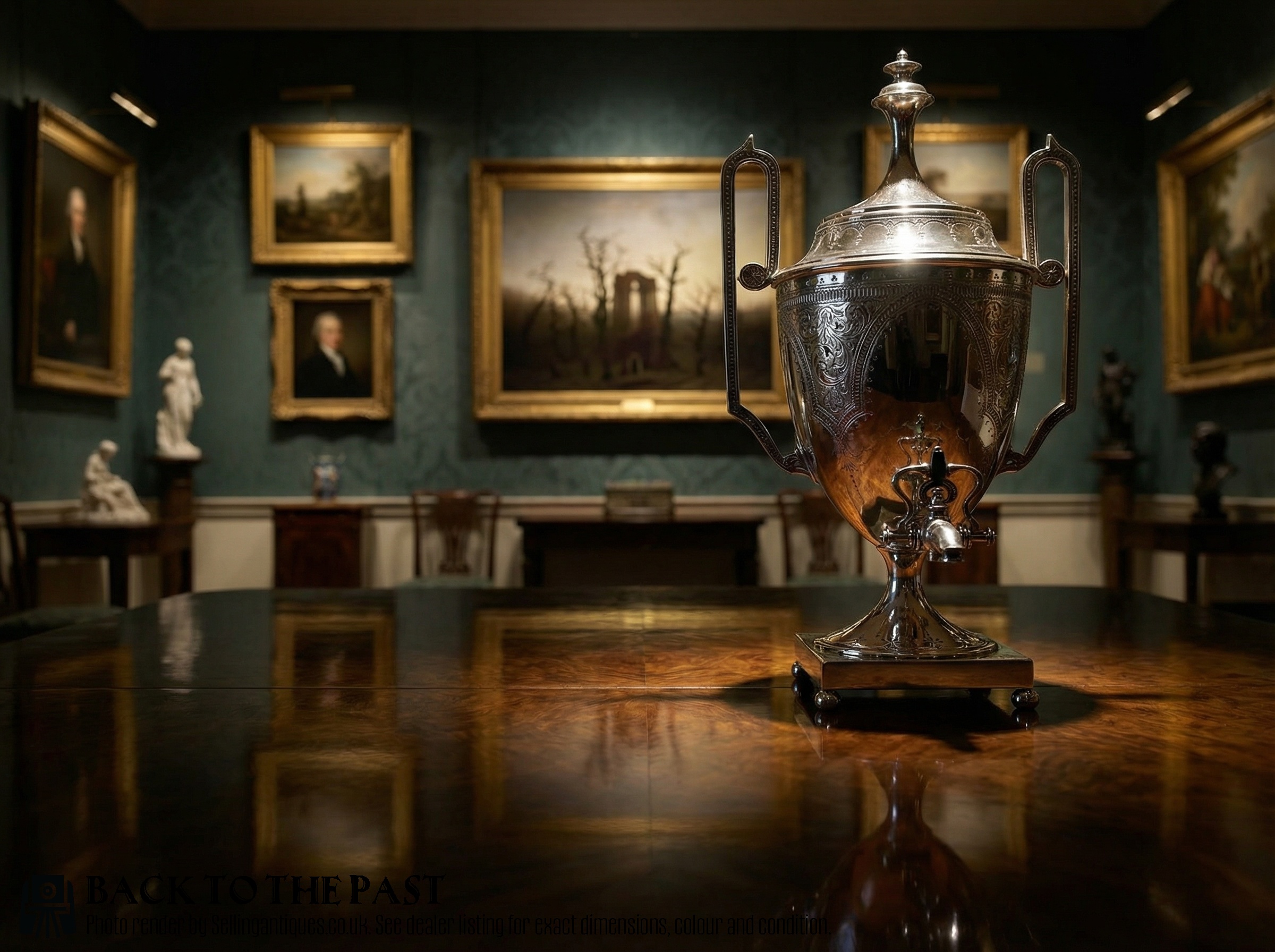
The versions most commonly met on this page date from the Edwardian era, alongside mid-Victorian copper examples and silver plated interpretations from around nineteen hundred to nineteen ten. Forms range from traditional spirit kettles on dedicated stands to larger samovars used for heating water.
Materials and construction methods
Construction relies heavily on silver plate and EPNS over a base metal, frequently shaped into ornate vessels with matching burners and stands. Copper also appears in Victorian pieces, showcasing robust metalwork designed to withstand direct heat.
Handles and insulators incorporate ebony, ebonised wood, bone, and plain wood to prevent heat transfer during use. These organic elements provide a sharp contrast to the polished metallic surfaces of the kettle and stand.
Every burner waits quietly beneath its kettle, holding the promise of endless Victorian tea parties.
Assessing quality in construction
Quality reveals itself in the substantial weight of the metal and the crispness of the chased or cast decorative details on the stand. Superior pieces maintain a balanced proportion between the kettle, its burner, and the supporting frame.
The integrity of the insulating materials on the handle and the smooth operation of the burner mechanism distinguish finer workshops from standard production. Maker attribution, such as work by Fenton Brothers or Walker & Hall, elevates the standard of craftsmanship.
Fenton Brothers·Frederik Ellis Tim & Co·Walker & Hall
The Silver Spirit Kettle Urn Glossary
- Spirit kettle
- A portable kettle mounted on a stand with an under-mounted burner that uses liquid spirit to keep water hot. It forms the centrepiece of traditional tea service.
- EPNS
- Electroplated nickel silver, a common base material for metalware produced from the mid-nineteenth century onwards. It provides the appearance of solid silver at a different scale of production.
- Samovar
- A large heated metal container traditionally used to boil and heat water for tea. Edwardian examples often feature tap mechanisms and rest on fitted stands.
- Ebonised wood
- Timber treated to resemble ebony, frequently utilised for kettle handles and insulators. This material remains cool to the touch during use.
Silver Spirit Kettle Urn: Frequently Asked Questions
How do I use a spirit kettle?
Fill the vessel with water and ignite the spirit burner positioned underneath the stand to heat or maintain temperature.
The handle, insulated with wood or bone, allows safe pouring once the water reaches the desired heat.
What is the difference between a kettle and a samovar?
A spirit kettle typically tilts on a frame to pour water directly into a teapot during tea service.
A samovar is generally a larger urn fitted with a small tap at the base for dispensing hot water.
How do I clean silver plated tea ware?
Use a soft cloth and a gentle cleaning agent specifically formulated for silver plate to preserve the metallic finish.
Avoid abrasive materials that might wear away the plating over time, particularly on raised decorative motifs.
How do I date an Edwardian kettle?
Examine the style of the metalwork, manufacturer marks, and the materials used for handle insulation.
Edwardian pieces often display distinct revival motifs and maker stamps from the early twentieth century.