



Edwardian Hot Water Urn
An Edwardian hot water urn is a practical table accessory for serving tea, prized for its generous capacity and handsome metalwork.
Edwardian Hot Water Urn
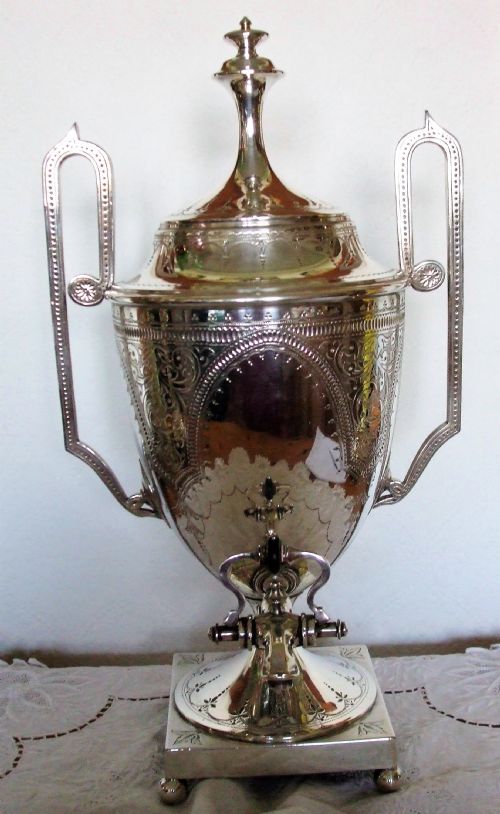
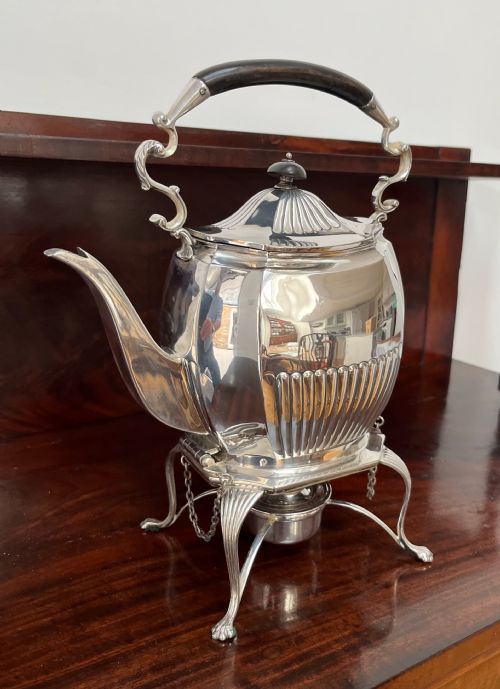
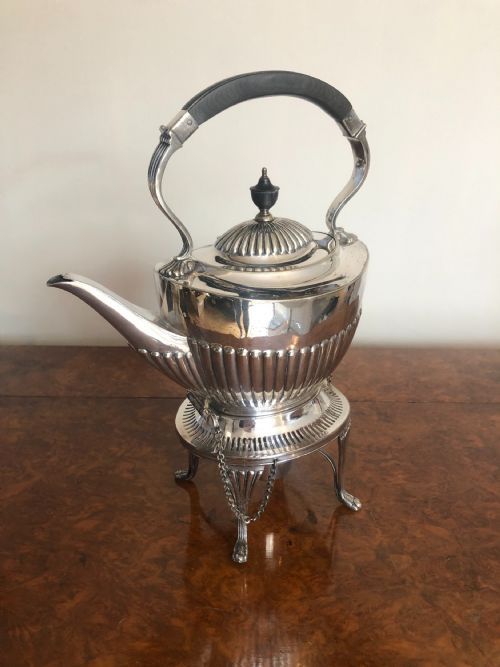
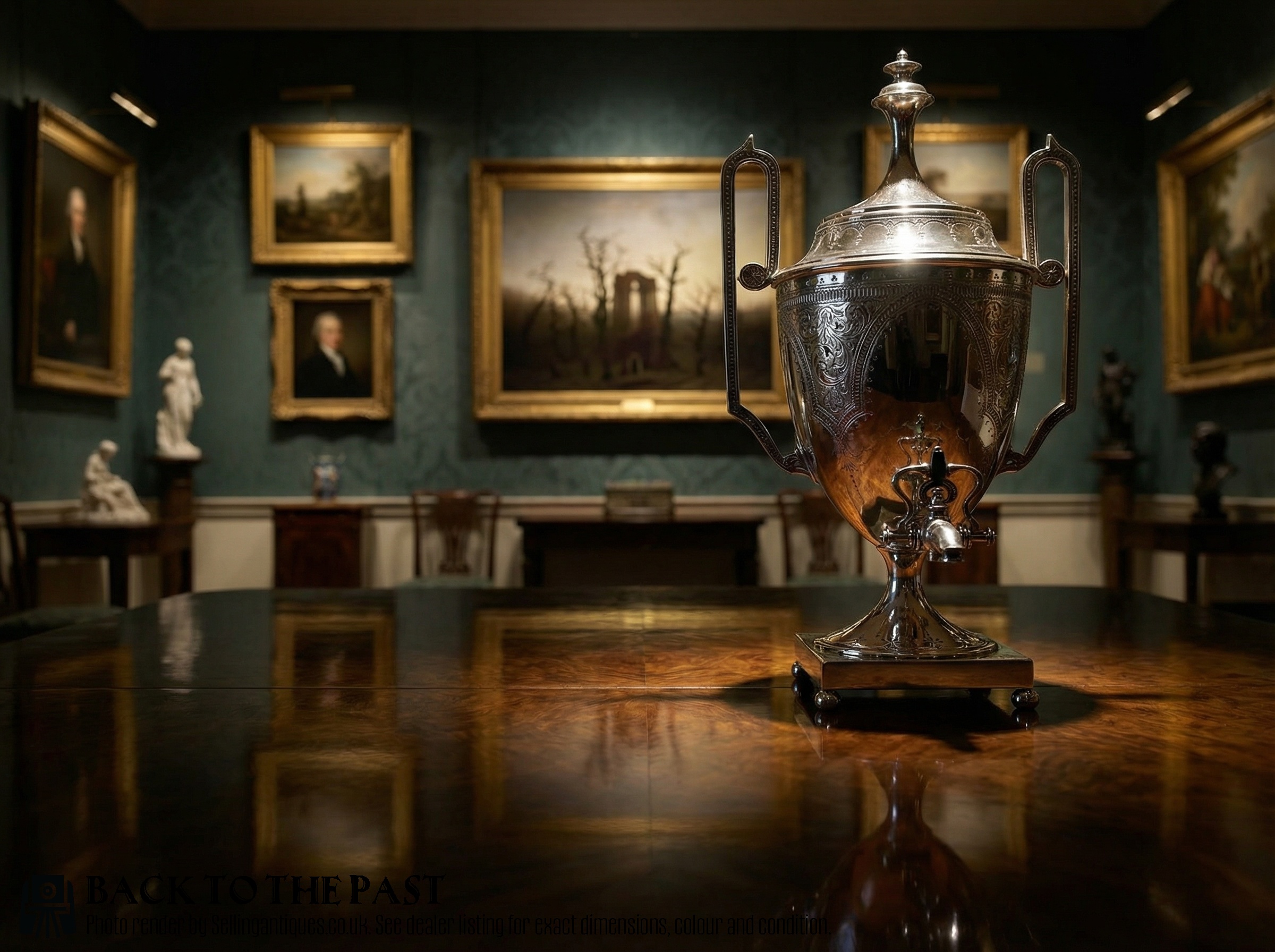
An edwardian hot water urn encompasses tea urns, samovars, and spirit kettles mounted on stands with burners, designed to keep water hot during service. The pieces seen on this page span the Edwardian period alongside Victorian and later examples in related tea wares.
Most items encountered are silver plated or fashioned from brass and copper, often featuring ebonised wood or ebony handles. These vessels range from large samovars to portable spirit kettles intended for the tea table.
How they were made
Makers utilised silver plate over base metals, alongside solid brass and copper, hammering or casting the bodies into substantial vessels. Stands and burners were engineered to support the weight of boiling water safely.
Handles and finials frequently incorporate wood, ebony, or ebonised wood to insulate against heat. Surface finishes include polished silver plate, japanned decoration, and traditional metal patination.
A tiny burner sits ready beneath each kettle, waiting to keep the tea flowing.
What varies in quality
The weight of the metal and the robustness of the stand dictate the substance of the piece, distinguishing heavier vessels from lighter alternatives. Fineness in the casting of handles, spigots, and burners separates standard utility wares from finer examples.
The integrity of the silver plating and the clarity of maker marks reveal the standard of original production. Complete sets retaining their original burner and stand demonstrate greater coherence than mismatched assemblies.
Walker & Hall·Benetfink & Co
The Edwardian Hot Water Urn Glossary
- Samovar
- A heated metal urn traditionally used to boil and heat water for tea. These large vessels often sit on dedicated bases.
- Spirit Kettle
- A water kettle mounted on a metal stand above a small spirit burner. This setup keeps water hot at the table.
- Silver Plate
- A thin layer of silver applied to a base metal such as copper or brass. It provided the look of solid silver at a lower cost.
- EPNS
- Electroplated Nickel Silver. This common base material for silver plated items offered durability and strength.
- Japanned
- A European imitation of Asian lacquerwork. It created a dark, glossy decorative finish on metal items like tea urns.
Edwardian Hot Water Urn: Frequently Asked Questions
What is an edwardian hot water urn?
An edwardian hot water urn is a metal vessel designed to hold and heat water for tea service. These pieces include samovars and spirit kettles on stands.
They combine practical function with decorative metalwork suitable for a formal tea table.
How were spirit kettles used?
Spirit kettles sat on a metal stand equipped with a small burner beneath. This allowed water to remain hot throughout the tea service.
The burner used methylated spirits to maintain a steady flame.
What materials are these urns made from?
These vessels are predominantly made from silver plate, brass, and copper. Handles often incorporate wood or ebonised wood.
Some pieces feature japanned finishes or specialised metal alloys like EPNS.
How do I date an urn?
Dating relies on stylistic clues, construction methods, and maker marks stamped into the metal. The Edwardian era spans the early twentieth century.
Victorian and later 1920s examples show shifts in decorative style and manufacturing techniques.