


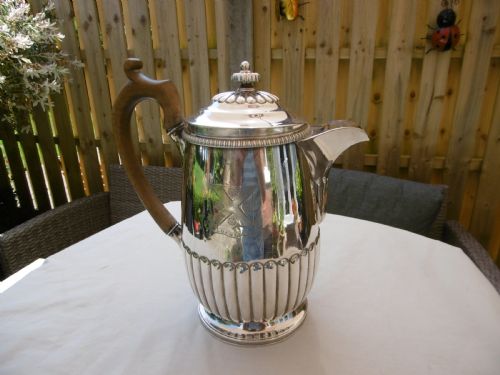


Engraved Silver Urn
An engraved silver urn brings monumental presence to a sideboard, offering both historical utility and decorative weight.

Engraved Silver Urn
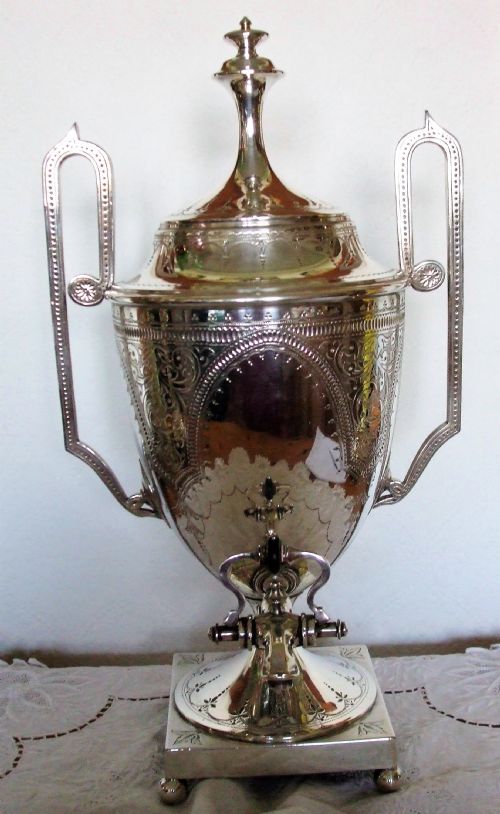
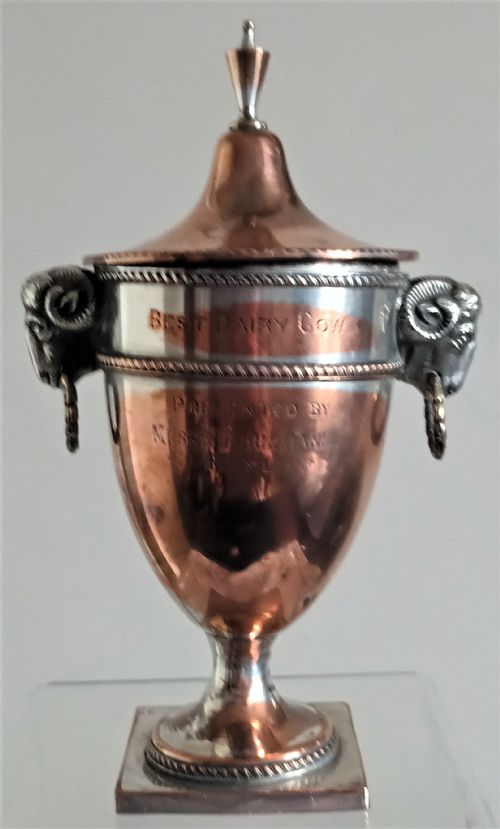
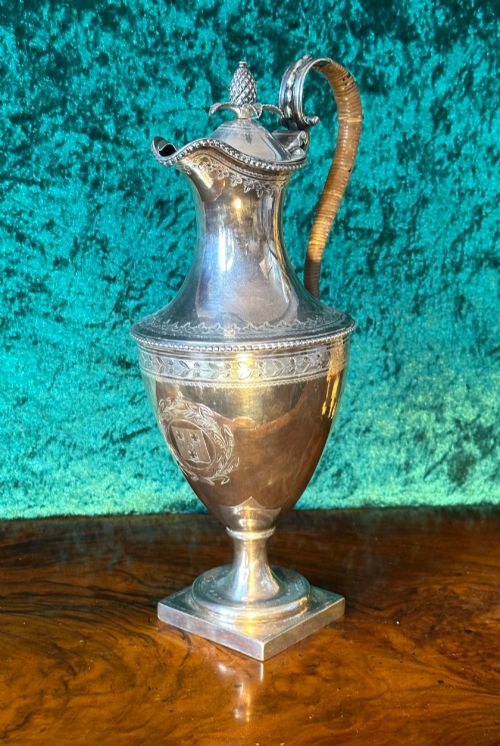
When you search for an engraved silver urn, you meet substantial vessels spanning tea urns, samovars, wine coolers, and presentation trophies. These objects originate largely from the eighteenth and nineteenth centuries, taking forms defined by Georgian, Regency, and Victorian aesthetics.
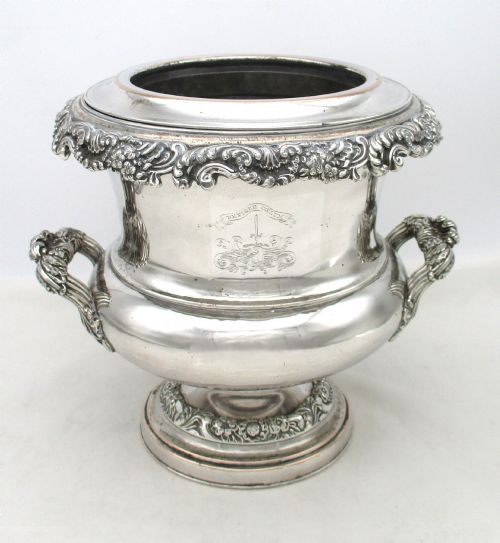
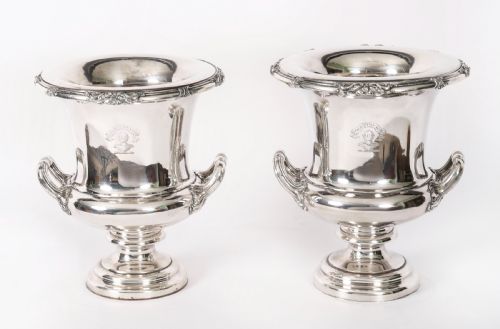
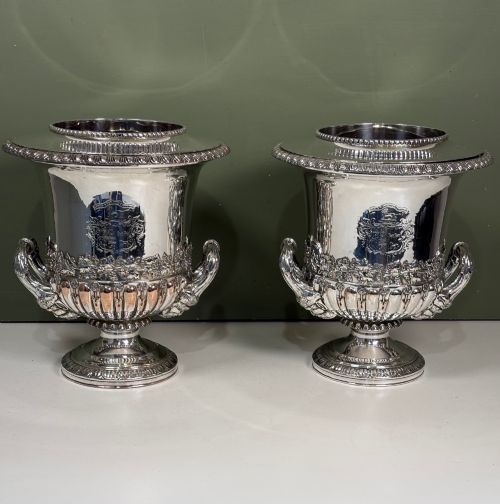
The version you are most likely to encounter on this page is the silver-plated or Old Sheffield Plate wine cooler, alongside tea urns equipped with taps and heavy presentation cups. They bridge domestic hospitality and formal display, often bearing family crests or commemorative inscriptions.
Makers ranged from prominent workshops producing large-scale vessels to provincial silversmiths crafting intimate domestic pieces. Their enduring appeal lies in the combination of functional design and ornamental engraving.
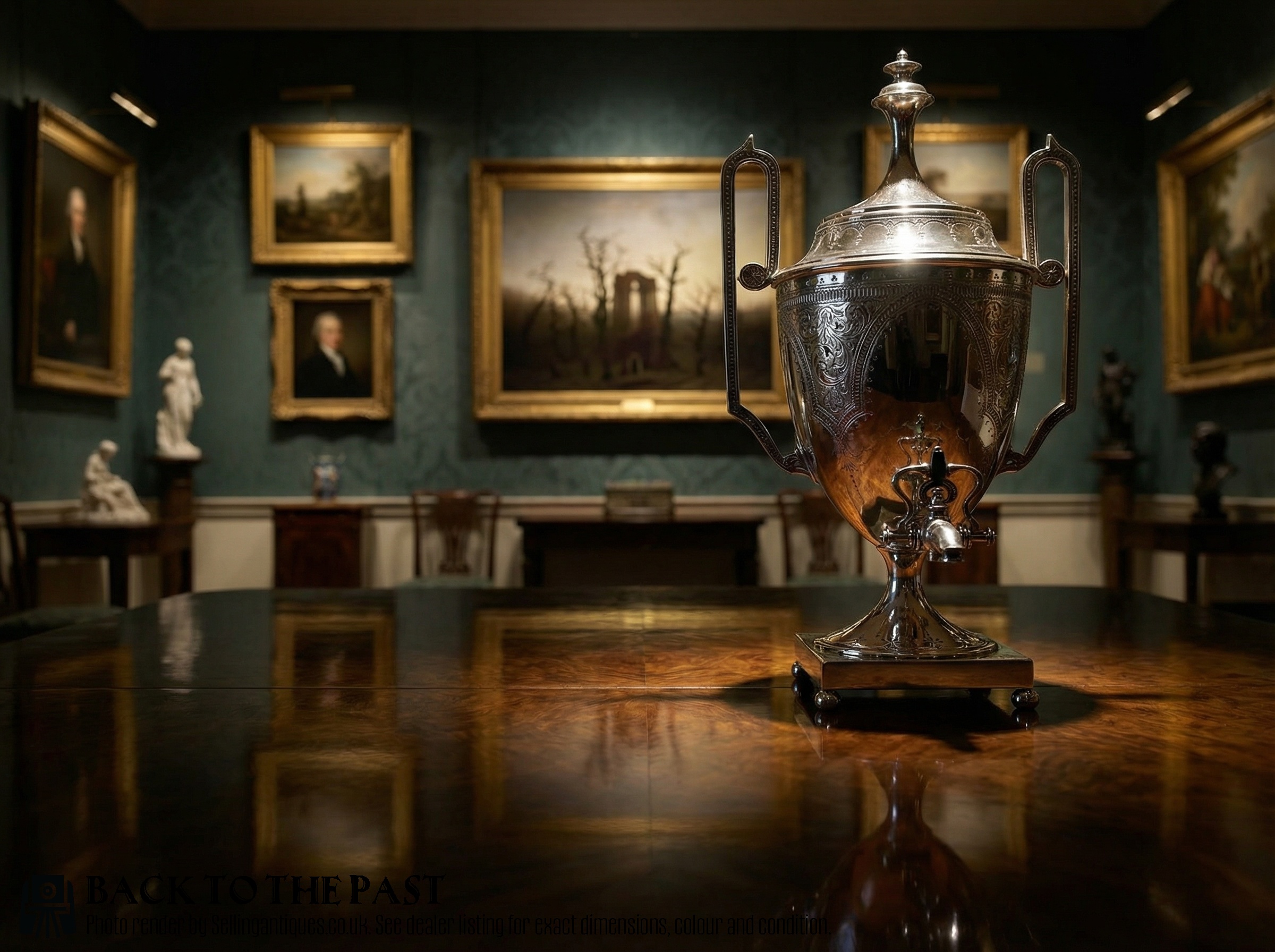
How they were made
Makers utilised solid sterling silver, Old Sheffield Plate, and later silver plating over copper or nickel silver, shaping the metal through spinning, hammering, and casting. Handles, feet, and spout fixtures were cast separately and soldered to the main body.
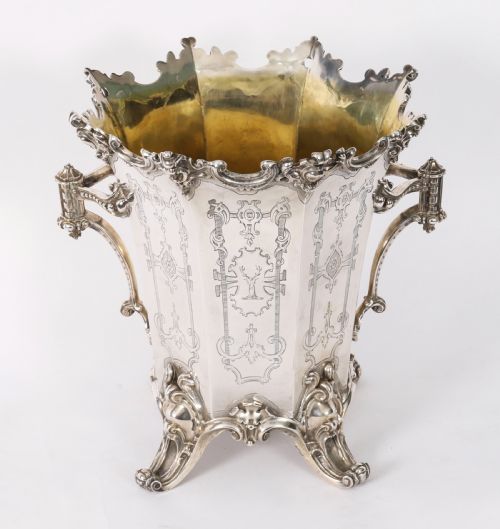
Engraving was applied by hand using gravers to cut linear patterns, armorial crests, and foliate motifs directly into the metal surface. In Old Sheffield Plate pieces, a thin sheet of sterling silver was fused to a copper core before forming, requiring considerable skill to avoid exposing the base metal during engraving.
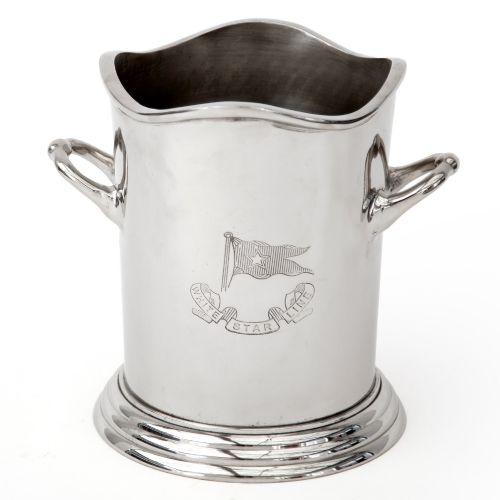
Several pieces preserve regimental identities, including a nineteenth-century wine cooler commissioned by the First Lancashire Rifle volunteers.
What varies in quality
The division between standard domestic ware and top-tier pieces rests on the crispness of the chased ornament and the depth of the hand engraving. Superior examples retain sharp relief in their cast mounts and delicate precision in their heraldic work.
Weight and balance distinguish finer vessels, alongside the integrity of the original plating or solid silver gauge. Pieces bearing documented maker marks or significant provenance command greater attention from collectors.
Elkington, Mason And Co·Walker And Hall·Matthew Boulton·Harrison Brothers And Howson·Henry Tatton And Son
The Engraved Silver Urn Glossary
- Old Sheffield Plate
- A composite material made by fusing a thin layer of silver to a copper base, typical of eighteenth and early nineteenth-century manufacture before electroplating replaced the technique.
- Samovar
- A large heated metal container traditionally used to boil water for tea, often fitted with a spigot and handles.
- Crest
- A heraldic design engraved onto the body or shield of the vessel to denote family ownership or institutional provenance.
- Ewer
- A large jug with a wide spout, used historically for pouring water or wine at formal dining occasions.
- Engine turning
- A mechanical decoration technique producing intricate geometric patterns of fine lines cut into metal surfaces.
Engraved Silver Urn: Frequently Asked Questions
What was an engraved silver urn used for?
These vessels served practical functions at elite dining tables and tea services, holding hot water, wine, or cooling ice for champagne.
Over time, many transitioned into decorative display pieces or presentation items awarded for civic and military achievements.
How do I clean an antique silver urn?
Maintenance requires gentle dusting and occasional cleaning with a non-abrasive silver cream designed for antiques. Harsh chemical dips strip the natural patina and can damage Old Sheffield Plate by exposing the underlying copper.
Soft cloths and careful application preserve the delicate hand engraving around crests and cartouches.
How can I tell Old Sheffield Plate from electroplate?
Old Sheffield Plate reveals a faint copper seam edge where the fused silver sheet meets the base metal, particularly around rims and cut sections. Electroplated nickel silver displays a uniform white metal colour beneath worn spots rather than warm copper.
Weight and manufacturing era also guide identification, as fusion plating predates nineteenth-century electrodeposition.
Where should I display a large urn?
A substantial wine cooler or tea urn requires a sturdy surface such as a sideboard, serving table, or low console where its weight is fully supported. Positioning the piece away from direct sunlight and damp environments protects both the metal and any wooden stands.
Allowing sufficient space around the vessel highlights its handles, tap fixtures, and engraved details.