
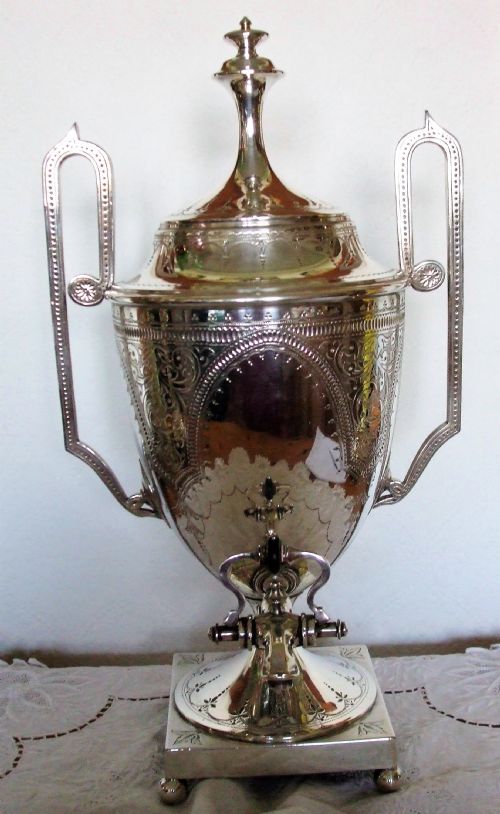
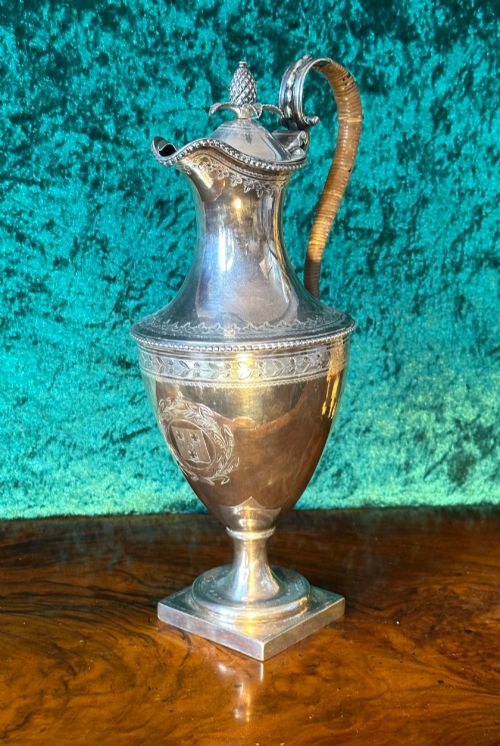


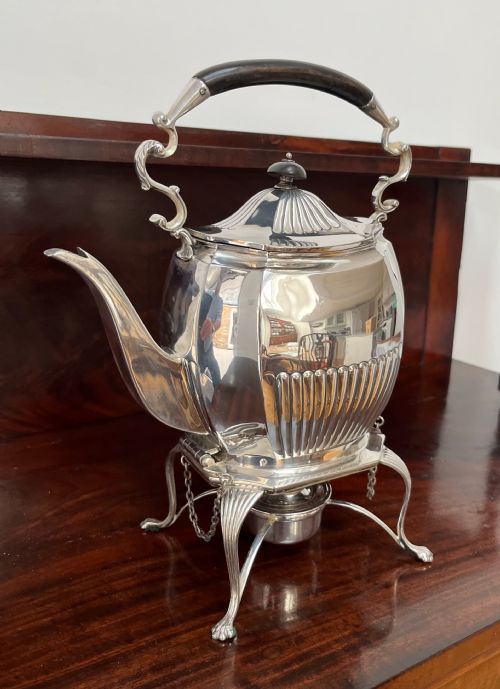

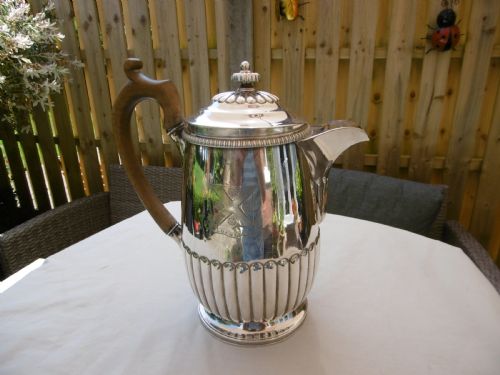


Silver Hot Water Urn
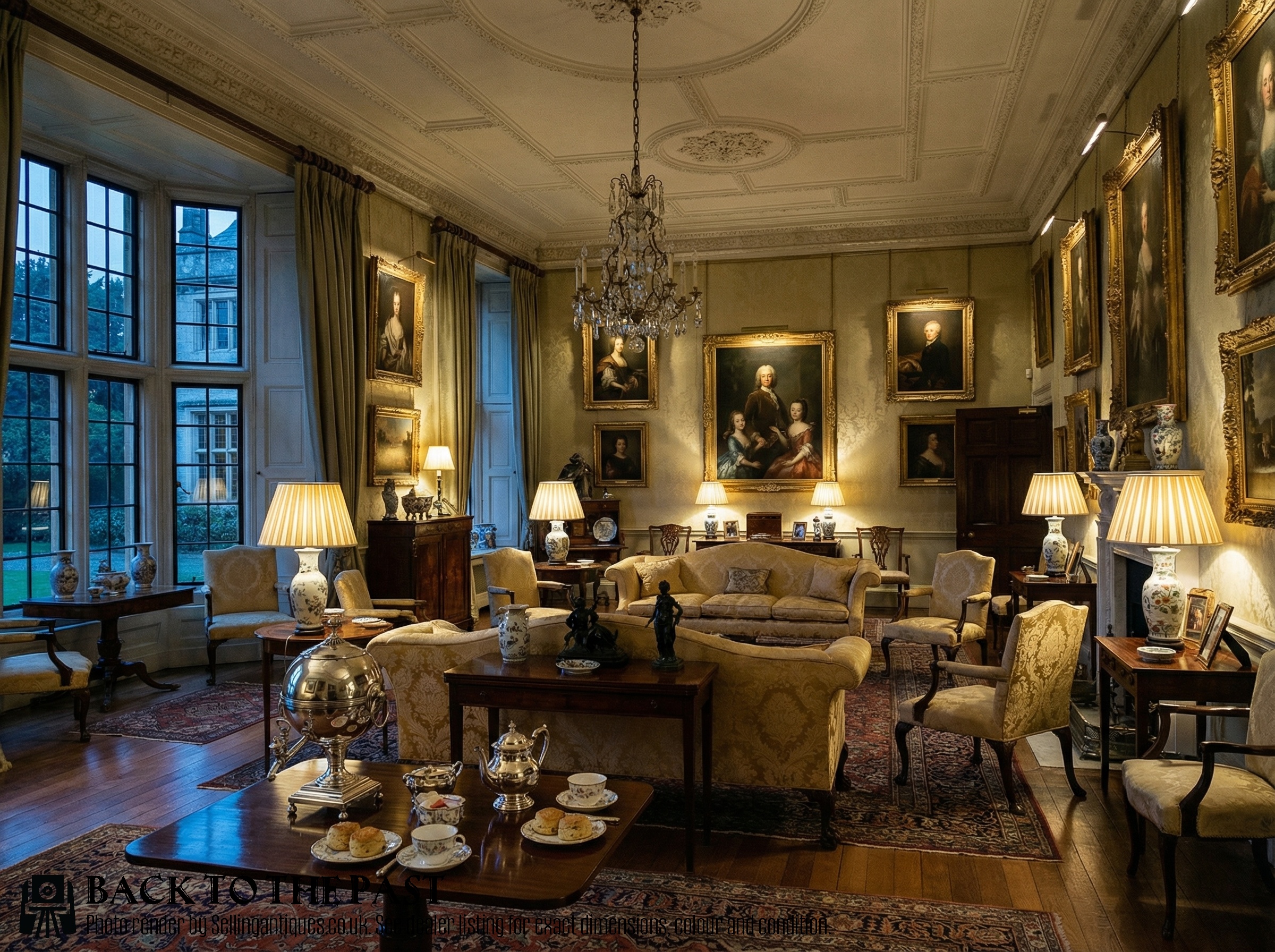
A silver hot water urn brings immense gravitas to a room, offering a stately centrepiece designed for pouring boiling water during formal tea service.
Understanding silver hot water urn
A silver hot water urn is a substantial vessel engineered to keep water piping hot at the tea table, often referred to as a samovar or tea urn. These objects date across several periods, appearing in Georgian neoclassical designs, Regency models, Victorian French 19th-century interpretations, and Edwardian iterations.
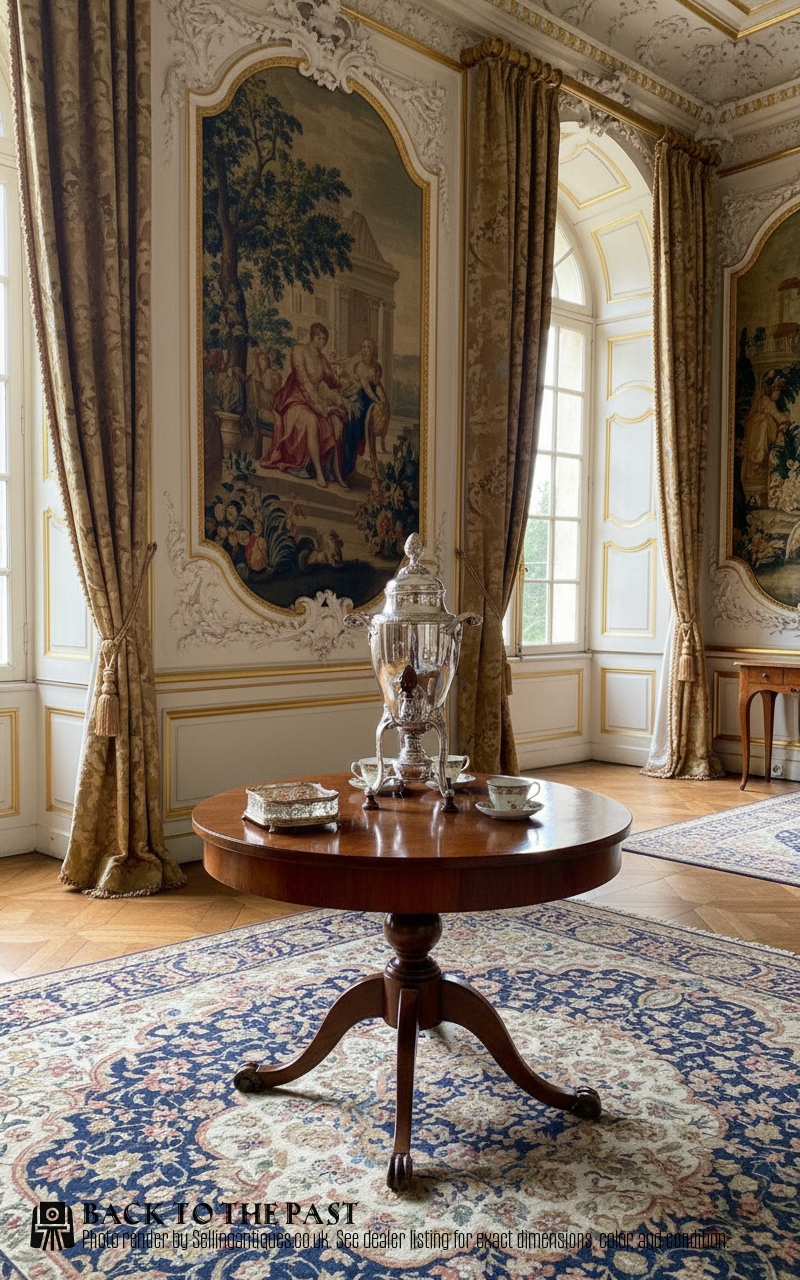
The versions most frequently met on this page span silver plate and mixed metal construction, occasionally incorporating wooden elements. They take the form of tea urns with pedestals, spigots, and handles, designed to sit prominently during dining or drawing room gatherings.
Manufacturing and Materials
Construction relies primarily on silver plate and base metal, shaped into grand vessels and mounted on secure pedestals. Wood elements appear on handles or insulators to protect the hand from heat during service.
Metalworking techniques involve forming the body of the urn and applying decorative chasing or neoclassical motifs, fitted with functional spigots for dispensing water.
Retail Price Guide 2026
Typical UK retail prices for silver hot water urn, calculated from the Sellingantiques database of over a million retail prices indexed since 2003. This retail price guide relies exclusively on Sellingantiques data; no external sources or auction records are used, so the figures do not describe the wider market.
The listings here feature periods spanning the Georgian era, through Victorian French nineteenth-century styles and Regency, down to Edwardian examples from nineteen-ten.
Judging Quality
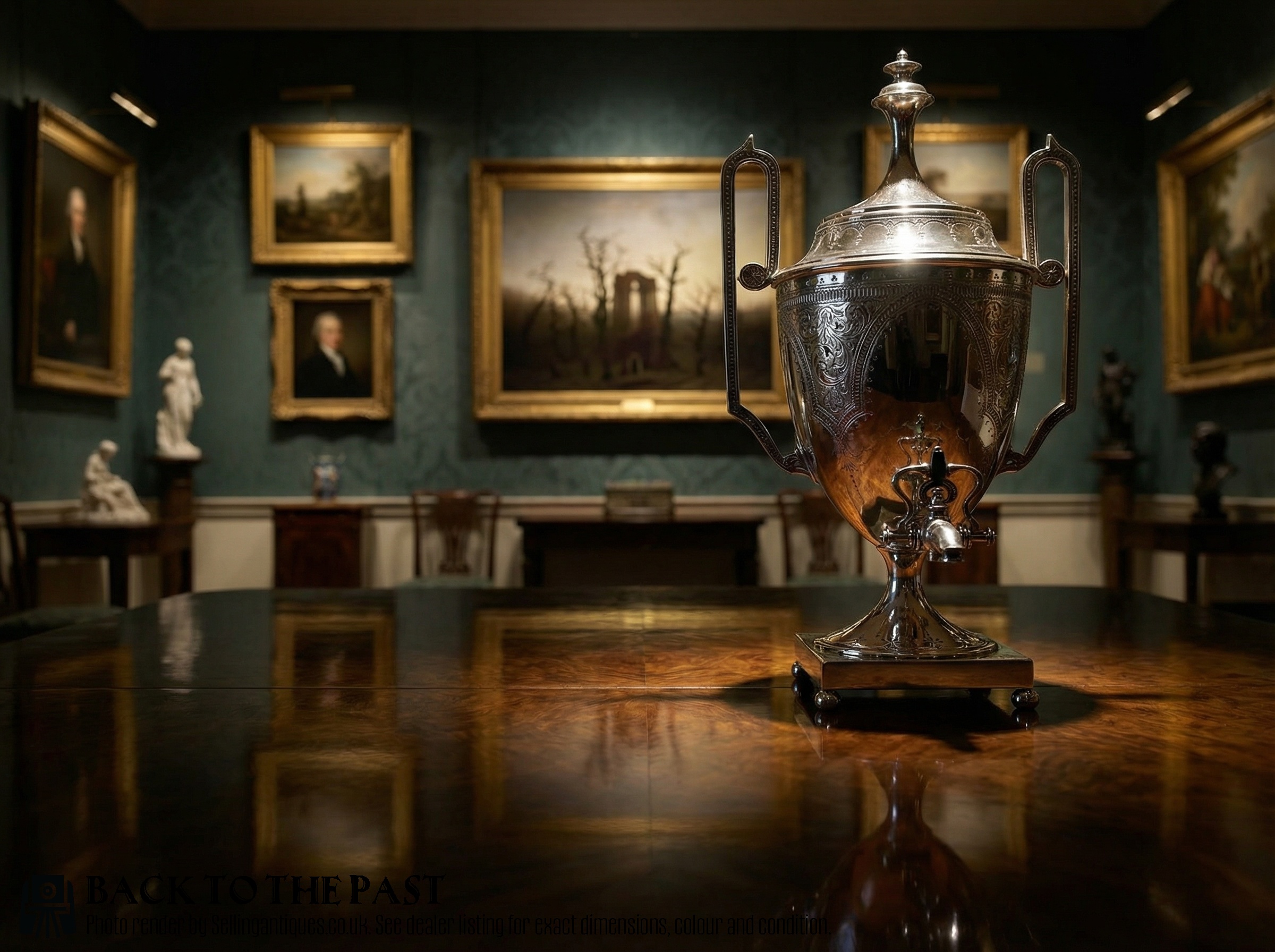
The division between standard examples and superior pieces rests on the crispness of the neoclassical or Victorian ornamentation and the structural integrity of the metalwork. Maker attribution elevates an object, particularly when associated with notable Parisian or Sheffield workshops.
Weight, balance, and the proportion of the pedestal relative to the urn body dictate the aesthetic success of the piece. Fine quality shows in the seamless integration of handles, spigots, and wooden components without looseness or clumsy repair.
Walker & Hall·Risler and Carré Paris
The Silver Hot Water Urn Glossary
- Samovar
- A heated metal container traditionally used to boil and heat water in Russia and adopted across Europe for formal tea service. These vessels often feature an internal heating tube or serve purely to hold hot water.
- Spigot
- A tap or nozzle fitted near the base of the urn to control the flow of hot water into waiting cups. The mechanism requires a tight seal to prevent leaks during operation.
- Silver Plate
- A manufacturing method where a thin layer of silver is fused onto a base metal core such as copper or Britannia metal. This technique allowed makers to produce grand vessels at a more accessible cost than solid silver.
- Neoclassical
- A style dominating late eighteenth and early nineteenth-century design, drawing inspiration from classical antiquity. Urns from this period display strict symmetry, urn shapes, and delicate friezes.
Frequently Asked Questions
What is a silver hot water urn used for?
These vessels were designed to supply boiling water during extended tea services in large households. Servants kept the water hot so guests could top up their teapots without leaving the table.
Over time, their role shifted from active kitchen implements to decorative objects displayed on sideboards and buffets.
How do I tell a Georgian urn from a Victorian one?
Georgian examples generally adhere to strict neoclassical proportions with restrained ornamentation like urn motifs and delicate handles. Victorian pieces, particularly those influenced by French nineteenth-century design, tend to feature heavier, more exuberant decoration.
Examining the manufacturing marks and the style of the chasing helps confirm the precise period of production.
Are silver plated urns durable?
Silver plated pieces utilise a durable base metal core beneath a protective layer of silver. With careful cleaning using appropriate silver care products, the plating remains stable for generations.
Avoid abrasive cleaners that wear down the thin silver layer over time.
Can I still use an antique tea urn?
Most antique urns function primarily as decorative display items rather than practical kitchen appliances. The internal linings and spigots may not meet modern plumbing standards for consumable water.
Collectors choose to admire their sculptural form and historical craftsmanship in a dining room setting.