





Victorian Tea Urn
A victorian tea urn is a substantial vessel for heating water, prized for solid metalwork and a commanding presence on the sideboard.
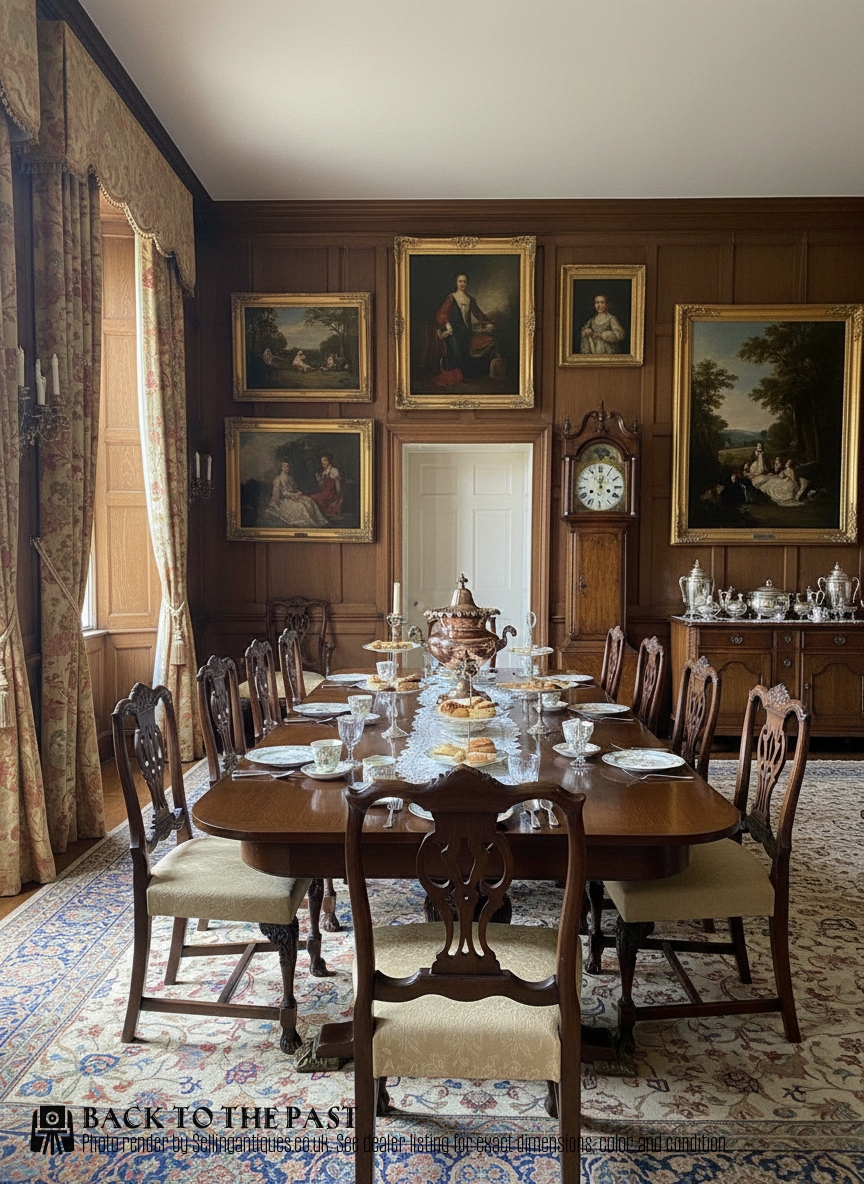
Victorian Tea Urn
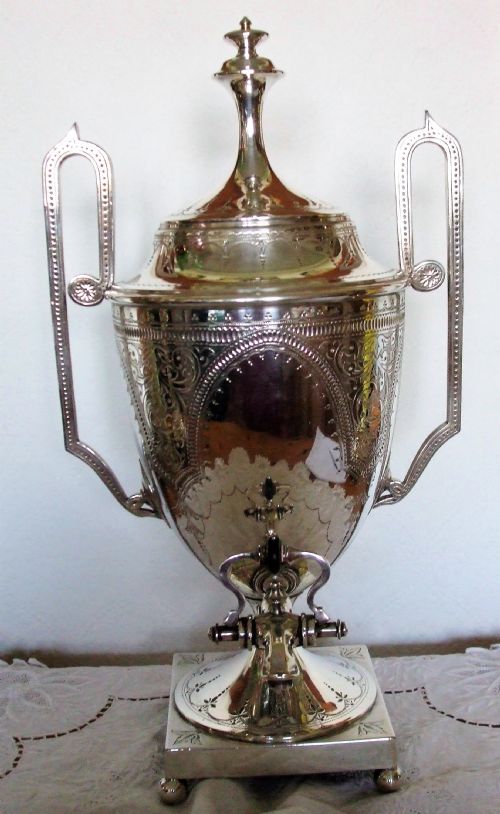
A victorian tea urn sits at the heart of nineteenth-century hospitality, engineered to hold large volumes of boiling water for social gatherings.
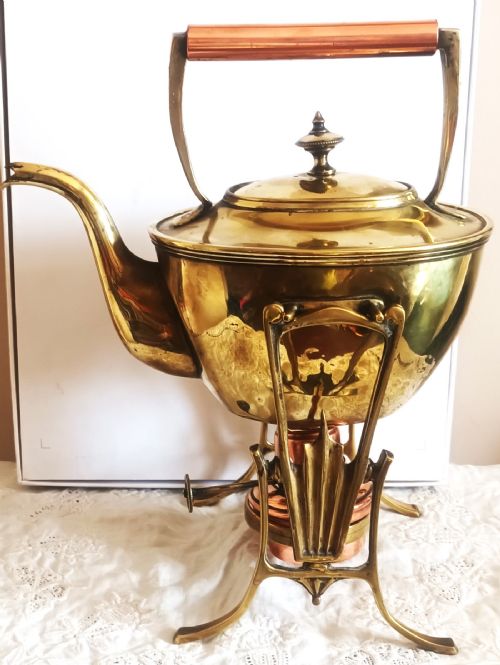
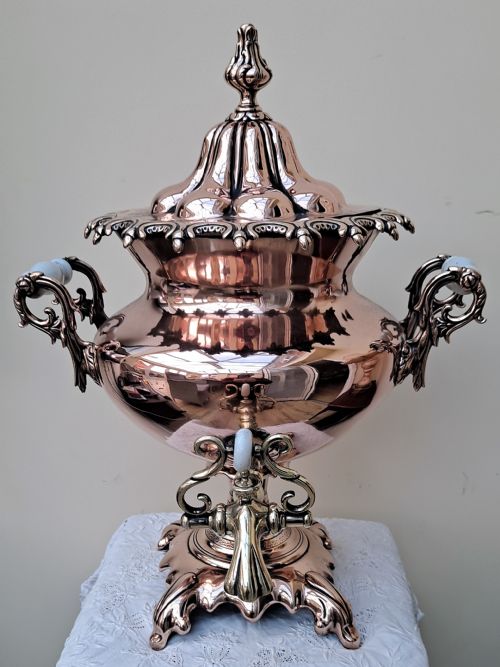
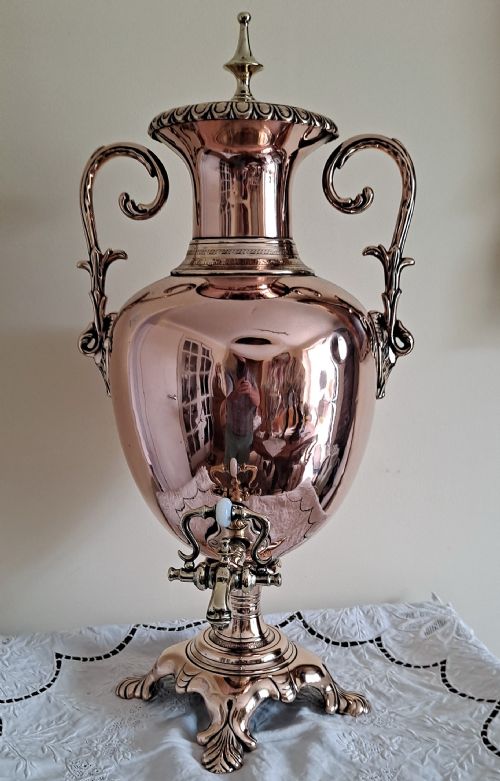
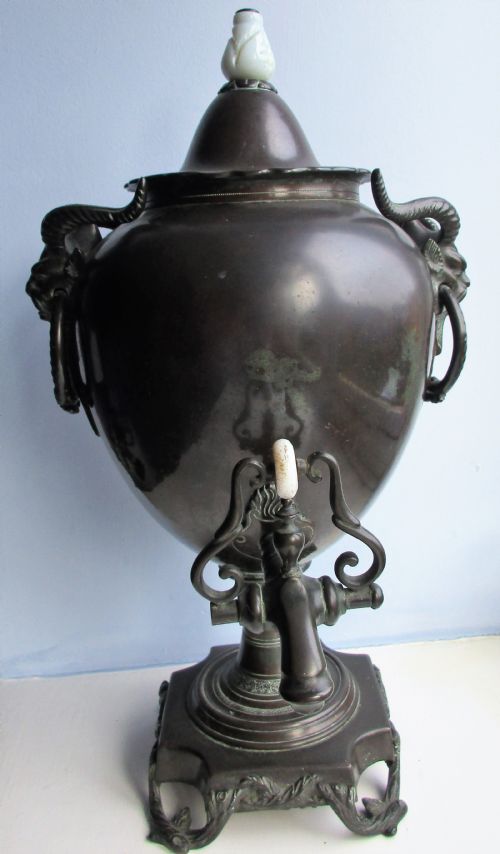
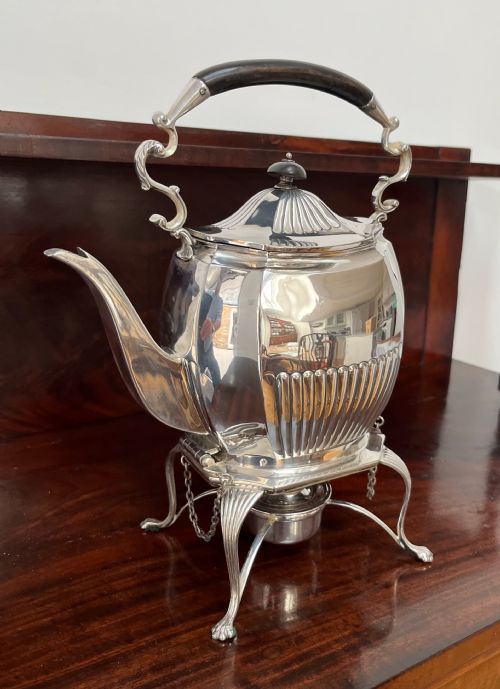
Most examples encountered here take the form of heavy copper and brass samovars, alongside silver-plated spirit kettles mounted on dedicated stands with burners.
Makers produced these pieces across the nineteenth century and into the Edwardian era, incorporating styles from Gothic Revival and Arts and Crafts to Neoclassical and Aesthetic Movement designs.

How they were made
Metals form the core of these objects, utilising hammered or sheet copper, solid brass, and Sheffield silver plate over base metal.
Casting and joining methods created complex spouts, tap handles, and burner assemblies, often incorporating ceramic, bone, or ebonised wood details for insulation.
Surface treatments range from bright polished brass and burnished copper to japanned finishes seen on Pontypool ware.
Victorian Tea Urn Retail Price Guide 2026
Typical asking prices for victorian tea urn among the pieces listed under this phrase on Sellingantiques today, from the lower quarter to the upper quarter. They describe what is for sale here now, not the wider market.
One remarkably large copper sample on record matches the scale of an iron bedstead.
What varies in quality
Subtlety of weight and gauge separates standard production vessels from works attributed to notable makers and fine workshops.
Detailing on mounts, handles, and tap spigots dictates overall refinement, where crisp casting and integrated stands elevate a piece far above utilitarian models.
William Soutter & Sons·Walker & Hall·Edwards and Roberts·Benetfink & Co·Risler and Carré Paris·Fenton Brothers·Frederik Ellis Tim & Co·Benham & Sons·John S. Pyrke and Sons
The Victorian Tea Urn Glossary
- Samovar
- A heated metal container traditionally used to boil water for tea, featuring an internal vertical tube.
- Spirit Kettle
- A small kettle mounted on a metal stand with an attached spirit burner for maintaining water temperature.
- Pontypool Ware
- Japanned metalware produced in Wales, known for its durable gloss finish and decorative painted surfaces.
- Sheffield Plate
- An early form of silver plating created by fusing a sheet of silver to a copper ingot.
- Aesthetic Movement
- A late nineteenth-century design style emphasising visual beauty over narrative or moral themes.
Victorian Tea Urn: Frequently Asked Questions
How do you use a spirit kettle?
A spirit kettle sits above a small burner filled with methylated spirit to keep the water hot during tea service.
The flame is regulated or extinguished using a snuffer cap provided with the stand.
What is the difference between an urn and a samovar?
A tea urn functions primarily to dispense hot water from a tap near the base.
A samovar traditionally includes an internal central chimney or tube to hold hot charcoal or a heating element.
Can these vessels still boil water?
Many surviving pieces retain their internal components and spirit burners in working order.
Most owners today display them as decorative metalwork rather than utilising them for active tea preparation.
How do you clean antique copper and brass?
Gentle dusting and occasional application of appropriate metal polish maintain the original lustre.
Historical patination is often valued by collectors, so heavy abrasion should be avoided.