
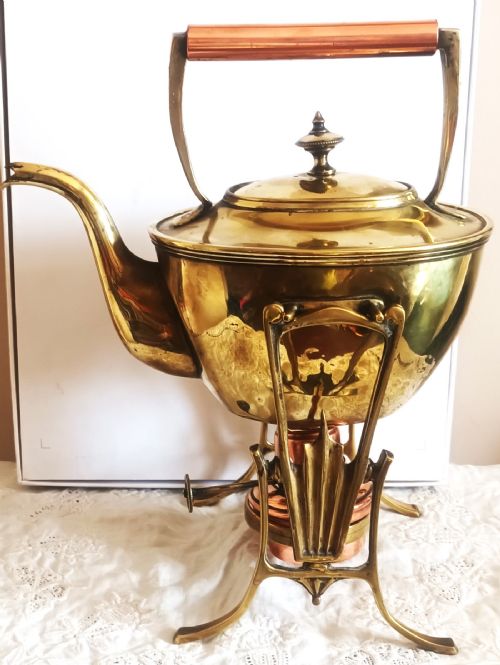
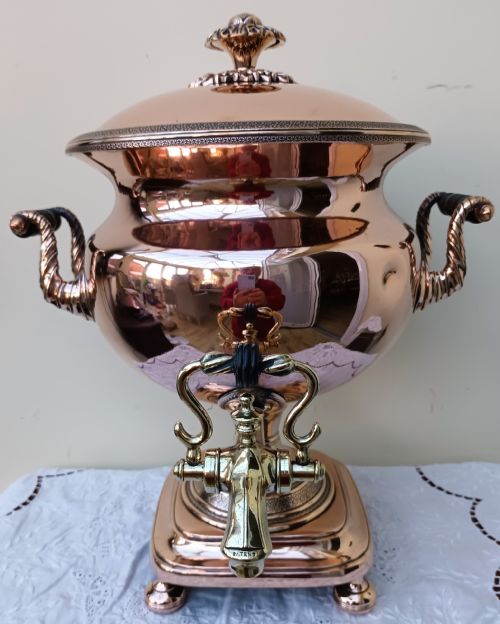
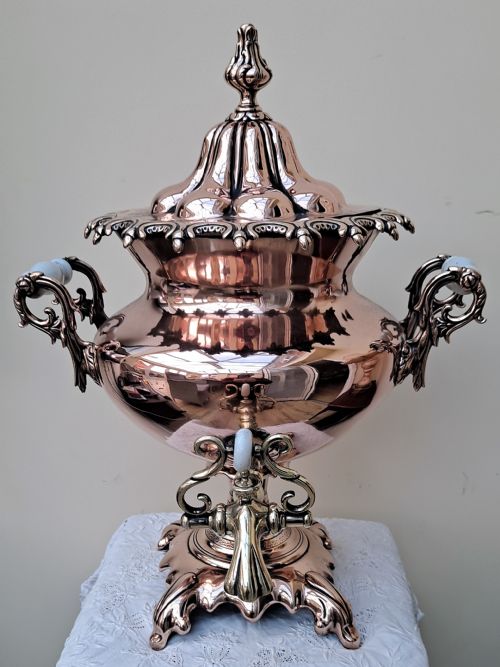
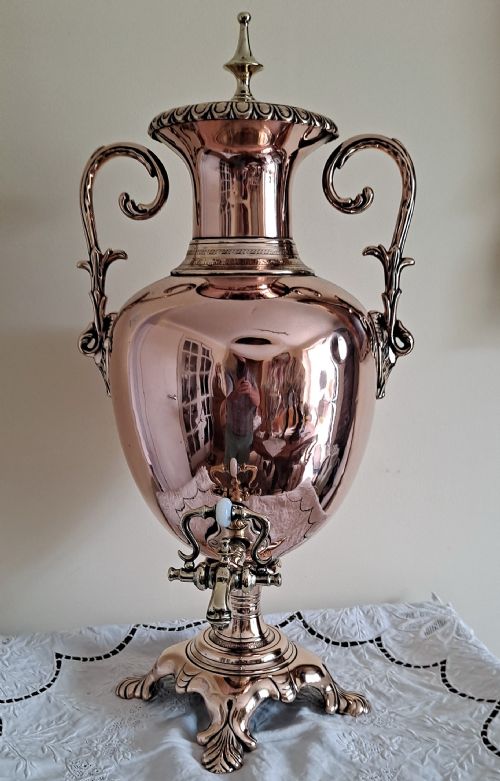
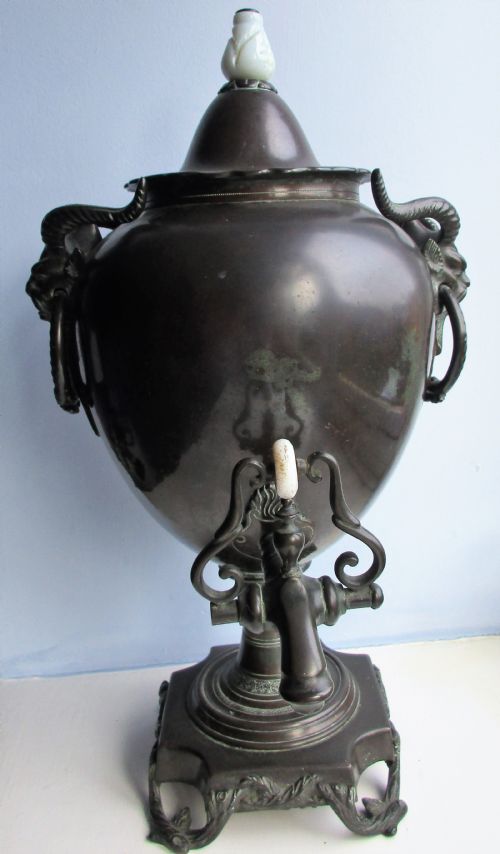


Copper Tea Urn
A copper tea urn brings warmth and historic craftsmanship to a room, functioning as both a decorative vessel and a tangible piece of domestic heritage.

Copper Tea Urn
When you search for a copper tea urn, you encounter vessels designed for heating and dispensing water for tea, spanning George III, Regency, and Victorian periods. These pieces frequently appear alongside related forms such as samovars, spirit kettles, and water urns.
The Victorian examples dominate the selection, often incorporating brass handles and spigots alongside the main copper body. Earlier pieces from the Georgian and Regency eras also feature prominently, showcasing distinct classical proportions and metalwork.
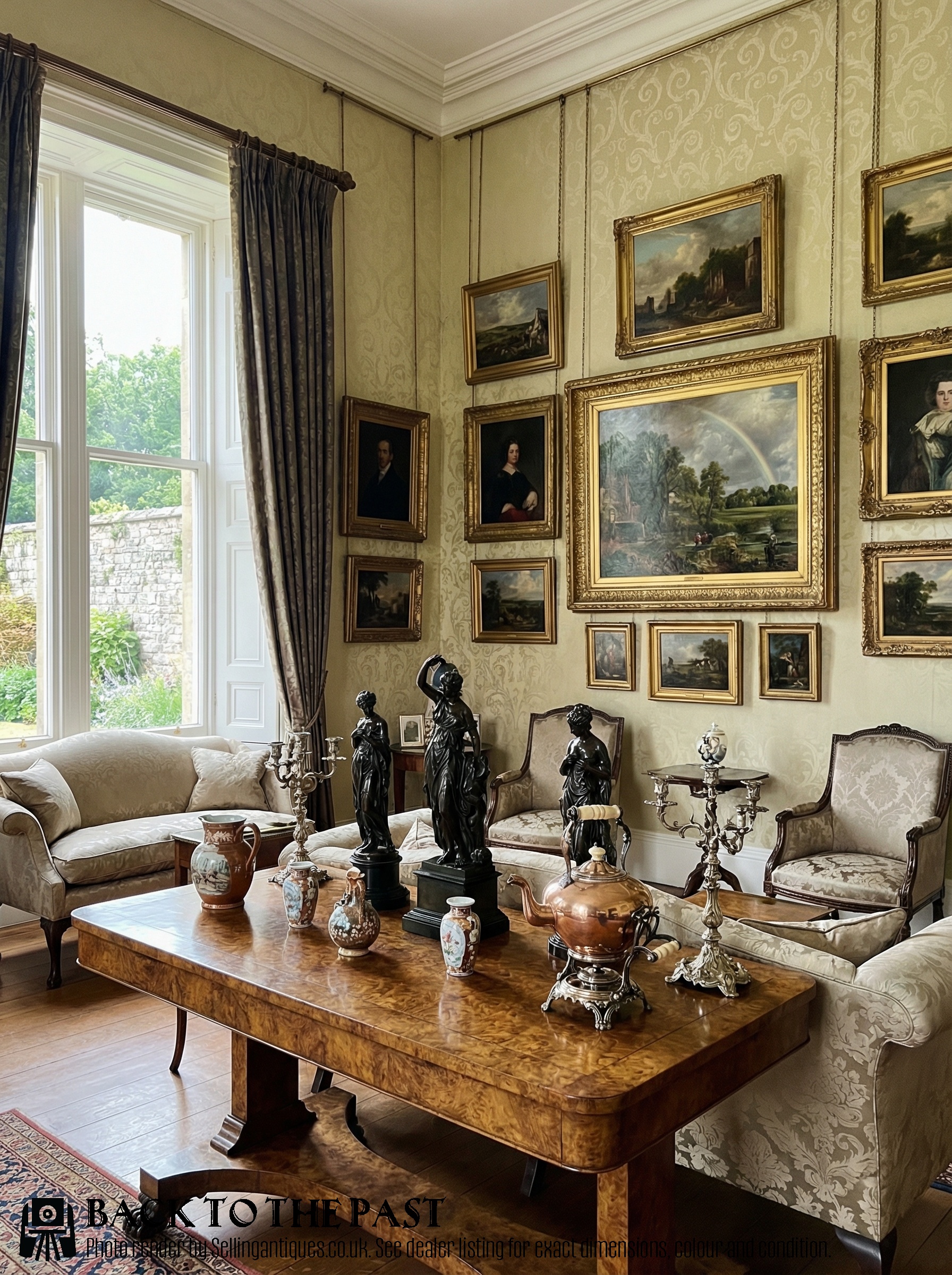
How They Were Made
Coppersmiths shaped these vessels using heavy gauge copper sheets, hammering and joining the metal to form durable bodies. Brass mounts, spigots, and handles provide structural contrast and functional utility.
Details such as bone insulators on handles and ceramic or ebonised wood components appear frequently in the construction. Japanned finishes, as seen in Pontypool ware, add layered colour and protection to the metal surface.
Copper Tea Urn Retail Price Guide 2026
Typical asking prices for copper tea urn among the pieces listed under this phrase on Sellingantiques today, from the lower quarter to the upper quarter. They describe what is for sale here now, not the wider market.
Listings combine George III, Regency, and Victorian periods, with materials spanning copper, brass, bone, ebonised wood, and ceramic.
What Varies in Quality
The distinction between standard utility items and superior examples lies in the weight of the metal and the crispness of the cast brass fittings. Heavier copper bodies and intricately detailed spigots indicate higher workshop standards.
The presence of original fittings, including interior heating tubes and matching stands, separates complete survivors from altered pieces. Subtle hand-beaten textures and refined proportions elevate the status of individual items.
William Soutter And Sons·Benetfink And Co·Benham And Sons
The Copper Tea Urn Glossary
- Samovar
- A heated metal container traditionally used to boil and heat water in Russia and adopted across Britain for tea service. These vessels often feature an internal vertical tube for charcoal or a heating block.
- Spirit Kettle
- A tea kettle mounted on a stand above a small spirit burner used to keep water hot at the table. These portable units combine copper and brass elements.
- Pontypool Ware
- Japanned metalware produced in Wales known for its durable and glossy lacquered finishes. This technique applied dark or coloured coatings to iron and copper bases.
- Bell Metal
- An alloy of copper and tin traditionally used for casting spigots, handles, and small fittings. It produces a clear tone when struck and offers high resistance to wear.
Copper Tea Urn: Frequently Asked Questions
How were copper tea urns used?
These vessels heated and dispensed water for tea during formal gatherings and domestic meals. Servants filled the internal chamber to maintain hot water throughout the service.
They stood on side tables or tea boards, allowing hosts to replenish pots without returning to the kitchen. The integrated spigots enabled controlled pouring directly into individual cups.
Can I use an antique urn for tea?
Most surviving examples serve primarily as decorative objects rather than functioning kitchen appliances. Modern users should check interior linings and seals before attempting to boil water.
Many antique vessels contain historic tin linings that degrade over time and require professional restoration for safe culinary use. Displaying them dry preserves the original interior surfaces.
How do I clean a copper urn?
Maintenance involves removing dust with a soft cloth while preserving the natural historic patina. Aggressive commercial cleaners strip the aged surface character that collectors value.
Light dusting and occasional gentle wiping keep the metal stable without altering the dark tones accumulated over centuries. Avoiding harsh abrasives protects both the copper and the underlying brass fittings.
How do I tell Regency from Victorian pieces?
Regency urns often display neoclassical urn shapes, pedestal bases, and clean architectural lines influenced by ancient Greek and Roman forms. They frequently incorporate bronzed finishes.
Victorian examples tend toward heavier proportions, ornate surface engraving, and more eclectic revival styles. The mounting of handles and feet also shifts toward sturdier domestic utility in the later period.