


Copper Water Urn
These copper water urn pieces offer warmth and service, bringing substantial metal vessels into daily settings with practical design and period character.
Copper Water Urn
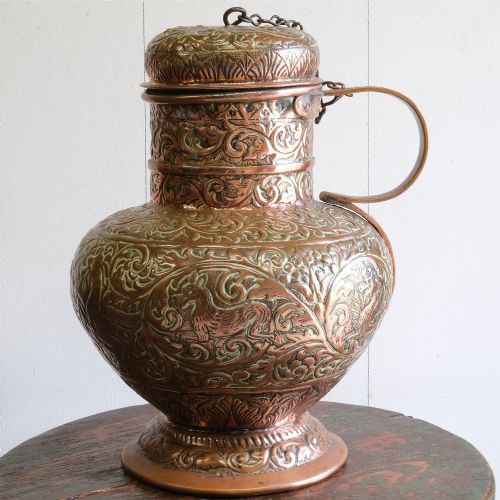
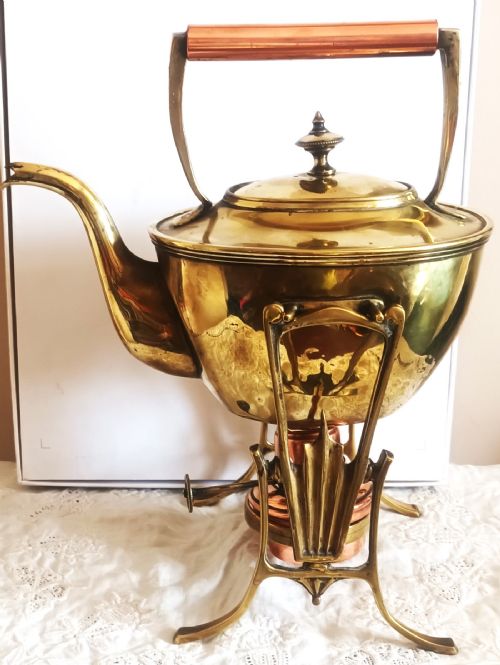
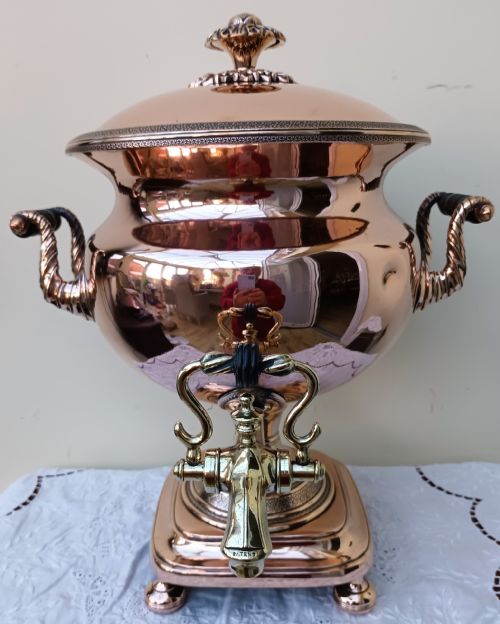
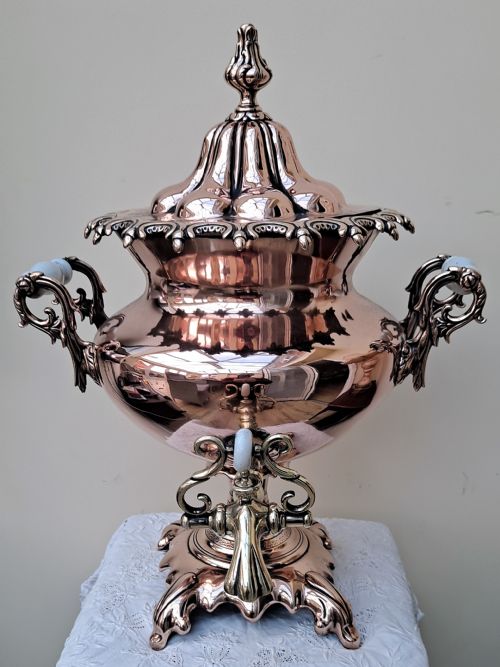
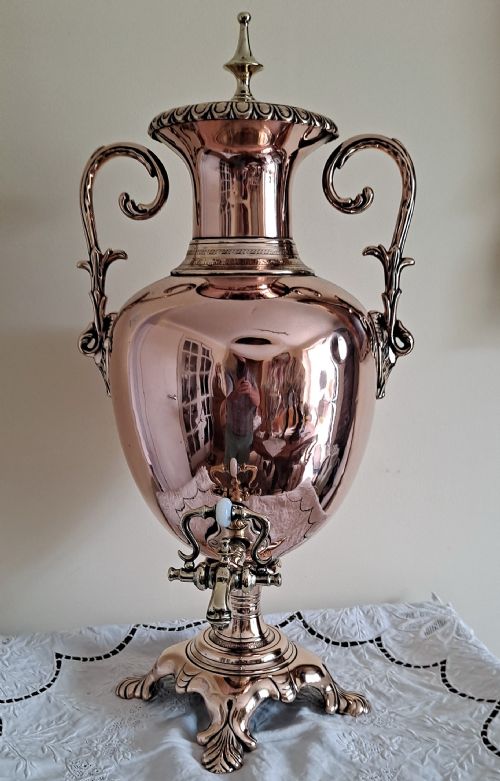
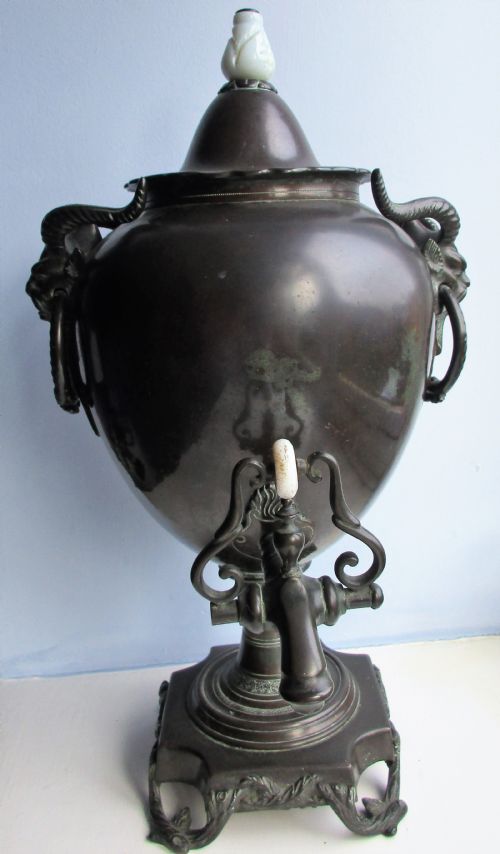
A copper water urn selection comprises vessels designed to hold and dispense heated water, appearing mostly as samovars, tea urns, and spirit kettles alongside water barrels and hanging containers. The examples seen span the Georgian, Regency, and Victorian periods, often showing English, Scandinavian, and Japanese origins.
Most items meeting the search for a copper water urn date from the nineteenth century, reflecting the Victorian preference for heavy metalware in domestic hospitality. Alongside standard tea urns, the range includes spirit kettles on stands and occasional water barrels constructed for heavy duty use.
Construction and Materials
Makers built these vessels primarily from sheet copper, hammering and joining the metal seams while incorporating brass for taps, handles, and decorative mounts. Many pieces integrate secondary materials such as bone, wood, ceramic, and ebonised wood for thermal insulation on handles and spigots.
Surface treatments vary from polished finishes and patinated metal to japanned surfaces and intricate cloisonne enamel work. Bronze and bell metal frequently appear in fittings and smaller structural elements, ensuring durability alongside decorative impact.
Copper Water Urn Retail Price Guide 2026
Typical asking prices for copper water urn among the pieces listed under this phrase on Sellingantiques today, from the lower quarter to the upper quarter. They describe what is for sale here now, not the wider market.
Materials recorded across the inventory include copper, brass, bronze, bell metal, iron, ceramic, bone, wood, and ebonised wood.
Standards of Execution
Quality rests upon the weight of the metal gauge and the integrity of the original fittings, including taps, handles, and internal heating tubes. Better examples maintain complete matching components rather than replacement parts.
Artisanal execution dictates the visual standard, separating standard production vessels from ornate pieces bearing repousse decoration, specialised japanning, or signed maker details.
William Soutter And Sons·Benetfink And Co
The Copper Water Urn Glossary
- Samovar
- A heated metal container traditionally used to heat and boil water, central to tea preparation in various cultures.
- Spirit Kettle
- A kettle mounted on a stand with an underlying burner fueled by spirit, used to keep water hot at the table.
- Pontypool Ware
- Japanned metalware produced in Wales, known for its durable glossy lacquer finishes applied to iron or copper bases.
- Bell Metal
- An alloy of copper and tin traditionally used for casting bells, utilised here for durable fittings and urn components.
Copper Water Urn: Frequently Asked Questions
What is a copper water urn?
A copper water urn is a heavy metal container built to hold and dispense heated water for domestic use. These vessels often take the form of samovars or tea urns equipped with spigots and handles.
They combine structural metalwork with functional design, utilising brass, wood, and bone to manage heat during service.
How were they used historically?
These vessels heated and dispensed water for tea and other domestic requirements in large households. Servants or hosts operated the brass taps to fill cups directly from the reservoir.
Many included internal heating cylinders or rested above spirit burners to maintain water temperature throughout long gatherings.
How do I style a copper water urn?
These pieces function well as focal points on sideboards, tables, or open shelving within period and eclectic interiors. Their warm metallic tones contrast effectively against stone, wood, and painted walls.
Keeping the surfaces polished or maintaining an aged patina depends on the desired visual contrast within the room.
How can I tell the period apart?
Georgian and Regency examples tend toward classical urn proportions with refined brass mounts and crisp lines. Victorian pieces often display heavier construction, varied Japanned finishes, or more elaborate decorative embossing.
Maker stamps and specific fitting styles also help anchor pieces within nineteenth century production eras.