


Vintage Copper Samovar
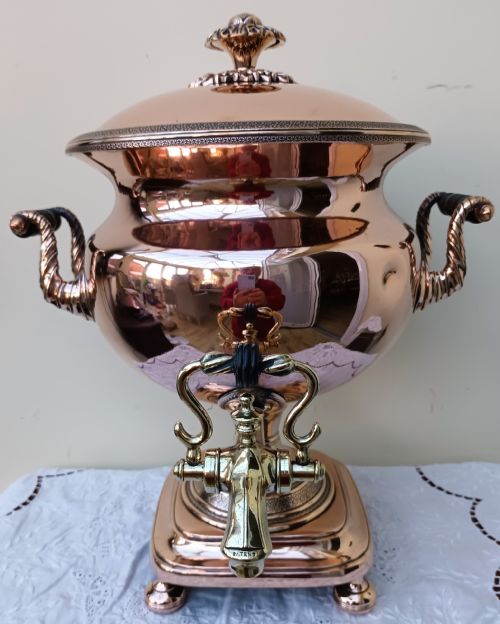
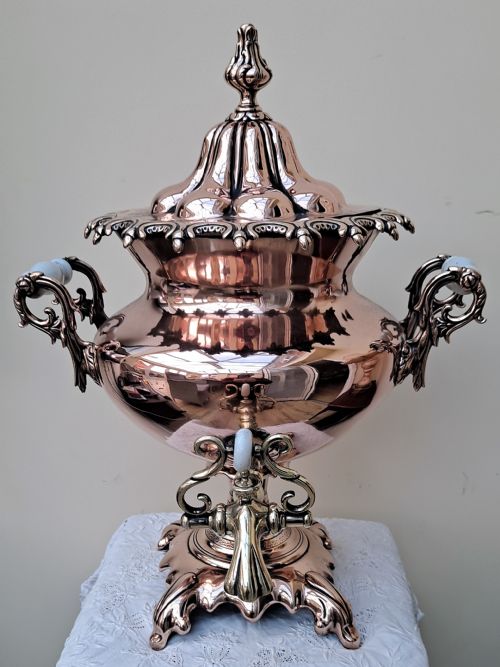
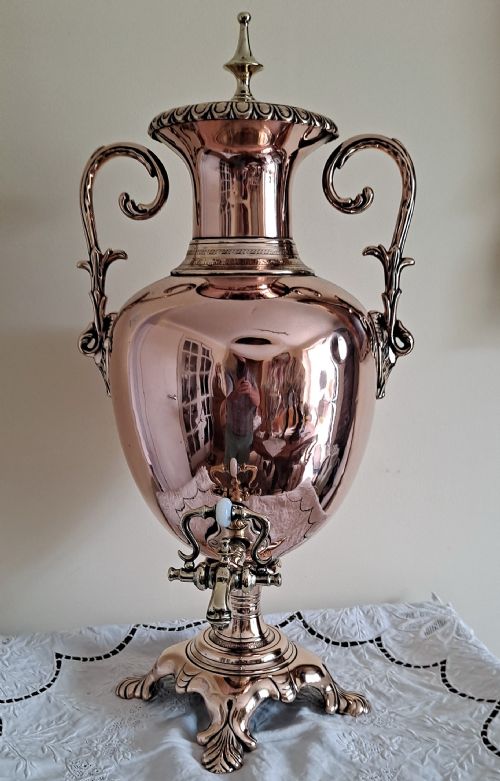
These vintage copper samovar examples are striking tea urns offering warmth and hospitality to any interior scheme.

What vintage copper samovar pieces are
A vintage copper samovar is a traditional heated vessel designed for boiling water, appearing in forms such as tea urns and samovars. These pieces represent historical beverage service, originating across periods from George III and Regency to the Victorian era.
Buyers encountering this selection will most frequently meet Victorian and nineteenth century examples alongside earlier Georgian or Regency pieces. These vessels function as dramatic focal points for a room, reflecting centuries of metalworking heritage.
The objects combine functional utility with decorative presence, often integrating brass, bronze, bone, or ceramic components. Each piece demonstrates the traditional forms used for heating water during large gatherings.
How they were made
The primary construction relies on beaten and formed copper, frequently paired with cast brass or bronze fittings. Artisans shaped these metals by hand to create the substantial bodies and spigots characteristic of the form.
Detailing often incorporates contrasting materials such as bone handles and ceramic elements to insulate against heat. These elements were carefully fitted to the metal bodies using traditional joining techniques appropriate to the period.
Retail Price Guide 2026
Typical UK retail prices for vintage copper samovar, calculated from the Sellingantiques database of over a million retail prices indexed since 2003. This retail price guide relies exclusively on Sellingantiques data; no external sources or auction records are used, so the figures do not describe the wider market.
Some pieces feature bone handles designed to stay cool to the touch while boiling water hissed inside.
What varies in quality
Quality diverges in the crispness of the ornamentation and the refinement of the metal finishing. Pieces from the George III and Regency periods often display more intricate casting and heavier gauge metalwork than later Victorian iterations.
The integrity of the original components, including handles and spigots made of brass, bronze, or bone, dictates the desirability of the piece. Superior examples maintain a harmonious balance between decorative embellishment and structural proportion.
The Vintage Copper Samovar Glossary
- Samovar
- A heated metal vessel traditionally used to boil and heat water for tea. These containers form the central utility object for beverage service.
- Tea urn
- A large standing vessel fitted with a spigot for dispensing hot water. They share the functional space of the samovar in historic settings.
- Regency
- An English design period spanning the early nineteenth century known for classical restraint and influenced by Greco-Roman motifs. Pieces from this era often feature refined bronze and copper combinations.
- George III
- The period of British history covering the latter half of the eighteenth century and early nineteenth century. Furniture and metalwork from this time emphasise quality and ornate detailing.
- Bronzed copper
- A surface treatment applied to copper to simulate the darker, richer appearance of bronze. This finish appears on specific Regency era vessels.
Frequently Asked Questions
What is a vintage copper samovar used for?
These vessels were historically utilised to boil water for tea service in large households and formal gatherings.
Today, they serve primarily as decorative antique objects that anchor a room with period character.
How do I date a copper samovar?
Dating relies on stylistic markers associated with periods such as George III, Regency, and Victorian.
Details like the shape of the handles, the form of the spigot, and the use of bronzed copper or brass elements provide chronological clues.
What materials are found on these pieces?
The primary body is constructed from copper, sometimes treated with a bronzed finish.
Fittings and accents frequently incorporate brass, bronze, bone, and ceramic components.
Are tea urns and samovars the same thing?
Both terms describe large heated water vessels equipped with spigots for beverage service.
While samovars often carry specific cultural connotations of internal heating tubes, listings frequently group them alongside traditional English tea urns.